OBITUARY |
By Marc Grossman
 Mo Jourdane spent his life overcoming multiple tragedies by finding new purpose in changing the lives of underrepresented people — and in devotion to family. Shortly before his passing, his son Jonathan asked him what in his life’s work made him most proud. He quickly cited representing farm workers.
Mo is best known for getting the state of California to abolish use of el cortito, the infamous short-handled hoe.
Mo, 83, passed away on Sept. 5 following a two-year battle with cancer. Fittingly, it was the end of his favorite season, summer, the surf was up and it was Labor Day weekend, when homage is paid to workers.
Enlarge
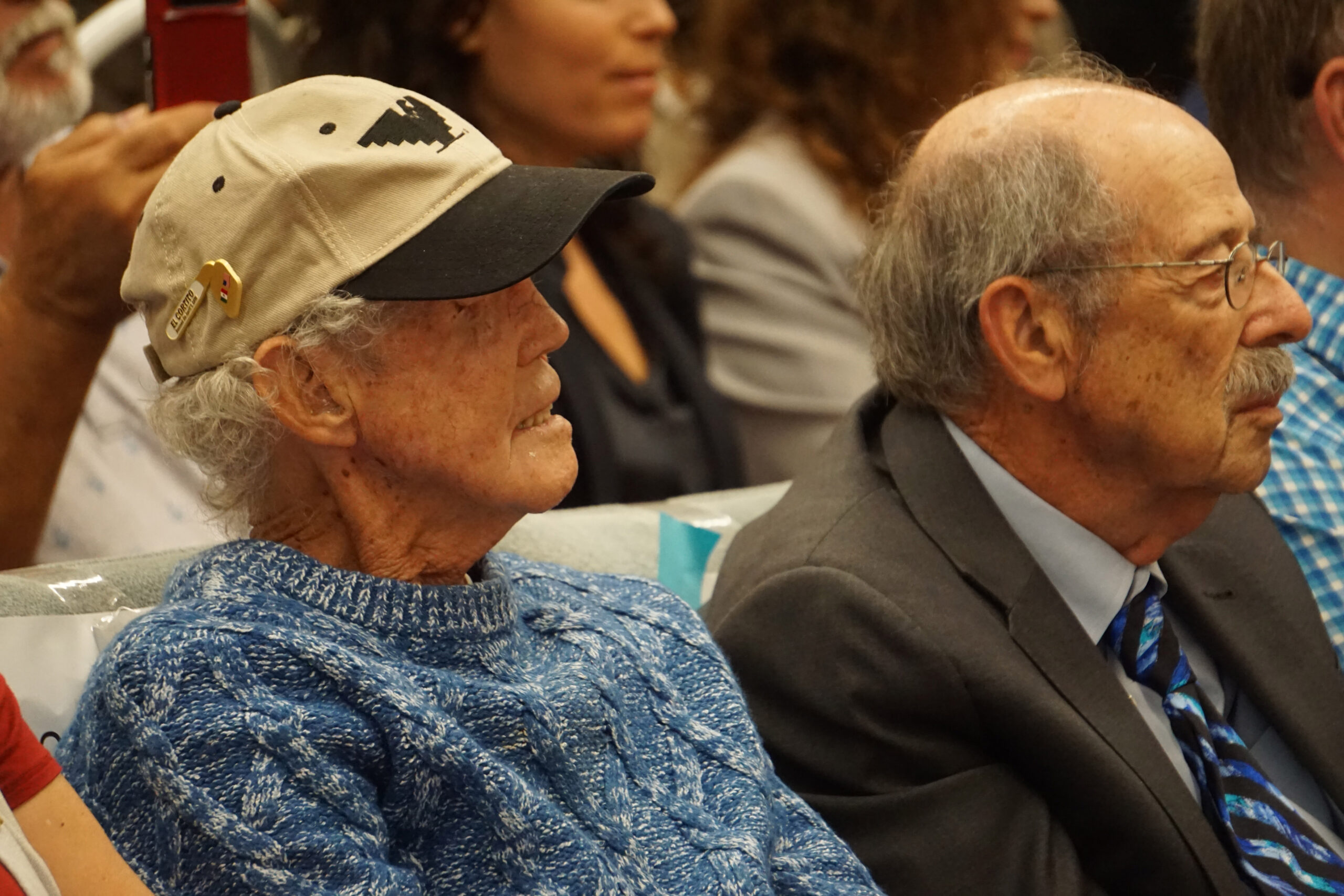
Maurice “Mo” Jourdane was born in Los Angeles in 1942 and grew up in Huntington Park: making him an unlikely protector of farm workers. But as a child he would go to his grandpa’s small avocado farm in Vista near Oceanside to learn Spanish and learn about the plight of the farm workers picking fruit.
The first challenge he overcame was polio, contracted in the third grade during the early 1950s before there was a vaccine. Children were dying and becoming paralyzed. He was treated with hot pads on his legs and swimming. School work was brought home. His response to polio in the year away from the classroom was becoming a relentless academic and athlete.
At 17, he moved to Hawaii to surf the big waves. Then came San José State University and the University of California San Francisco School of Law, where he graduated at the top of his class.
Mo’s greatest achievement for farm workers was his relentless and successful struggle to outlaw agribusinesses’ use of the short hoe. It plagued generations of field workers with crippling injuries by demanding they toil stooped over in back-breaking labor while thinning, weeding and harvesting for as long as 10 or 12 hours per day, often in triple-digit heat.
Republican U.S. Senator George Murphy of California infamously said in 1964 that Mexican field workers “are built low to the ground … so it is easier for them to stoop.”
The same fighting spirit he applied to people’s legal struggles helped him overcome his personal hardships. It inspired people from all walks of life — activists, lawyers, immigrants, students, people with disabilities.
Over almost a decade in the 1960s and ‘70s, while working with California Rural Legal Assistance (CRLA), Mo ceaselessly researched and advocated for a state ban of the hated implement. Through negotiations with employers and administrative and court actions, he overcame stern opposition from the conservative, pro-grower administration of Gov. Ronald Reagan. With the ascendency of a new governor, Jerry Brown, in the mid-‘70s, Mo and CRLA achieved an epic victory. Working with the United Farm Workers (UFW), other CRLA lawyers and volunteers, Mo persuaded the California Supreme Court to compel the state to eliminate use of the hoe in the fields.
Mo chronicled this historic crusade in his 2004 book, “El Cortito: The Struggle for the Health and Legal Protection of Farm Workers.” His story is a shocking reminder of the shameful oppression plaguing impoverished field laborers into the 1970s. He spent the rest of his life striving to overcome that injustice and always reminding people of the unfinished work, in part by supporting the UFW. Among his accomplishments:
- Spanish-speaking school children in the small southern Monterey County town of Soledad were placed in classrooms for students who at the time were called “mentally retarded” simply because they did not comprehend English and therefore scored as low IQ on the tests. Mo filed a class-action lawsuit that ultimately stopped the practice in California and ordered 55,000 mis-classified children removed from those classes. This case spurred the creation of bilingual education as well as much-needed reforms in special education.
- A teacher in the nearby city of Greenfield was fired for encouraging migrant farm worker children to go to college. Mo’s lawsuit got her job back and ended the practice.
- He filed a class-action lawsuit in Los Angeles County, Maria P. v. Riles, that stopped school districts from refusing to educate non-citizen students who lacked proof of immigration status.
- Abela v. Riverside Unified School District was a trial on a complaint Mo filed for a junior high school girl who the district claimed it could summarily suspend for fighting as “mentally unfit.” He won and halted that practice too.
Enlarge
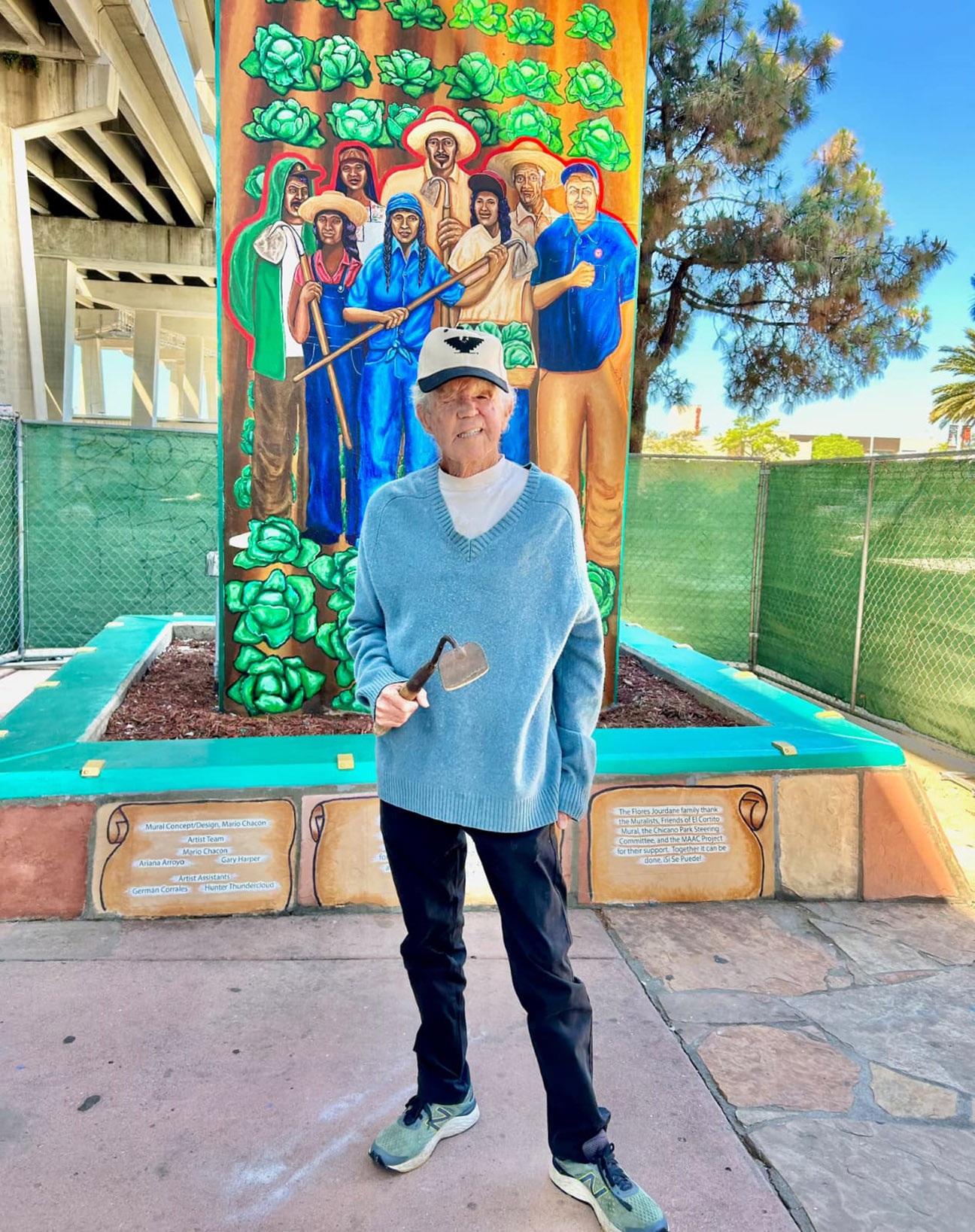
Mo handled landmark cases as an attorney for the newly formed state Agricultural Labor Relations Board (ALRB). He successfully litigated a case sustaining the ALRB’s access rule letting farm workers speak with union organizers in the fields during non-working hours, as well as a key case against the big lettuce grower Bruce Church Inc. Throughout his years with CRLA and the ALRB, “If you were an employer abusing your workers and Mo Jourdane was on the other side, you knew you were in trouble,” observed son Jonathan Julio Jourdane.
“His mantra that he often repeated was if you see someone being harmed, you do something about it,” recalled Olivia Flores Jourdane, his wife and partner of more than 42 years. “That was how he lived his life.”
Mo’s second tragedy occurred in 1977. He was driving in the early morning from Santa Maria to Bakersfield for interviews with farm workers in an ALRB case. On the pitch-black highway, a big tractor-trailer oil truck pulled out in front of him. He lost an eye. His face was crushed. He was in a coma. They didn’t think he would survive.
He was moved to Stanford University Hospital. His face was reconstructed. His jaw was wired shut for a year. He had to re-learn how to speak.
Yet he found a new purpose after the accident. Rather than dying, he returned to his good work but also transformed himself from a Southern California surfer and bad-ass litigator into a marathon runner, meeting his wife and starting a family. He found Olivia and became a present dad, first for their daughter Jacquelyn (Jackie) and later, Jonathan.
Mo spent three years as a Municipal and Superior Court judge in Monterey County, appointed by Gov. Brown. He lost his election when growers organized a deputy district attorney to run against him, spotlighting his disability. After all, Mo had fought for the people who the powers that be didn’t like.
The family started anew in San Diego, and Mo worked for the Fourth District Court of Appeals until Jerry Brown became state attorney general in 2007, with Mo handling labor cases.
Some students sat with mouths open. “How were you able to do all this?” they’d ask. “You just do it,” he replied. “If you see something wrong, you do something about it.”
The following year began his third tragedy. Esophageal cancer metastasized to his lymph nodes and liver, resulting in four ball-sized cancerous tumors engulfing his liver. Doctors did not expect Mo to survive.
He found an oncologist who would prescribe the most intense chemotherapy. He’d go for treatments and then drive with Olivia to New Mexico to walk door-to-door for Barack Obama’s first presidential campaign. He’d return to California for more treatments and then go back to knocking on doors for Obama. Mo believed in practicing law to change lives, but also saw electoral politics as important.
He was always present as a dad and husband, even when that was hard. Mo eventually had to stop driving after the accident, so getting to work at the Court of Appeals in San Diego required an hour’s commute on bus and trolley.
He endured the same drill running to attend his kids’ sporting events. His way of being present wasn’t as a coach or chatting with other parents. It was jogging for miles from downtown to watch his children’s activities — and them knowing what he had to go through to get there.
He cared for the children when Olivia attended night classes to become a teacher. He covered everything from cooking to helping with homework.
Mo also ran 79 marathons, including one under three hours. He wrote three books.
What made him unique was how overcoming adversity became as important as the mountains he climbed for farm workers and others for whom he fought. The same fighting spirit he applied to people’s legal struggles helped him overcome his personal hardships. It inspired people from all walks of life — activists, lawyers, immigrants, students, people with disabilities.
Overcoming adversity also meant never caring what others thought about how he looked. From 1977 onward, he often drooled because half his face was numb. When he was invited to speak on high school and college campuses, he would walk in wearing mismatched clothing — oversized khakis, cowboy boots, a sweater and visor. He could appear to some as homeless, disabled or disfigured.
But when people heard him talk about professional achievements and overcoming personal tragedy, they saw way beyond his appearance. Some students sat with mouths open. “How were you able to do all this?” they’d ask. “You just do it,” he replied. “If you see something wrong, you do something about it.” Mo offered powerful lessons about empathy without ever saying the word.
He read to his children every night, picking books with morals and values — stories such as “The Little Engine That Could.”
In the end, when he was in great pain from his second bout with cancer, Mo took joy in being around his granddaughter Josephine, who will carry on his legacy.
This story was first published on the United Farm Workers website and has been lightly edited by Voices staff; it is reprinted with permission.
Enlarge
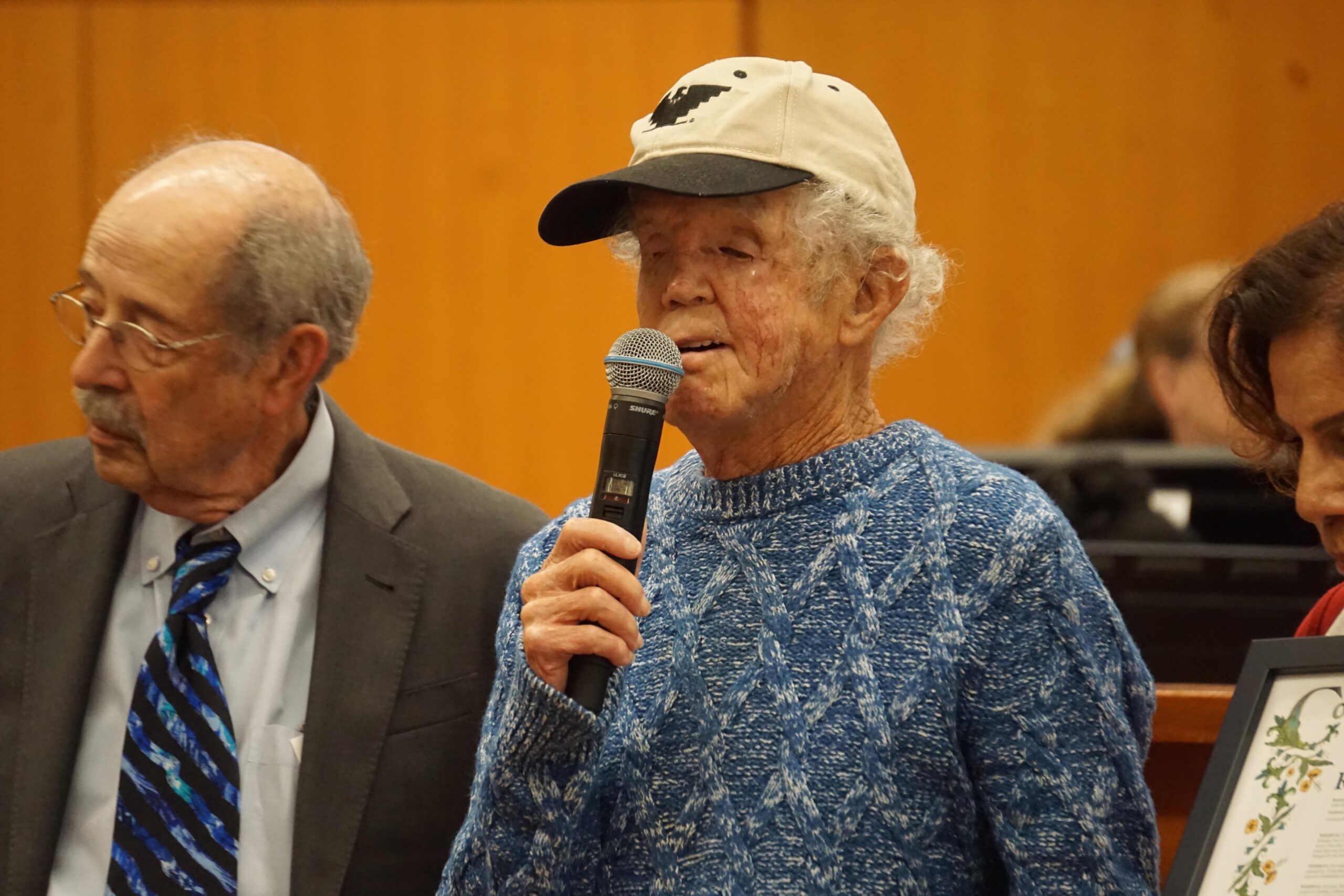

Have something to say about this story? Send us a letter.
SUPPORT NONPROFIT JOURNALISM 
GET OUR FREE NEWSLETTER