FEATURED |
By Jeremy Loudenback and Haydee Barahona
Last summer, former foster youth Bayley Craig gathered with anti-poverty advocates on the steps of California’s Capitol building before a crush of cameras.
He was nervous, but had an urgent goal: beseeching state lawmakers to protect access to food stamps from federal cuts. The benefits kept him alive as an impoverished 7-year-old, and later as an 18-year-old in college with no family support.
Then he heard he was on the lineup with one of his heroes, the iconic Dolores Huerta, and felt a surge of inspiration. Like Huerta, Craig felt driven to speak up for others without a platform, including thousands of young adults facing adulthood with scarce resources.
“It felt like such a dream to be there with her,” Craig, now 24, said in a recent interview.
“It was incredibly brave for her to share her story, but it also pointed to the fact that victims can take a very, very long time to want to disclose their abuse for whatever reason.” Chantel Johnson, Youth Law Center
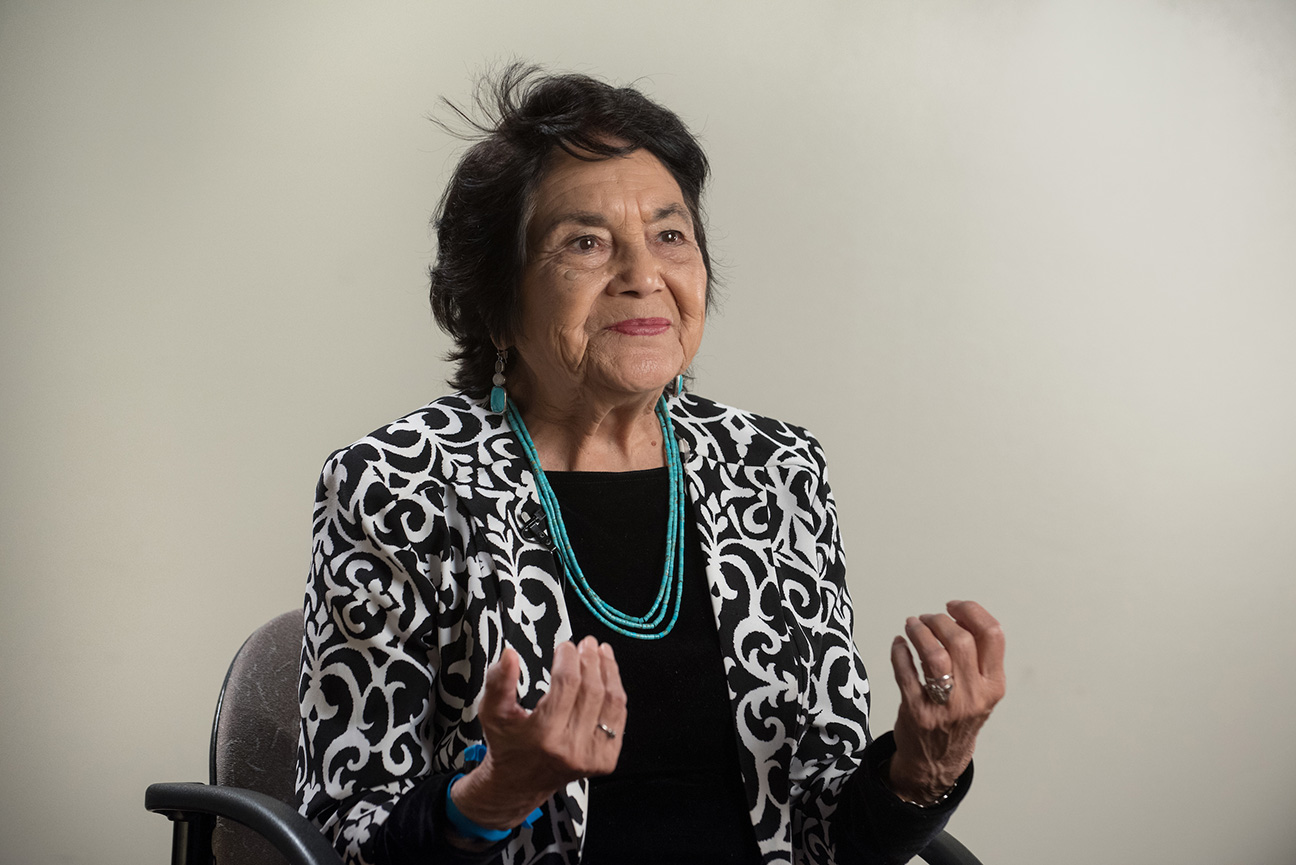
Since Oct. 28, when Huerta died at 96 from cancer, the nation has mourned her passing and heralded her contributions as a labor leader, feminist, and activist for immigrant, LGBTQ+ and civil rights.
Given her revelations in the final months of her life that she had been raped by César Chávez , she is also being revered as an inspiration among advocates for abused women and young girls. In a detailed investigation published by The New York Times, Huerta’s story was told alongside the accounts of other women in the United Farm Workers Union community who said Chavez abused them, beginning when they were 12 and 13.
“It was incredibly brave for her to share her story, but it also pointed to the fact that victims can take a very, very long time to want to disclose their abuse for whatever reason,” said Chantel Johnson, directing advocate with the San Francisco-based Youth Law Center.
Johnson credits Huerta’s most recent revelations for inspiring passage of a new law that adds protections to prevent the abuse of youth in foster homes, residential centers and juvenile detention facilities.
Over the past two weeks, Huerta has been honored up and down California in ways small and large — from a candlelight vigil in her hometown of Stockton to an election-night speech by governor-elect Xavier Becerra, the nation’s first Latino governor. He invoked her name in his acceptance speech, chanting “¡Sí, se puede!”
***
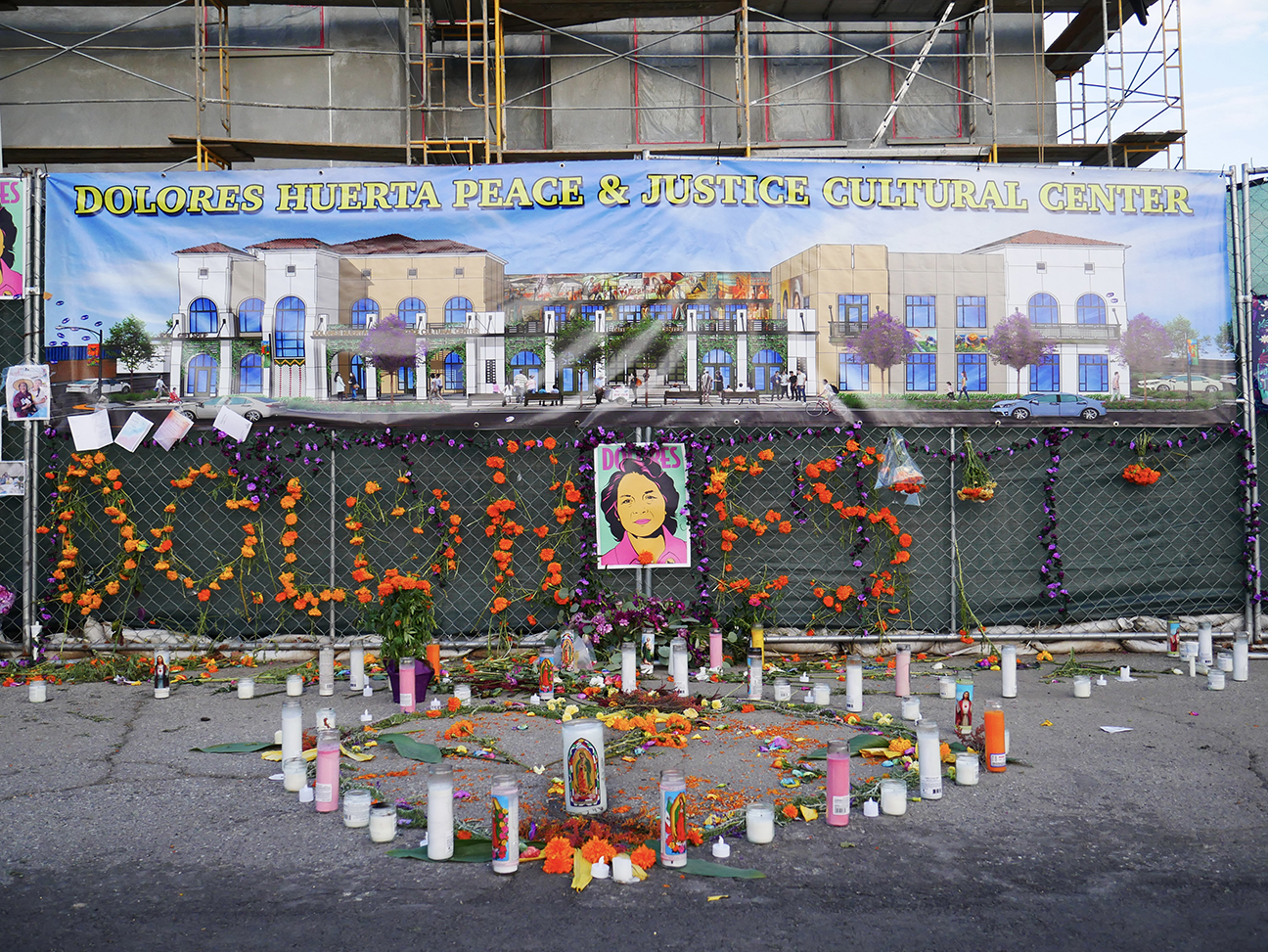
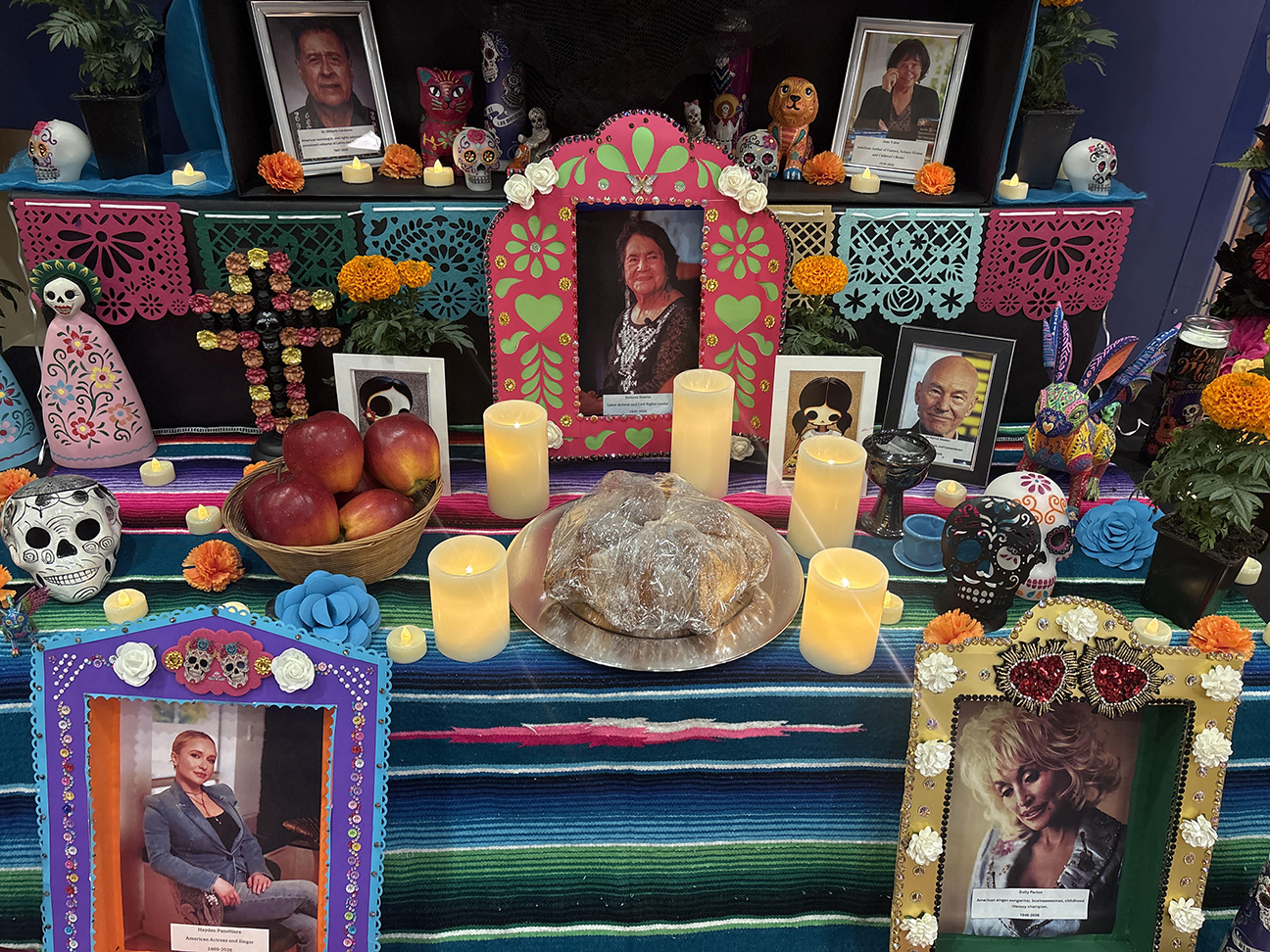
Photos, candles and orange flowers spell out “Dolores” on a fence outside the Dolores Huerta Peace and Justice Cultural Center in downtown Bakersfield. Los Angeles school children watched Teatro Campesino-inspired performances about her life, and statewide, Day of the Dead altars featured her photo.
On Nov. 16, Huerta’s body will lie in honor at the California Capitol.
For advocates of abused girls and teens, her passing has particular resonance. They are relishing moments of contact with the civil rights icon and hoping to mirror her resolve and dedication.
Julia Arroyo, executive director of the San Francisco-based Young Women’s Freedom Center, found a guide in Huerta, even though they came from different worlds. After growing up in foster care and being incarcerated in juvenile hall, Arroyo studied Huerta’s work as an activist, and met her in 2024 at a Movement Innovation Collaborative conference attended by hundreds of political organizers.
“It gave us the ability to be believed about our experiences, because it had happened to somebody with such credibility and prestige.” Julia Arroyo, Young Women’s Freedom Center
During a small group session, Arroyo found herself sitting next to Huerta — “shocked and more than a little overwhelmed” at the chance to speak to one of her heroes more intimately.
But what happened next surprised her: The veteran labor leader wanted to know about Arroyo’s background.
“It was so humanizing and humbling that somebody that had done this work for so many decades wanted to hear from somebody like me,” Arroyo said. “I had a different experience about being exploited, about being trafficked, and having the experience of being abused inside of a jail facility, and she wanted to learn from me.”
More recently, when the Young Women’s Freedom Center held an April rally in Los Angeles to highlight the sexual assault of girls and women in California juvenile halls and jails, several speakers mentioned Huerta’s recent revelation about her own abuse. Arroyo said she set an example for speaking up.
“It gave us the ability to be believed about our experiences, because it had happened to somebody with such credibility and prestige,” she said.
Elvira Herrera, an advocate for women experiencing domestic violence, sexual assault and harassment, was a teenager when she worked with her parents in the fields in Mecca, California, each summer. She said she would sit under the grapevines with her mother, sister and other women farmworkers as they discussed the sexual harassment they faced at work. In her 40s, Herrera said, she, too, became a victim of sexual harassment while working at a packing house.
Her experiences led her to Líderes Campesinas, an Oxnard-based nonprofit advocacy group. As the coordinator of the organization’s Violence Against Women Program, Herrera trains women and young girls on how to identify and report sexual harassment. In that role, she met Huerta several times, including as recently as January.
The revelations by Huerta and other women who told their stories publicly to The New York Times hit home in the state’s agricultural heartland, Herrera said: “Women here in my community were very happy that she finally let go of what she had inside of her, holding for so many years, and that gave a lot of women the strength to speak up and not be afraid anymore.”
Although Huerta was brave enough to “put herself on the frontline,” Herrera said she hopes she will not be judged for staying silent so long — a common reaction among assault survivors.
“When you had Dolores in your corner, it gave you credibility, power and legitimacy. She epitomized being on the morally correct side of any issue that transcended vote counts and politics.” Bill Monning, former state senate majority leader
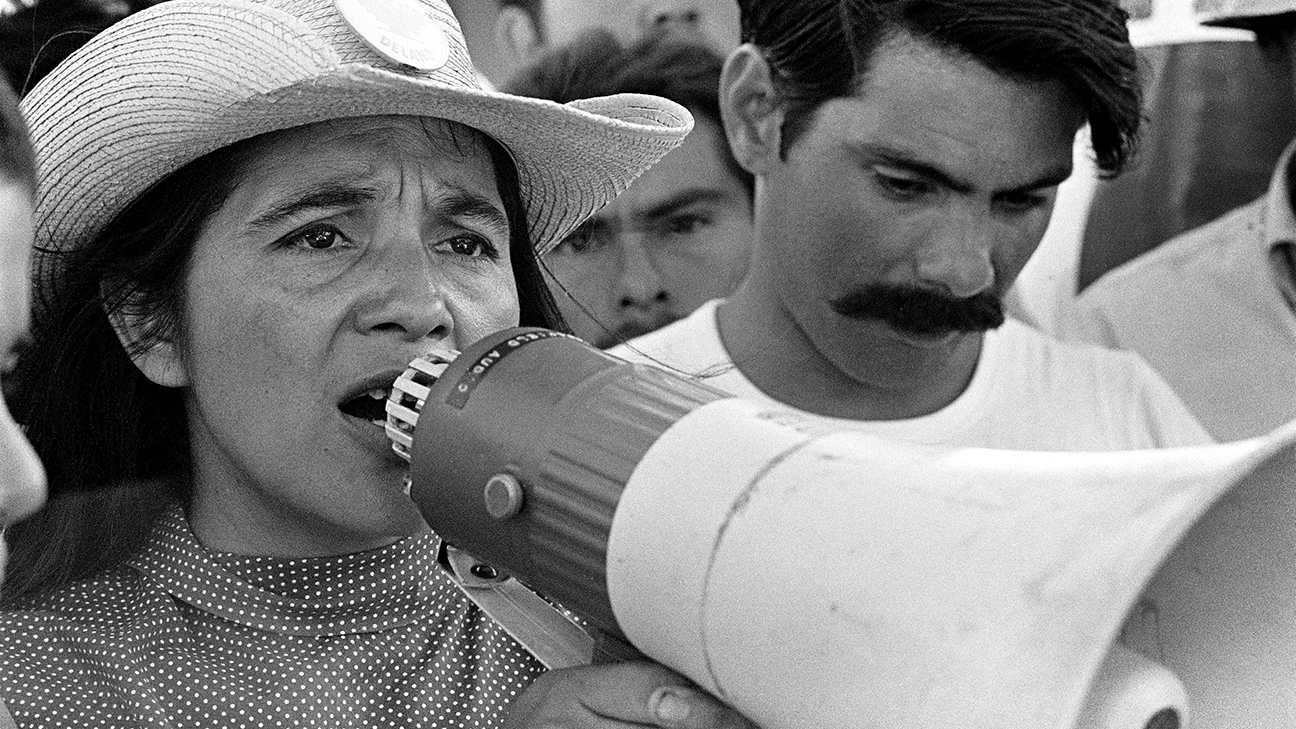
Bill Monning, former state senate majority leader and a former attorney with the United Farm Workers Union, described Huerta as a regular presence in Sacramento in the last decades of her life. Unlike other older activists who transition into management roles at their organizations, Huerta kept showing up on the front lines, keeping to the rugged discipline of her days organizing farmworkers.
Monning recalled Huerta’s help on several of his bills during his time in Sacramento, between 2008 and 2020 — legislation granting Californians “death with dignity;” providing access to clean water to rural residents; and requiring agricultural companies to provide mandatory sexual harassment prevention training to all employees.
Even in her 80s and 90s, Huerta still kept to a strict work schedule, with accountability measures, Monning said. She met with her team at 6 a.m. to discuss who would go after the probable “no” and “maybe” votes on bills before the Legislature, regrouping at noon and 6 p.m. with the results.
Huerta’s authenticity and commitment to the rights of working people made her a “moral conscience” of the Legislature. “When you had Dolores in your corner, it gave you credibility, power and legitimacy,” Monning said. “She epitomized being on the morally correct side of any issue that transcended vote counts and politics.”
This story was co-published with The Imprint, a national nonprofit news outlet covering child welfare and youth justice. Sign up for The Imprint’s free newsletters here.
FEATURED IMAGE |
Enlarge

Have something to say about this story? Send us a letter.
SUPPORT NONPROFIT JOURNALISM 
GET OUR FREE NEWSLETTER