FEATURED |
By George B. Sánchez-Tello
Dozens of Monterey County residents told the Board of Supervisors to stop a proposal to grow the region’s network of artificial intelligence surveillance cameras, also known as automatic license plate readers.
On Tuesday, Aug. 25, Supervisor Luis Alejo announced during the regular Board of Supervisors meeting that the board postponed consideration of a 10-year, $2.7-million contract with Flock Safety to add 40 cameras — for a total of 103 — across Monterey County. Alejo explained that additional questions had been sent to Monterey County Sheriff Tina Nieto before the meeting, and the sheriff would be granted time to answer those questions.
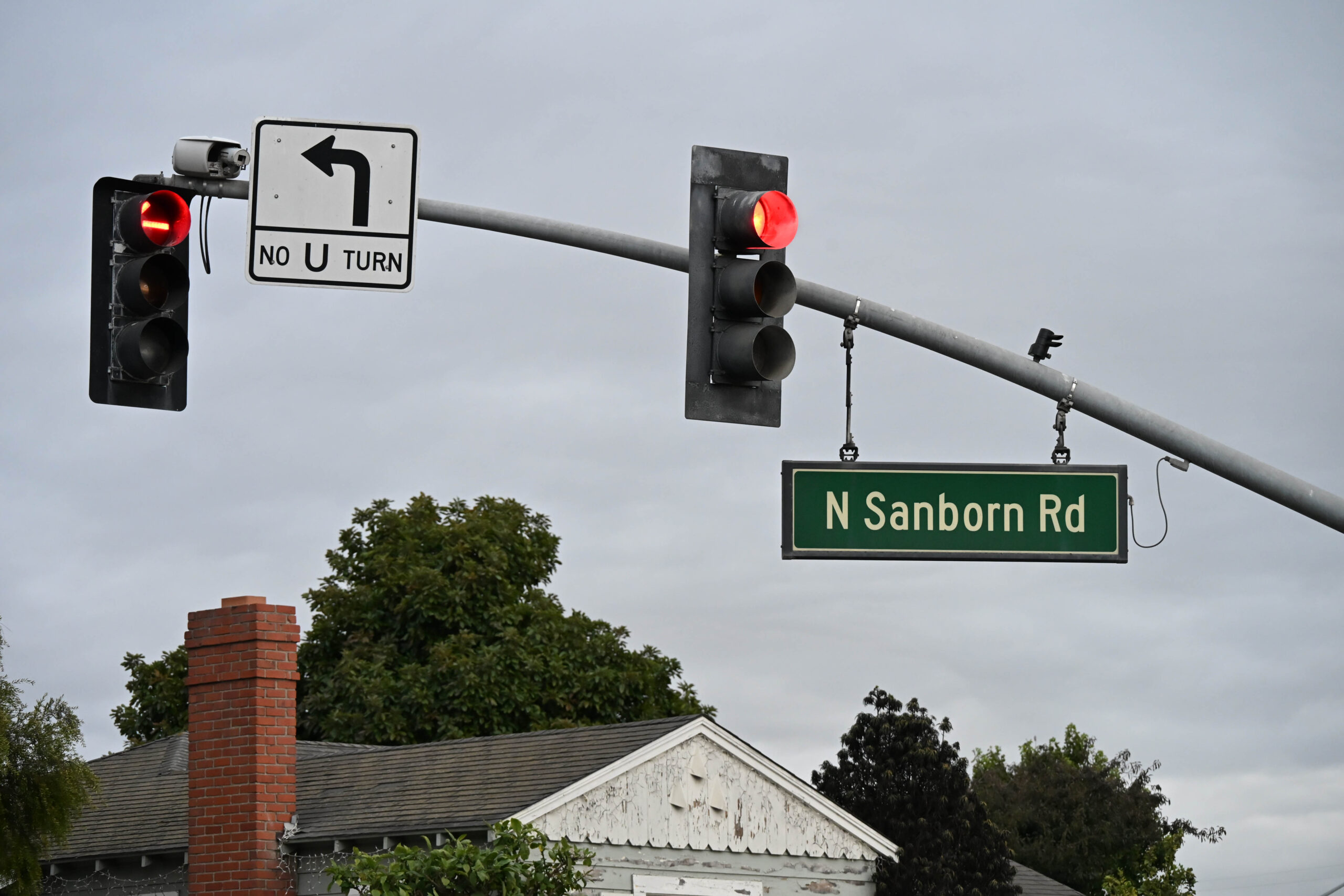
Flock License Plate Readers, or LPR, are mounted solar-powered cameras that use artificial intelligence to record license plates as well as other characteristics of an automobile, including make and model as well as the driver. Contracts and agreements between the company, Flock Safety, and local, state and federal law enforcement agencies allow the sharing of images and data. Flock’s website boasts of its network connecting agencies across 49 states.
With so many residents present to speak on the issue, Board Chair Wendy Root Askew said the supervisors would hear and record public comments.
Enlarge
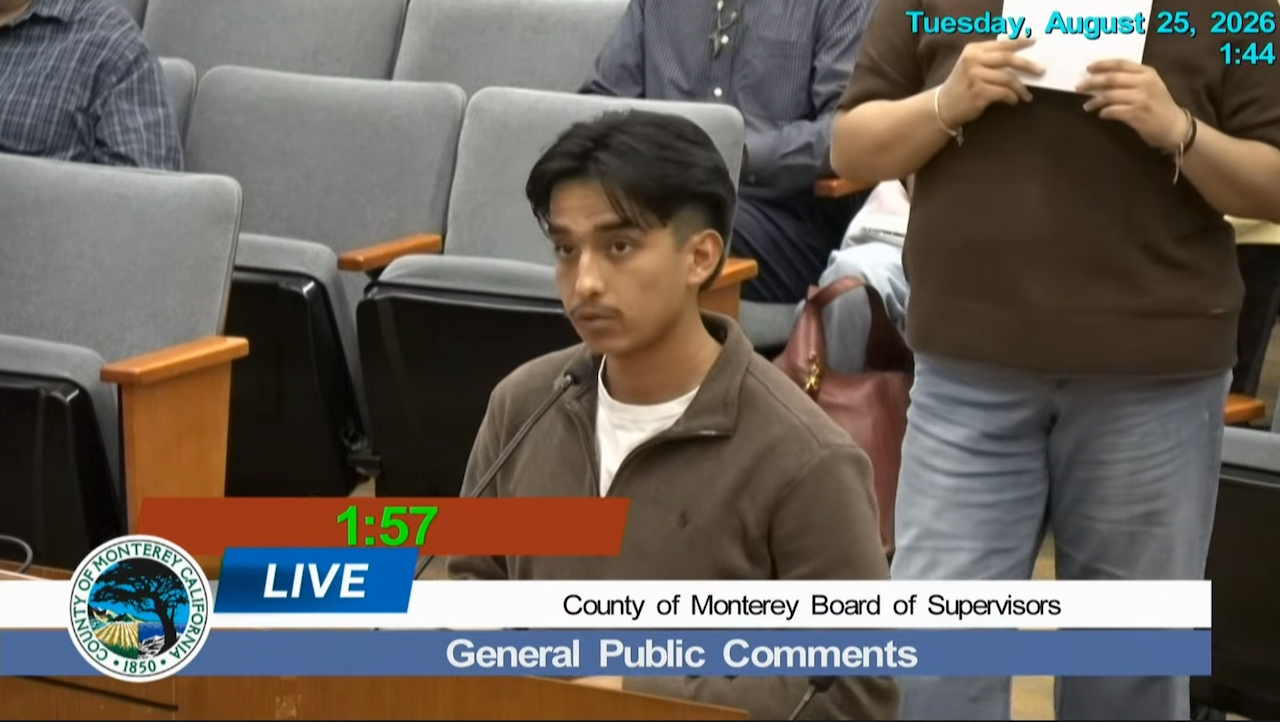
Thirty-four residents lined up to state their opposition during the early afternoon meeting. No speakers supported the proposal. They identified themselves as residents of Carmel, Pacific Grove, Marina, Salinas, Seaside and Monterey County. Students from California State University, Monterey Bay and the University of California, Santa Cruz addressed the board. Members of the Salinas branch of the League of United Latin American Citizens spoke, as did the policy and program manager for MILPA and a volunteer with the American Civil Liberties Union.
“Public safety is important, but there has to be a line between investigating crime and creating a permanent surveillance infrastructure that watches everyone,” said Felipe López, a member of the League of United Latin American Citizens.
Many of the speakers were young and spoke eloquently from prepared comments that were limited to two minutes.
“We the people should not have to sit here and convince our government and city officials that they do not need a searchable, live-streaming AI database of our exact daily movement,” said a woman who identified herself as Naomi. “Protecting both safety and individual liberty is not an either-or choice.”
In-person public comments lasted roughly an hour.
“I have to take a moment to practice some humility and say I don’t fully understand Flock cameras, I don’t fully understand AI, I don’t fully understand what data breaches even are and I’m guessing that’s true for a lot of policy-makers,” said a resident who identified herself as Riley. “I would much rather see a fraction of the $2.8 million going into consulting with experts, consulting with organizations so that policy-makers, people who decide where our money goes, are investing in completely understanding the technology they’re about to fund.”
Multiple speakers warned the board that voters would remember their decision on surveillance cameras.
“The community is speaking to you — they’re letting you know right now: We don’t approve of this,” said a speaker who didn’t state his name.
One of the last in-person speakers commented that Flock is uniquely unifying in public opposition.
“This is unpopular with everyone across the aisle — Republican, Democrat, Anarchist, whatever you call yourself,” said a speaker who did not mention her name but said she was from Salinas’ Eastside.
An additional hour was devoted to residents who called in via Zoom to voice their opposition. Supervisor Root Askew said over 50 people spoke during public comment.
Enlarge
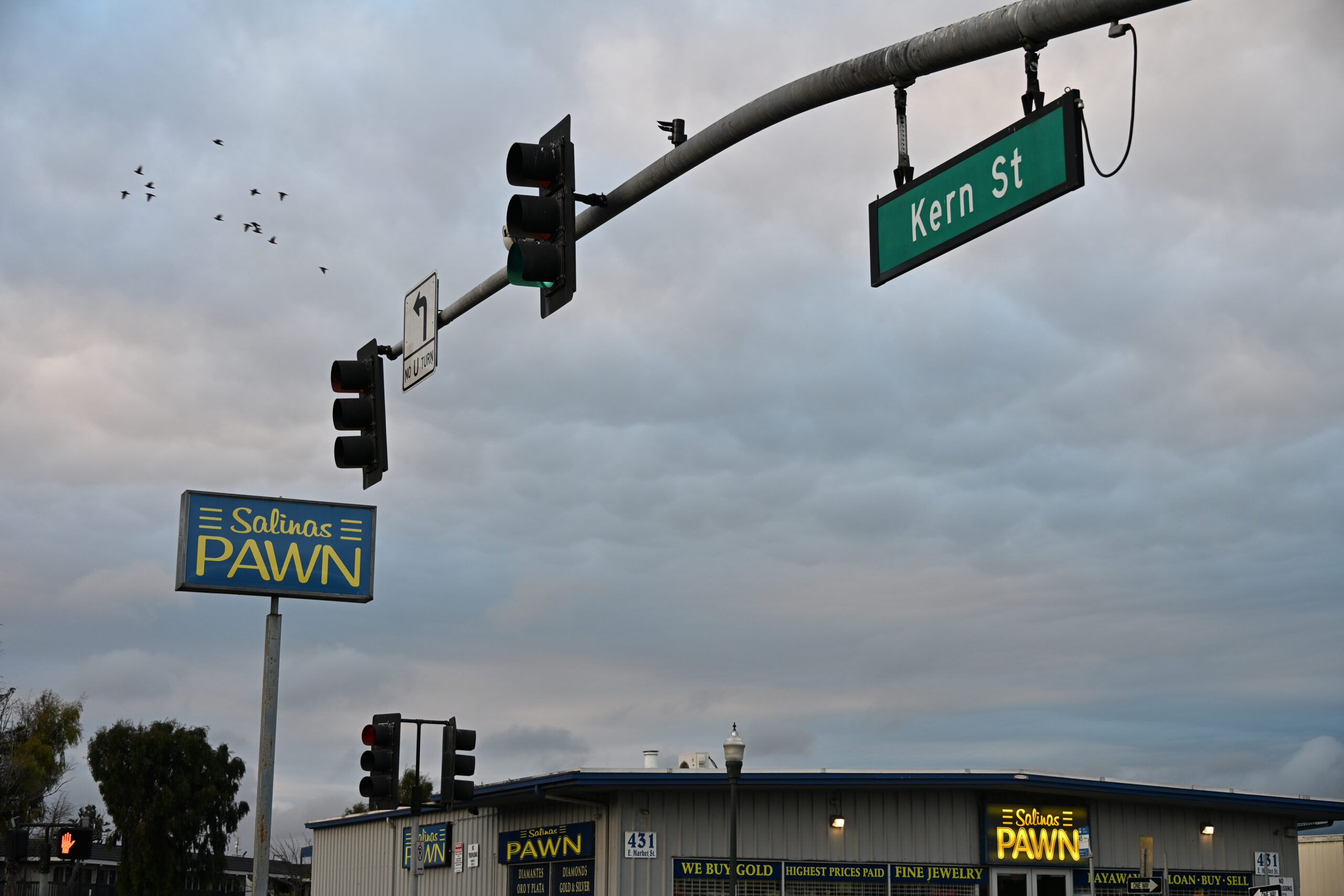
Nieto had previously prepared a report for the presentation urging the board to approve the proposal, which would have cost nothing this year and $309,000 annually for the next nine years, according to a quote and order prepared by Flock Safety.
The county’s auditor-controller had reviewed the contract and did not agree to the non-standard payment provisions, according to Nieto’s report.
In an email, Nieto said she understands the concerns raised about law enforcement technology and that they deserve thoughtful answers.
“This is an investigative tool, not continuous surveillance of individuals. It can give investigators a critical lead in a violent crime, help locate a missing or endangered person, identify a stolen vehicle, or help solve a hit-and-run when there may otherwise be very little evidence to follow,” wrote Nieto. “My responsibility is to protect this community while respecting the privacy and constitutional rights of the people we serve. Those responsibilities are not mutually exclusive. We should put strong safeguards around the technology and hold people accountable for how it is used. But I don’t believe the answer is to deny our deputies and investigators a modern investigative tool that can help us find offenders, protect victims and, in some cases, bring someone home safely.”
Images captured by Flock LPR are uploaded to a cloud server and kept for up to 30 days, though the company recently announced data storage will be limited to seven days.
Instances of unauthorized data access, notably between local and federal agencies, have raised concerns and questions about mass surveillance and civil liberties. Multiple research and reporting organizations have found local and state law enforcement have assisted ICE by allowing immigration agents access to Flock databases.
A California Highway Patrol review of 845 LPR systems, including Oakland’s, found searches labeled “ICE case,” according to the San Francisco Standard. Major agencies like the Los Angeles Police Department and San Diego and Orange county sheriff’s offices searched Flock at the request of ICE, according to records uncovered by Oakland Privacy, an anti-surveillance organization, and published by CalMatters.
Local police have used the surveillance tool to stalk women, according to a report by the Institute for Justice, a nonprofit public interest law firm. At least 50 police officers used the surveillance tool inappropriately, according to the Washington Post.
Many of those organizations and publications, including Voices, have called for local and state agencies to end their contracts with Flock.
In response, the CEO of Flock Safety recently announced changes to its system.
The county supervisors are another example of elected officials grappling with the public’s concern over protecting civil liberties clashing with law enforcement support of the technology.
Mountain View’s city council canceled its contract with Flock Safety earlier this year. In late January, the city revealed that out-of-state agencies had accessed the city’s Flock database without authorization or approval. The city’s manager and police chief recommended that the city end the contract. The chief ordered the city’s 30 cameras shut off in early February.
The Santa Clara County Board of Supervisors and the city of Los Altos have also ended contracts with Flock over concerns about data sharing.
The city of San Jose maintains a contract with Flock though it has passed strict security requirements for the company.
In many places, the public has not waited for governments to end contracts with Flock. Cameras have been intentionally damaged or destroyed in at least 33 states, CNN recently reported. There has been at least one local incident.
A Pismo Beach man — 40-year-old Marcus Bee — was arrested for allegedly damaging at least three Flock cameras in Lockwood and Bradley on July 28, 2026. Sheriff’s deputies released photos of a black pickup truck driving over a Flock camera pole.
The vote and contract discussion has been tentatively rescheduled for Sept. 22, Alejo said.
Enlarge

Have something to say about this story? Send us a letter.
SUPPORT NONPROFIT JOURNALISM 
GET OUR FREE NEWSLETTER