FEATURES |
By Isaac González Díaz
The No on Measure H campaign emerged victorious as Salinas voters rejected the measure by a decisive margin, with roughly 62.51% voting against it. The result preserves the Rent Stabilization Ordinance and Tenant Protections first approved in 2024 and implemented on Jan. 1, 2025.
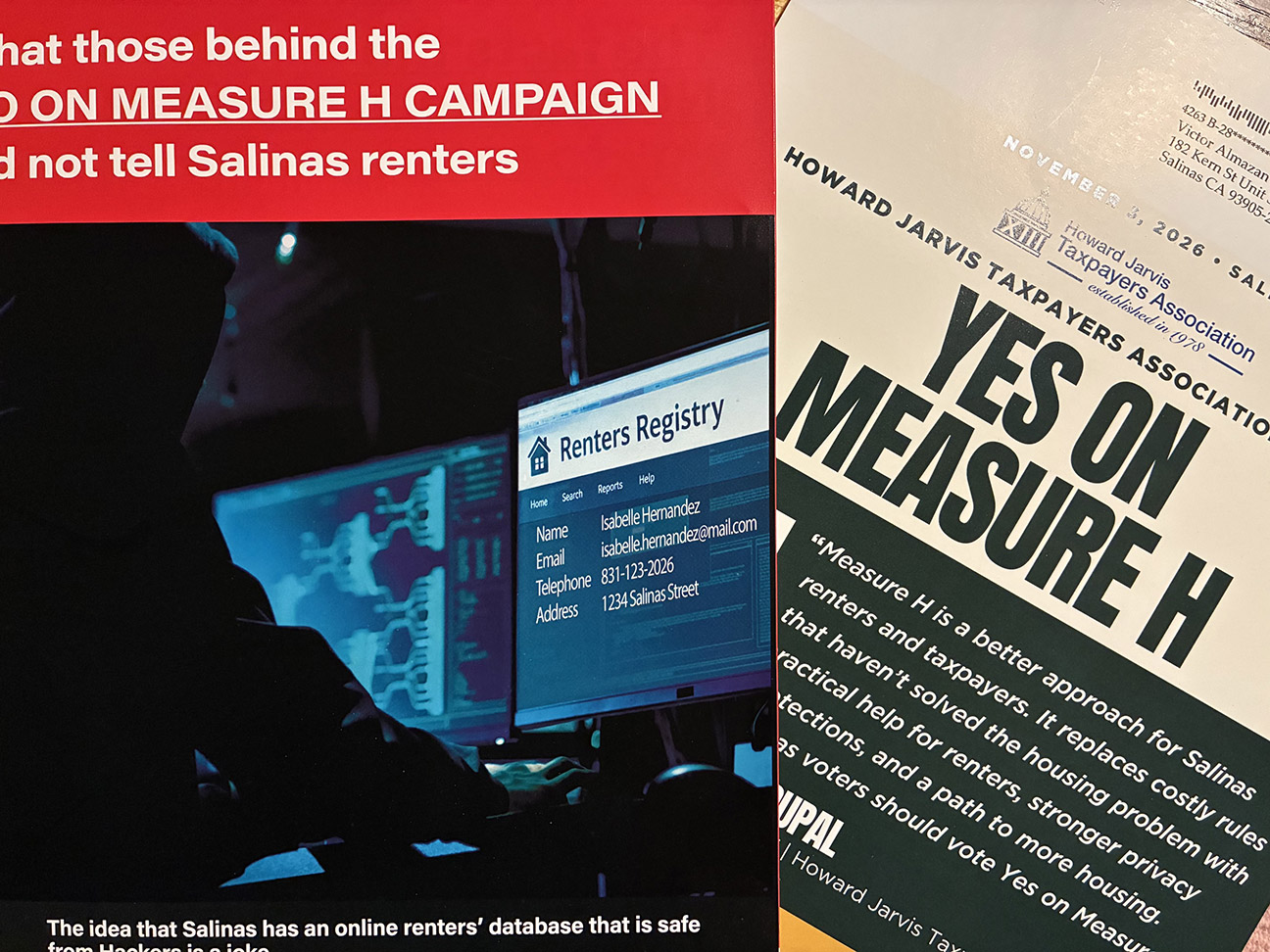
Salinas voters defeated a campaign that was seeking to overturn the ordinances. The Yes on H effort raised over $700,000, mostly from large apartment operators like UDR Inc., a Colorado-based real estate trust company. UDR was the largest contributor, donating at least $273,975.
With the vote, Salinas voters preserved limits on rent increases, protections against unfair evictions and tenant harassment, and a rental registry intended to improve landlord accountability. The result also reflected a broader community debate over affordable housing and the role of local government to protect working-class families.
“For the community, it means a victory for tenant rights,” said Anthony Rocha, community organizer and former Salinas councilmember. “A victory for working people across the city who want to make ends meet, make an honest living and work hard.”
Rocha was one of four council members who pushed for these tenant protections in 2024, when he still represented District 6. He was defeated that year by Aurelio Salazar Jr., one of the first councilmembers to push for the repeal. When Protect Salinas Renters gathered 10,000 signatures, Salazar voted to put tenants’ rights to the test by putting Measure H on the ballot.
The city of Salinas rent stabilization ordinances and tenant protections limit annual rent increases to 2.75%. They also provide local protection against evictions.
“If you’re going to evict someone, you have to meet a set of criteria if they are not at fault,” said Rocha.
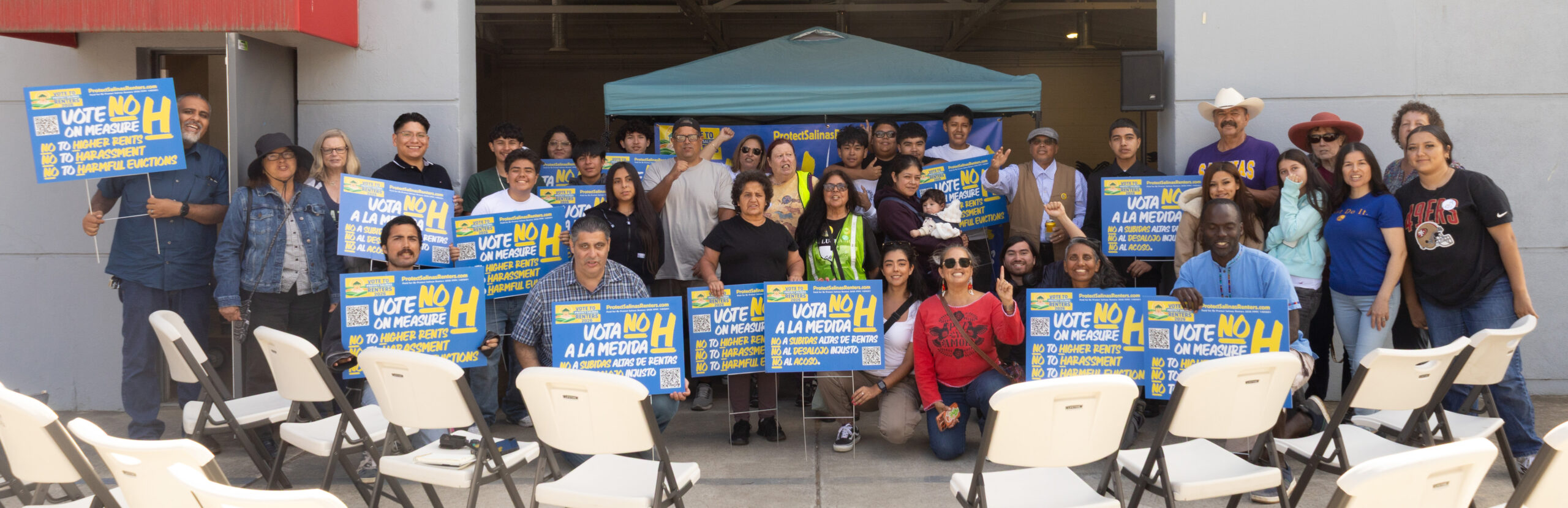
Representatives for Protect Salinas Renters, a grassroots community organization behind the No on Measure H campaign, said the biggest reason voters rejected Measure H was the economic environment, arguing that the possibility of saving $100 to $150 each month made the measure important to Salinas residents.
Enlarge
Dr. John Silva, a retired physician, said people are aware where their dollars are going right now.
“I think Measure H was really a kitchen-table topic,” said Dr. Silva. “That is the kind of thing that Mom struggles with when she’s looking at all the bills she has to pay.”
With the rising costs of rent, gas, groceries, child care and medical care, families are paying closer attention to how far their money goes. The financial pressure extends beyond renters to the workers and families who keep the Salinas economy running, Silva said.
Rosa González, co-lead of the No on Measure H communications campaign, said many homeowners understood that rents kept rising, affecting farmworkers, teachers and service workers.
“Renters and working families are more likely to shop locally,” said González. “But when they’re spending 50, 60, 70, up to 90-100% of their income on rent, they don’t have that extra money to spend in our local economy.”
For González, preserving rent protections was not only a tenant issue but a community-wide concern.
One of the biggest challenges the No on Measure H group faced was a lack of funds for an extensive mail campaign, González said. Instead, the strategy they adopted was to engage with residents through phone calls, door knocking and social media.
“We stayed true to that throughout the campaign,” she said. “But we did towards the end realize, ‘Oh, gosh! We’re not going to be able to knock on all these doors. We need to also send text messages.’”
After the victory, González said the ordinances are a first step toward addressing the housing crisis in Salinas, but it doesn’t fully resolve the issue.
Enlarge
Chris Benner, Ph.D. and professor in sociology at UC Santa Cruz, said one reason Salinas has a housing crisis is because the city does not produce enough housing to meet the demand.
“The easiest way to think about it is that we have depended on a market-based response to our housing situation,” he said, adding that the housing market does not work for a variety of reasons. One is that Salinas has only a fixed amount of space to build.
“You can’t create more land, period,” said Benner. “So the only way you can get more housing in the places where people need it in a market-based system is to go denser.”
Benner recognizes that housing became a polarizing issue in Salinas because there is money involved, that the literature in favor of Measure H misrepresented what rent stabilization means, based on a kind of fundamental lesson in economics. But there is no relationship between existing rent control measures and production of new homes.
“The two examples the textbooks frequently use are minimum wage and rent stabilization,” said Benner. “If you keep rent stabilized, the builders and landowners will have less incentive to build new houses, and so less housing will be built.”
With the preservation of rent control, Benner recommends implementing the ordinances and finding solutions to expand the creation of affordable housing. Additionally, he encourages Salinas residents to get involved in what’s happening in the community.
“Paying attention to city council decisions,” said Benner. “Getting engaged in that process that’s often invisible but has some really important impacts for people’s lives.”
Enlarge


Have something to say about this story? Send us a letter.
SUPPORT NONPROFIT JOURNALISM 
GET OUR FREE NEWSLETTER