Featured image | A photo from a Department of Homeland Security post on Instagram.
FEATURED |
By George B. Sánchez-Tello
During the summer, Watsonville Law Center Executive Director Adriana Melgoza heard from the family of someone detained by immigration agents. It had been two weeks since the person was taken but the Monterey County Solidarity Network, a volunteer human-rights organization and rapid response group she also works with, had no record of the abduction.
“That’s when I realized there’s more happening than what we’re seeing,” Melgoza said.
Nationwide, Immigration Customs Enforcement, or ICE, nearly doubled arrests in July 2026 compared to July 2025; 41,850 from 24,222, according to the Deportation Data Project, a collaboration between researchers at University of California, Los Angeles and University of California, Berkeley. One Chicago-based organization has called the quiet escalation in detentions a “shadow surge.” Arrests for a three-month period spanning May to July for the San Francisco region, which includes Monterey County, jumped from 1,556 in 2025 to 2,495 in 2026: an increase of 62 percent.
Amidst a new public surge that coincides with the end of the harvest season’s peak and mid-term elections next month, immigration advocates, legal advisors and now the general public are witnessing new tactics to detain and deport more people: surveillance and targeted arrests of those whose humanitarian protection has ended, moving detainees to stymie legal aid, and transferring private prisons to the federal government to bypass state inspection.
“In both June and July, ICE made more arrests than in any previous month in the second Trump administration, while refraining from high-profile, militarized operations in coordination with CBP of the kind that it conducted in 2025 and early 2026,” according to a summary of the Deportation Data Project’s latest report.
The quieter approach is in line with Secretary of Homeland Security Markwayne Mullin, who vowed to keep ICE operations out of the news headlines during his confirmation hearing in the early spring.
The Department of Homeland Security, which oversees ICE, separates California into three areas of responsibility. Monterey County falls into the San Francisco region, which spans 15 counties as well as Hawaii and Guam.
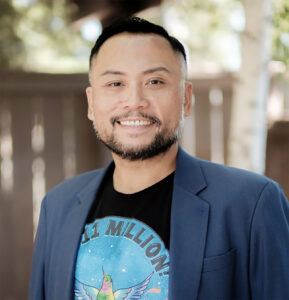
Huy Tran
Locally, Santa Clara County has seen the most detentions of the nine Bay Area counties, explained Huy Tran, executive director of SIREN, which is also on the Steering Committee of the Santa Clara County Rapid Response Network, a county-wide collaborative of nonprofit agencies and volunteers that coordinates emergency response to community members impacted by immigration enforcement. Those were largely targeted arrests — people with removal orders — said Tran, as well as collateral arrests, a term referring to other undocumented people caught during the targeted arrest.
“Instead of the big flashy raids happening under Kristi Noem, Mullin seemed to be focused on operations people weren’t going to pay attention to and the operations that would minimize risk to agents in a public setting,” Tran said.
Across California, legal observers and rapid responders have reported what seemed like surveilled immigrants and neighborhoods, with quick detentions happening in the early morning, often while people were on their way to work.
“It seems like they follow whoever they want to detain or they’re waiting for people to leave their home,” Melgoza said. “Before they get in their car, that’s when they detain them. They try to ‘box’ them so they can’t go anywhere. And they’re outside of their car, so they don’t have to take them out.”
A group of agricultural workers in a large van were detained in the early morning while traveling from Selma to work in Bakersfield in early October. Melgoza said buses carrying workers around the Salinas Valley have not been targeted, but individual drivers have. Small farms in Monterey County have reached out to the Monterey County Solidarity Network for information to ease their employees’ fears.
The rise in targeted arrests highlights changes in immigration and humanitarian policy, including the end of humanitarian status and protection of people from countries in conflict, economic collapse or violence. That includes refugees from Afghanistan, Cameroon, Honduras, Myanmar, Nepal, Nicaragua, South Sudan, Syria, Yemen, Ethiopia and Somalia, according to PEW research. Recently, refugees from Venezuela saw their Temporary Protected Status revoked in October and Haitians and Syrians lost their protected status in July.
“When folks are being publicly detained in mass groups — ICE is present in school parking lots, ICE is detaining in market parking lots — that is a very public and fear mongering approach and that is intentional.” Sukaina Hussain, California Immigrant Policy Center
In Monterey County, legal observers and rapid response volunteers have noticed a trend of immigration agents focusing on people who were not priorities for deportation in the past,even if they had an order for removal or filed applications with immigration, Melgoza said.
Under the Biden and Obama administrations, people convicted of violent crime were priorities for deportation. That has changed in both Trump administrations. Approximately 70% of current immigrant detainees have no criminal conviction, according to TRAC, an independent research organization.
***
The lack of large detention centers in Northern California has likely lessened enforcement in the region, aid groups have told Voices, with most detainees in Northern California sent by bus or plane to detention centers elsewhere. In Southern and Central California, where private prisons have become immigration detention centers, civil rights groups have noticed another disturbing trend: Those released from detention facilities are from other states like Arizona, Texas and Florida.
“This is a vicious tactic to complicate the ability to track and support loved ones in detention,” said Sukaina Hussain, deputy executive director for the California Immigrant Policy Center. “This expedites the process to deport.”
Similarly, Monterey County detainees are getting sent to centers in Texas, Melgoza said.
“ICE is not working and thinking and strategizing as a country or an area. They are strategizing to separate our community in general. We need to stop thinking about it regionally.” Adriana Melgoza, Watsonville Law Center
Over the summer, private prison companies Geo Group and CoreCivic announced the sale of their detention centers in Adelanto, California City and San Diego to the federal government. The sale echoed a leaked memo entitled the “ICE Detention Reengineering Initiative” that called for the purchase of additional detention and processing centers. County property records reveal the federal government paid more than the assessed value of the sites, according to CalMatters. The same report raised concerns that the prison sales to the federal government will slow health inspections required of private prisons under California law.
In Fresno, organizers have seen a rise in detentions stemming from traffic stops and more public raids, Hussain said. The uptick is particularly sinister, she said, because it follows the end of peak harvest season.
“Now, what we’re seeing is a very visible, chaotic, loud surge,” Hussain said. “We know the tactic is meant to cause fear. When folks are being publicly detained in mass groups — ICE is present in school parking lots, ICE is detaining in market parking lots — that is a very public and fear mongering approach and that is intentional.”
But the surge in detentions has also led to a rise in volunteer enrollment in rapid response groups and training for legal observers, Hussain said.
“Folks are excited to figure out what their contribution can be in this moment,” she added.
Hussain, Tran and Melgoza are part of organizations that communicate regularly to share information and experience from different regions of California. Melgoza said that’s important, because immigration enforcement doesn’t stop at county or city boundaries.
“ICE is not working and thinking and strategizing as a country or an area. They are strategizing to separate our community in general. We need to stop thinking about it regionally,” Melgoza said. “Our community does not believe in imaginary boundaries; they will work where they need to. We need to strategize to fight back wherever we are, inform and support each other.”

Have something to say about this story? Send us a letter.
SUPPORT NONPROFIT JOURNALISM 
GET OUR FREE NEWSLETTER