FEATURED |
Article and photos by Isaac González-Díaz

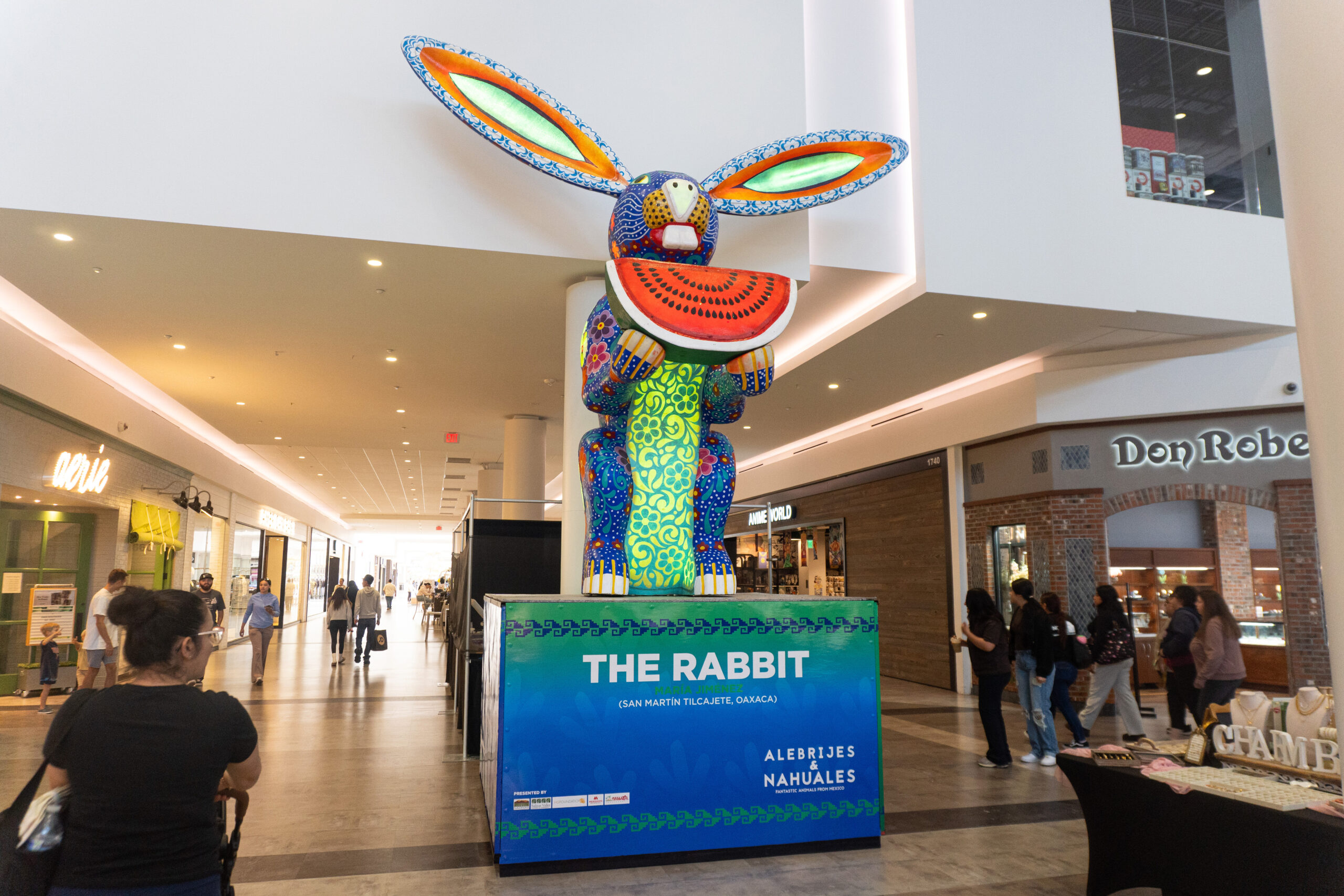
Eight 20-foot-tall “alebrije” sculptures arrived in Salinas on July 31, as part of the international exhibit “Alebrijes and Nahuales: Fantastic Animals from Mexico” to different places across the city, including Star Market Plaza, Northridge Mall and 1 Main Street. A small display also opened at 1 Main Street with a ribbon-cutting ceremony on Aug. 7.
While sharing credits in this exhibit, alebrijes should not be confused with nahuales. Alebrijes are fantastic animals often carved on wood and painted in bright colors. Nahuales are spiritual guides, and holy people in pre-conquest America were said to have the ability to transform into animals that were then called nahuales.
Enlarge
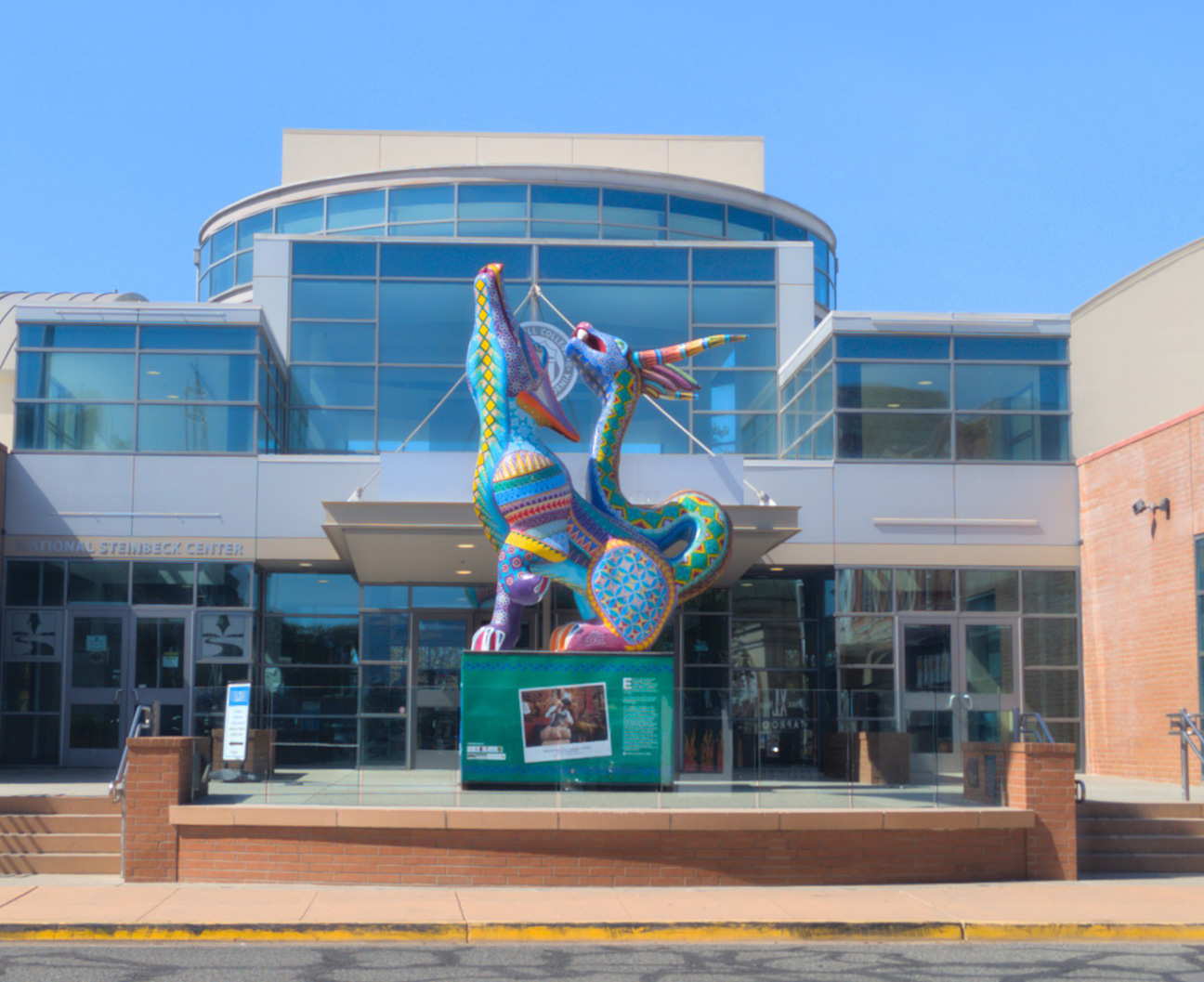
The exhibition showcases the diverse and colorful craftsmanship of traditional artists from Oaxaca and Mexico City. It opened at the Lille3000 festival in Lille, France, in 2019 and has since toured in cities across France and the United States. The show arrived in Salinas after a city delegation attended a Día de los Muertos celebrations in Guanajuato, Salinas’ Sister City, in October 2025.
Juan-Carlos “JC” González, artistic director of the Urban Arts Collaborative in Salinas and a multidisciplinary artist, was part of the delegation that traveled to Guanajuato. As an artist, González has his own definition of what alebrijes and nahuales mean.
“The nahuales and alebrijes celebrate two different identities, the alebrijes are more magical, more intricate, you know the colors, the forms,” said JC. “The nahuales are more animal-like also with vibrant colors but they’re both different.”
“Identity is a strong, strong element of understanding cultural production.” Marta Turok, Mexican anthropologist and executive director of the Mexican Cultural Institute in Washington, D.C.
The creation of alebrijes is widely attributed to Pedro Linares, a Mexican artist from La Merced neighborhood in Mexico City in the 1930s, using papier-mâché. However, some states like Oaxaca created their own versions, where Manuel Jiménez Ramirez started carving wooden alebrijes in his workshop in San Antonio Arrazola, Oaxaca. After his death in 2005, his two sons continued his carving tradition.
While alebrijes are purely an artistic endeavor, the existence of nahuales stems from spiritual beliefs that ascribe duality to human beings. In ancient cultures before the European invasion, each person was assigned a nahual — an animal — as guide and protector.
Marta Turok, Mexican anthropologist and executive director of the Mexican Cultural Institute in Washington, D.C., said understanding Mexico’s cultural diversity is important when looking at traditional craftsmanship.
“We have 68 recognized ethnic groups, but within the 68 recognized ethnic groups you’ve got dozens of languages and from one community to the other things can be very different,” Turok said at the show’s grand opening press conference. “Identity is a strong, strong element of understanding cultural production.”
While alebrijes are purely an artistic endeavor, the existence of nahuales stems from spiritual beliefs that ascribe duality to human beings. In ancient cultures before the European invasion, each person was assigned a nahual — an animal — as guide and protector.
For José Ortiz, muralist, sculptor, founder of the graphic arts group Hijos del Sol and descendant of a family that comes from Tepehuanes in the Mexican state of Durango, the alebrijes and nahuales represent a strong connection between ourselves, our soul and animals.
“The soul you can recognize in any animal in your life,” Ortiz said. “And simply because you connect with that animal, it’s like you live in an integrated world where there’s not just the human being.”
Angélico Jiménez Hernandez, one of Manuel Jiménez Ramirez’ two sons, was one of the artists and collaborators for the Alebrijes and Nahuales exhibition.
“The Cat,” a 20-foot-tall alebrije which was Manuel’s last statue before his death in 2020, is displayed outside of the Vineyard Church in East Salinas.
Angélico’s oldest son, Roque Jiménez Carrillo, said the intention behind their family art is to mix, more than anything, the body of an animal with the human face.
“Nahualism is part of the prehispanic story of Mexico. People were being discussed with special gifts, basically they were healers, they were shamans,” said Roque. “They had that special gift and for that reason could transform into their protective animal.”
Enlarge
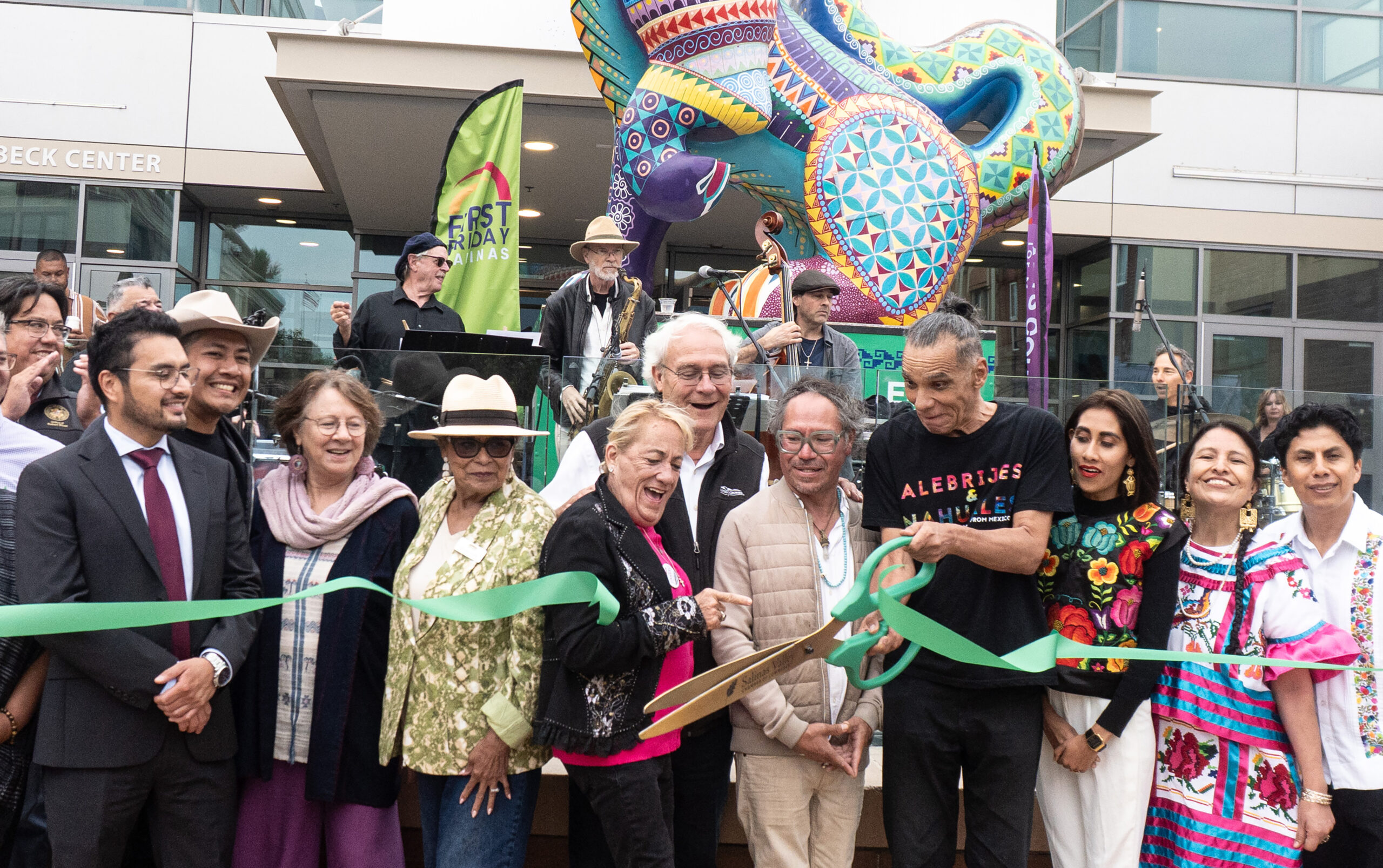
Other invited artists include Efrain Fuentes, a third-generation woodcarver from San Martin Tilcajete, Oaxaca. Alongside with his wife, Silvia Gomez, an artisan who paints and decorates wood carvings. Both crafted “The Coyote,” a 20-foot-tall alebrije, which is displayed at 1 Main Street at Oldtown Salinas — including a smaller version for the display.
“This piece was carved especially for this exposition,” Efraín said. “It’s a piece that was carved from a single piece of wood that has a lot of months of work behind it, so it is very representative for us.”
Silvia says they work primarily in everything that symbolizes Day of the Dead. Because just as life is celebrated, death should be celebrated with the same joy.
“We symbolize lots of colors because the more colorful, the more is the joy,” said Silvia. “The more colorful, the more life and more tradition.”
“We symbolize lots of colors because the more colorful, the more is the joy. The more colorful, the more life and more tradition.” Silvia Gomez, artisan
The display’s impact extends beyond its cultural significance, creating a shared experience for residents across Salinas.
Salinas Mayor Dennis Donohue, who was the head of the delegation that visited Guanajuato, highlights the community’s reaction as one of the most memorable aspects of bringing the alebrijes and nahuales to Salinas.
“What’s been exciting to see is the local response. We knew people would be interested, but it’s exciting to see people moving all around the city,” Donohue said. The exhibition has sparked “a shared conversation throughout the entire city,” Donohue said, adding he’s gratified to see “how much joy it brings people to see the animals.”
“Alebrijes and Nahuales: Fantastic Animals from Mexico” will be on display until Sept. 4, with a closing event from 5-6:30 at 1 Main St., Salinas. Locations throughout Salinas and more information can be found by visiting the Salinas Chamber of Commerce website: www.salinaschamber.com/ALEBRIJES-Y-NAHUALES/
Enlarge

Have something to say about this story? Send us a letter.
SUPPORT NONPROFIT JOURNALISM 
GET OUR FREE NEWSLETTER