FEATURES |
By George B. Sánchez-Tello
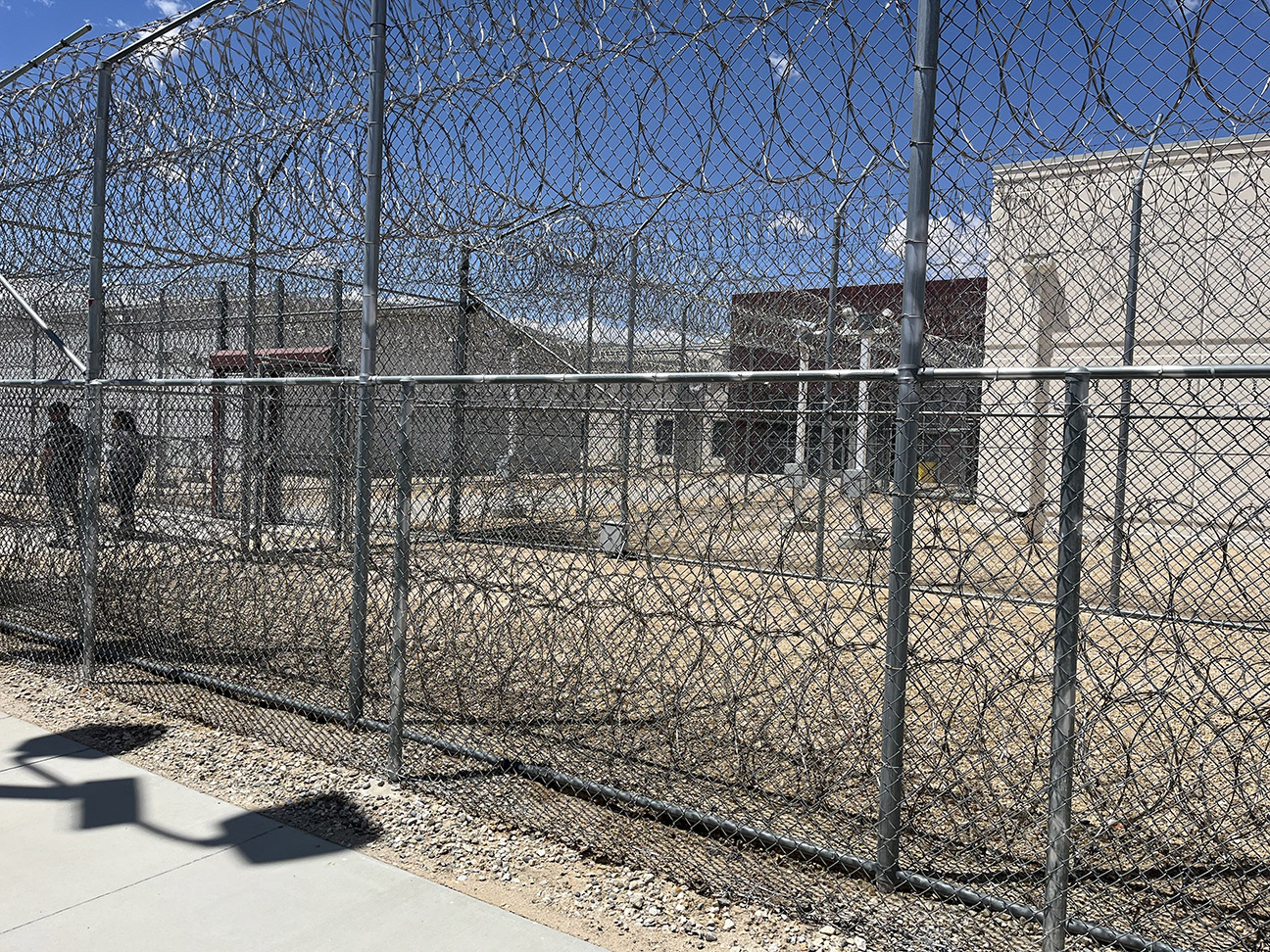
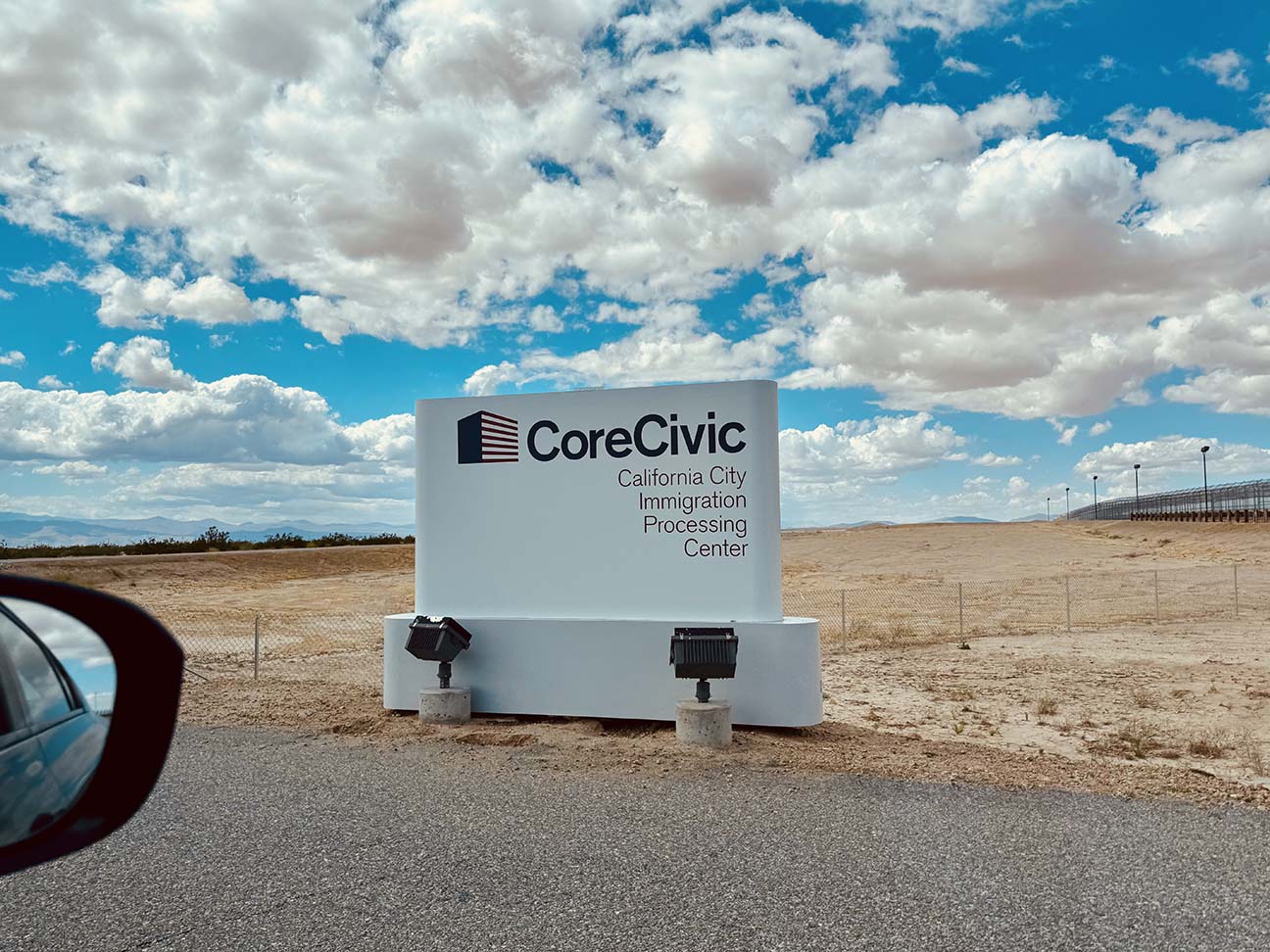
California City Detention Center sits isolated in the Mojave Desert, surrounded by sand, creosote and goldenbush shrubs that can withstand the sun-baked landscape. There are no traffic signals nor lights along the two-lane gravel road that leads to the prison. There are no bus stops or trains to get there. Nearly 100 miles northeast of Los Angeles, 70 miles east of Bakersfield and approximately 280 miles from Salinas, the rolling desert hills sometimes obscure California City Detention Center from the road.
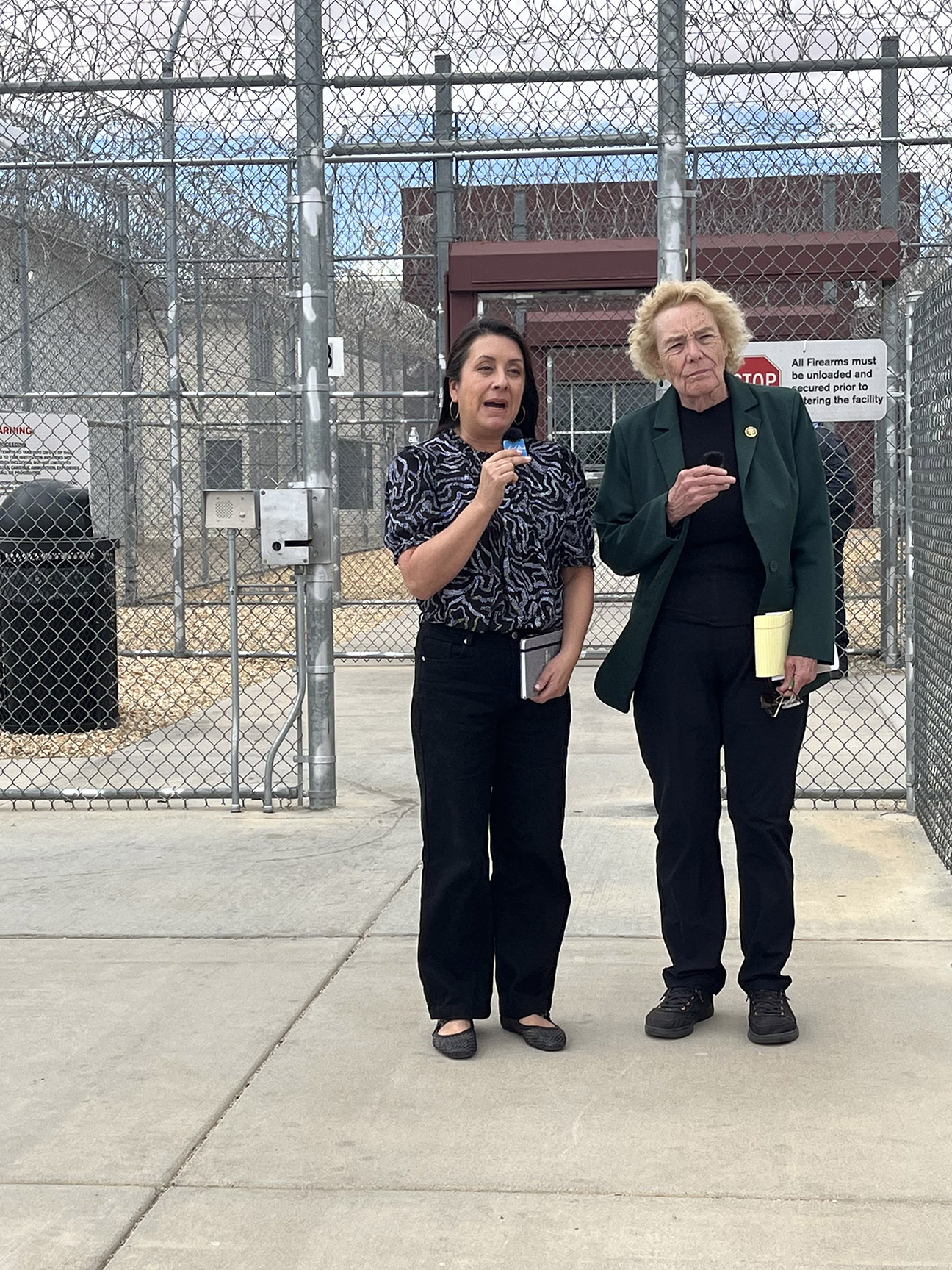
Standing outside the prison after a two-hour tour while the wind whipped, Rep. Zoe Lofgren acknowledged the impact such a solitary prison site can have on detainees, their families and their legal defense teams.
“It’s here,” said Lofgren, who represents much of Monterey County. “It’s hard for lawyers to get here. It’s hard for family to get here.”
Enlarge
The facility began holding immigrant detainees in August 2025, according to the state’s Department of Justice Immigrant Detention in California report published less than two weeks before the congressional visit. The report raised concerns about California City Detention Center.
“The facility opened prematurely and was not ready to accept detainees,” states the executive summary. “Cal City was inadequately staffed, including detention staff and healthcare staff .…”
California City is the largest immigration detention center in California, with the capacity to hold 2,560 people. When the Department of Justice visited the facility last year, 942 people were held there.
This year, on May 27, Lofgren (CA-18), and fellow California Democratic Representatives Kevin Mullin (CA-15), Luz Rivas (CA-29) and George Whitesides (CA-27) arrived unannounced to inspect the detention center.
"ICE is spending a small fortune just moving people around the country for civil infractions.”
Calif. Rep. Zoe Lofgren
The officials had come to personally inspect problems detailed in the state attorney general’s investigation of immigration detention facilities in California. The visit was part of their responsibility to oversee the Department of Homeland Security and Immigration and Customs Enforcement, they explained. They were there to ensure the well-being of detainees, the lawmakers said, and to examine the use of tax funds paid to private prisons to house people ensnared by immigration agents enforcing Trump Administration policies.
There were no protests, vigils or demonstrations outside the center, unlike at other federal detention facilities. At the same time as the visit, Immigration and Customs Enforcement agents and state police were attacking human rights advocates outside Delaney Hall in New Jersey. There, detainees were on a hunger strike to bring attention to their lack of access to lawyers and judges, as well as poor living conditions. In California, media and human rights advocates were outside Adelanto, another immigration detention facility in the Mojave Desert, where detainees were also on a hunger strike. While local, national and international media were at those facilities, Voices of Monterey Bay was the only media present for the California City Detention Center visit.
During the surprise inspection, the only people to enter the prison who were not associated with the visit or detention employees were a pair of elders who had traveled from Los Angeles to see their grandson, who was held in the prison.
Enlarge
Getting in
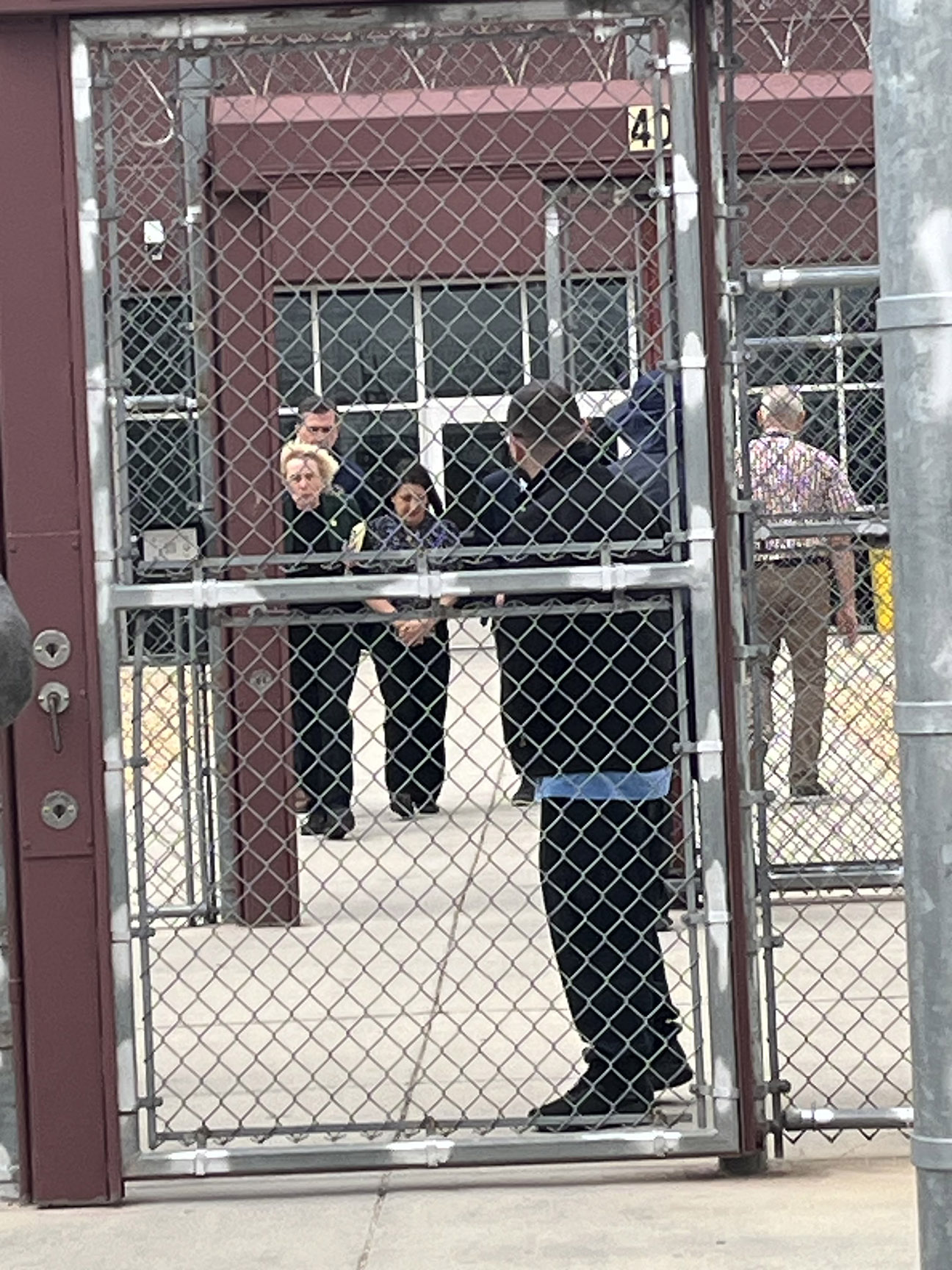
Lofgren had flown in from San José that morning for the visit. The elected officials arrived in a pair of vehicles — a large black SUV and a sedan — shortly after 12:30 p.m. They walked up to the prison’s double gate entrance, identified themselves as members of Congress, and asked to go inside. The group of approximately 12, including staff and media, proceeded through the first entrance, only to wait in a small enclosed patio for the main gate to close and a second gate to open.
After the second gate, the group walked to the glass-doored entrance to the prison, but were not allowed in. Men in light blue nylon polo shirts and grey cargo pants came out to meet the delegation. CoreCivic was embroidered on the polos — the name of the private company that runs California City Detention Center. The guards promptly escorted the group back out and told them to wait outside for the warden.
At least one congressional staff member was present with each representative. Staff had printed copies, as well as digital copies saved to their phones, of the 2024 federal appropriations act, specifically section 527, which plainly states that members of Congress are allowed to inspect detention centers unannounced.
Nonetheless, the members of Congress were made to wait.
Two men in tactical vests, hats and cargo pants arrived and identified themselves as ICE agents. They said members of Congress could enter but the congressional staff, a Voices of Monterey Bay reporter and a photographer were not allowed into the prison, and were told to wait outside the first chainlink fence topped by a triple layer of concertina wire. Prison staff warned those waiting outside to stay vigilant for the Mojave Green snake, a native rattlesnake that rests in the shade of desert scrub and parked cars during the day.
The representatives went inside at around 12:45 p.m., and returned nearly two hours later.
“Detainees reported that Cal City was being run like a prison as opposed to a civil detention facility even though the majority of detainees were classified as low security." State's Department of Justice Immigrant Detention in California report
Waiting in bleak and barren terrain
While they were inside, guards, nurses and CoreCivic staff came and went from the prison, through the various gates and into the parking lot. Staff took breaks in their cars, often looking at cellphones. The drive through the desert back to California City made leaving on breaks impractical.
In addition to CoreCivic staff, staff from TransCor America LLC, a private transportation company acquired by CoreCivic in 1994, entered and exited the facility. TransCor specializes in moving detainees and inmates.
Near the parking lot entrance were a black coach bus and four full-sized school buses that were painted white. On the periphery of the lot, 19 smaller transport vans were parked. All had TransCor America decals. On the outer edges were new trucks and large vehicles with no license plates and new-car paperwork taped in the windows. Otherwise, the lot was filled with employees’ private cars. There were few spaces for visitors.
Enlarge
‘There’s a piece of glass between them and their grandson’
Inside, Warden Christopher Chestnut accompanied the representatives on their two-hour visit and, according to Lofgren, showed them everything they wanted to see, including the area for detainee arrival and processing, called intake.
“I said, ‘How many people come at a time?’ It’s usually 50,” Lofgren said afterward. “I said, ‘Where do they come from?’ They’re bussed in or they’re flown in from other parts of the country.
“ICE is spending a small fortune just moving people around the country for civil infractions.”
Lofgren said she met a Haitian man who told her he did not know why he was still being held. The man should fall under the reinstated temporary protected status, or TPS, she said. His presence raised a systemic question for her.
“What happens if the courts make a decision and it affects people who are detained here?” Lofgren asked. “What’s the response of ICE? It’s really not the staff here; it’s the policy that needs to be set nationwide that is deficient.”
Lofgren recalled seeing grandparents that had come to visit their grandson.
“As we looked at the visitor center, there they were: There’s a piece of glass between them and their grandson and they’re on the phone,” Lofgren said. “That’s not right.”
Lofgren said she was impressed with the equipment used for video conferences between detainees and immigration judges, but the setting raised additional questions and concerns.
“Is their lawyer also hooked in remotely? That’s not very good,” Lofgren said. “I used to do immigration law and as an attorney, that’s not a very good way to practice law. It’s really set up in a way that’s not — It’s not my idea of due process, let me put it that way.”
Lofgren pointed up at the triple concertina wire atop the chain link fence.
“Take a look at this; The barbed wire,” Lofgren said. “These are civil detainees, these are people who haven’t committed a crime. We’re in the middle of nowhere, with a heavy level of security for people who are essentially civil detainees, at taxpayers’ expense.”
Lofgren said she and her colleagues were scheduled to meet the following day with Attorney General Rob Bonta’s staff to discuss their visit and discrepancies between his office’s recent report and what they saw.
“Detainees reported that Cal City was being run like a prison as opposed to a civil detention facility even though the majority of detainees were classified as low security,” the report states. “Detainees spent unnecessarily long periods locked down in their cells for excessive headcounts by facility staff, who did not uniformly have clear written orders describing the duties of their positions, and who reportedly yelled at detainees excessively.”
Enlarge
Growth for private prison firms
There has been significant growth in immigrant detention in California, according to the report — nearly tripling from 2,303 in 2023 to 6,028 in late 2025. The population of women detained has grown from 170 in 2023 to 626 in 2025.
“Notably, many of these individuals had no criminal history and were classified as low security, a significant divergence from our 2023 findings,” states the report.
The report notes that most of the facilities are in remote parts of the state and difficult for both family and attorneys to access.
The seven facilities in the state are all located in Southern California, with no immigrant detention facilities north of the town of McFarland or San Luis Obispo, Kern and San Bernardino counties. All seven facilities are operated by three private prison companies: The GEO Group, Inc., Management & Training Corporation and CoreCivic.
The report doesn’t include a review of the Central Valley Annex in McFarland in Kern County, which began to hold ICE detainees in April 2026. Six people have died in California immigrant detention between September 2025 and March 2026, the report says.
The report notes that most of the facilities are in remote parts of the state and difficult for both family and attorneys to access.
***
On the afternoon of their visit to California City Detention Center, the lawmakers and their staff were gone by 3 p.m.
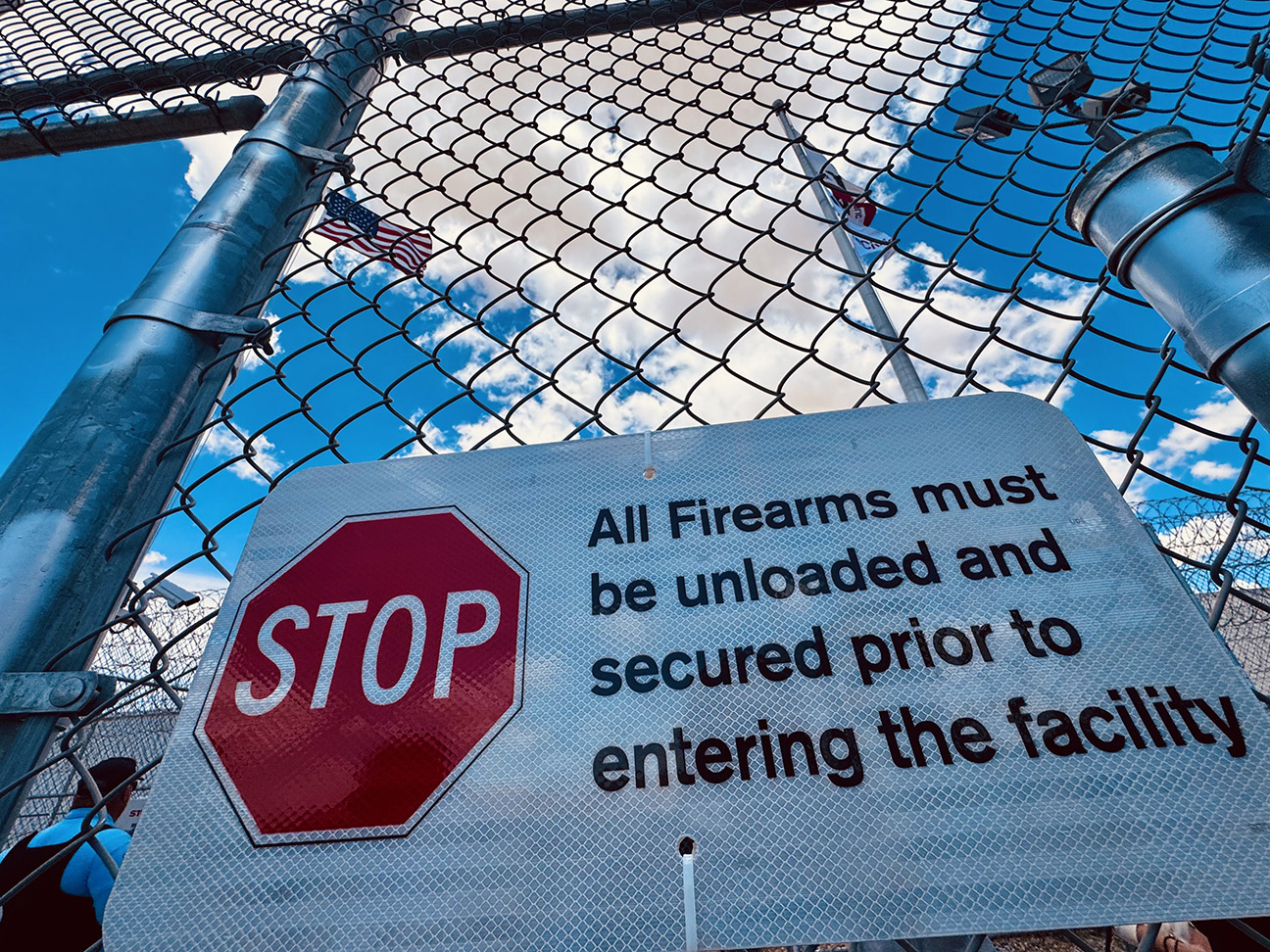
Above the chain link and concertina wire, the flags of the United States of America, the state of California and CoreCivic whipped in the Mojave wind, the sound audible from the desert floor.
Enlarge

Have something to say about this story? Send us a letter.
SUPPORT NONPROFIT JOURNALISM 
GET OUR FREE NEWSLETTER