FEATURED |
By Dennis Taylor
Yvonne Thomas was born in a military hospital on a U.S. Army base called Fort Ord and grew up in a city called Seaside, in a village where she was surrounded by a strong, willful community of role models and surrogate parents. The kind of village that, as the African proverb goes, it takes to raise a child.
Most of her neighbors were Black like her, but she says she barely noticed. “I grew up with diverse ethnicities and cultures, a lot of biracial kids — a true melting pot of people,” Thomas says. “All of my friends were from military families, like me, and we all got along. If somebody was a different race, I didn’t really notice.”
Today — after decades away from the Monterey Bay — she is celebrated by the community that nurtured her.
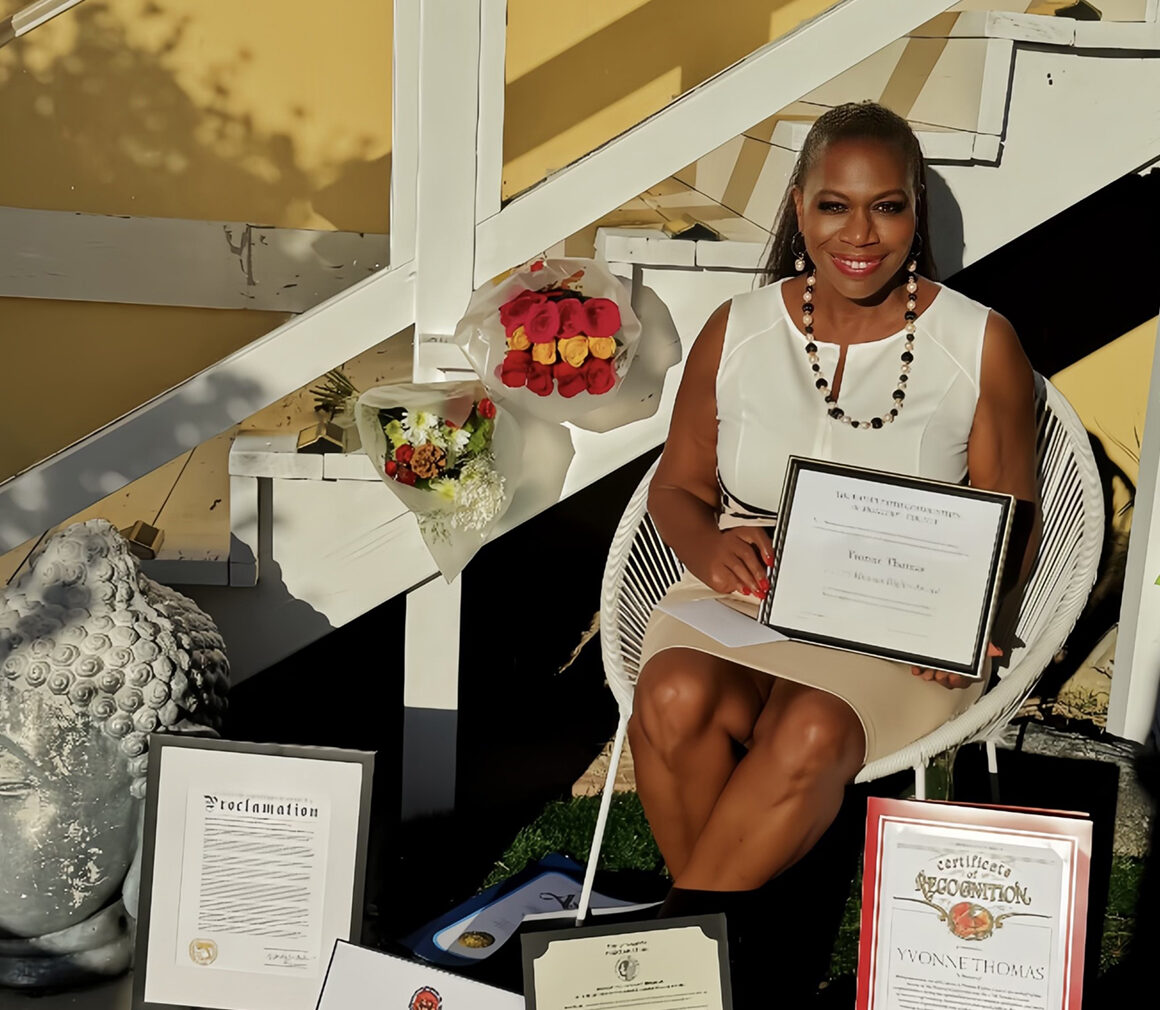
In December, Yvonne, 63, along with local activist JT Mason, was the recipient of a human rights award by the United Nations Monterey Bay Chapter and the Baha’i Faith Communities of Monterey County for “the promotion of equity and justice.”
Thomas was honored for her work with Hospice Giving Foundation, the City of Seaside Community Safety Advisory Commission, The Salvation Army Monterey Corps, United Way of Monterey County, the NAACP Monterey County Branch and the county district attorney’s Multi-Cultural Community Council.
It took a village to raise such a giver — a doting family, immediate and extended. An attentive, caring, close-knit community. Dedicated mentors, role models, and educators. It was Seaside civil rights giant Ruthie Watts (“She’s like my second mom,” Thomas says) who nominated her for the human rights award.
Enlarge
‘Your dad helped me’
The roots of Thomas’ community work in Seaside harken back to her parents.
Thomas’ father, Raymond Thomas Sr., had a globetrotting career in the U.S. Army, and often was deployed for 10-12 months at a time.
She remembers standing on the tarmac with her mother at the Monterey airport when she was 4 or 5. “Seeing him walk down the steps from the airplane, and thinking, ‘Oh, my gosh — that’s Daddy!’” she recalls. Her mother, Madlyn, would nudge her, “Well, go on!” and send Yvonne running to him for a “huge hug.”
After a 24-year career as a command sergeant major at Fort Ord, her father retired in 1973. He found a civilian career in banking, where he left a lasting imprint on his community.
“Dad was one of Seaside’s first Black bankers,” Thomas says. “He arranged loans that allowed a lot of Black families to buy their first homes in the community.”
The family bought their own picturesque home on Mescal Street. With a stunning view of Monterey Bay, it was her mother’s “dream house,” she says.
Like her husband, Madlyn had a penchant for public service. After attending Prairie View A&M, the oldest Historically Black College in Texas, she served in the Women’s Army Corps and later worked as an administrator at Seaside High School and a medical receptionist at Fort Ord’s hospital.
Civil rights activist Helen Rucker, who passed away late last year, resided a few doors down from the Thomas family.
“Sometimes I’d be in the front yard doing my gardening when Mrs. Rucker would come up the street on her walker,” Yvonne recalls. “She’d often stop and tell me how my dad helped her and her husband get the mortgage for their home all those years ago.”
Thomas says Rucker wasn’t the only one who appreciated her father’s help.
“A lot of people say, ‘Oh, your dad helped me, too,’ which brings tears to my eyes, because we never knew anything about that when we were growing up. Our father was very humble.”
Yvonne was a late arrival among the couple’s four siblings — born 10 years after sister Brenda, 12 years after brother Raymond Jr., and 14 after Ethelyn, who the family calls “Peaches.”
“Understand that I enjoyed being the baby for 10 years,” Brenda says. Having a new member of the family was an acquired taste. “I initially felt like I was being pushed out of my spot,” she says. “But as time passed, I fell in love with my ‘new toy,’ and began to carry her around everywhere, like the living doll she was.” She playfully calls Yvonne “the little monster” today.
Following the footsteps of her siblings — particularly Brenda, who studied music for 13 years — Yvonne started piano lessons at age 5. “We don’t perform for anybody anymore, but we can still play,” says Brenda.
Enlarge
From sports reporting to Miss Southern California
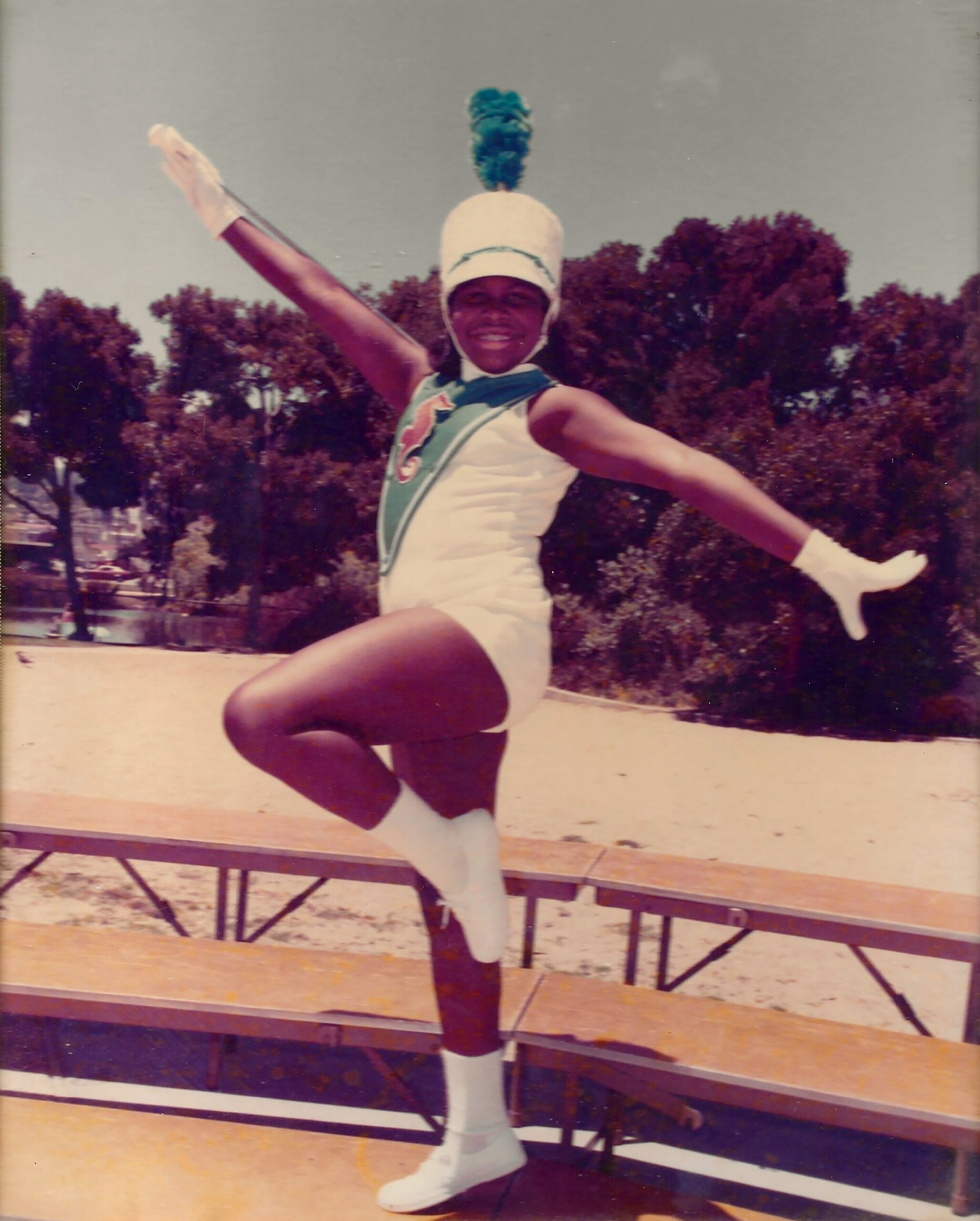
Thomas was a song leader, dancer and a competitive twirler in her high school years, and good enough academically to be accepted at both UCLA and the University of Southern California.
She wanted to major in journalism, but only USC had a program for it at the time. “So that’s where I went. I wanted to go to the big city — I wanted to be in Los Angeles.”
The USC experience in the early 1980s was eye opening. The school felt like “a little fortress,” she says, “a billion-dollar university, a cocoon surrounded by extreme poverty in South-Central Los Angeles. Koreatown over here, Black town over there, Hispanics in East L.A. — extremely segregated, and an extreme culture shock for me.”
She witnessed the Rodney King uprising — “I lived alone then, and was scared to death” — but her college experience turned magical during her sophomore year. The university launched a “sports information” program.
This was her ramp into broadcast journalism.
Thomas worked alongside national media figures in the press box at USC football games, watching future hall of fame tailback Marcus Allen win the Heisman Trophy.
As a senior in 1983, she interned at KCBS TV, working with well-known sports anchor Jim Hill. She also worked that year in the public relations office of the Los Angeles Express of the United States Football League.
Then she was trained by ABC Sports to become a production assistant at the 1984 Summer Olympics.
“The Olympic Village was on the USC campus. I was driving an ABC car, working with some of the top reporters in the world,” says Thomas, who became the first African-American graduate of USC’s Sports Information program.
That year, she earned her degree in Sports Information/Broadcast Journalism.
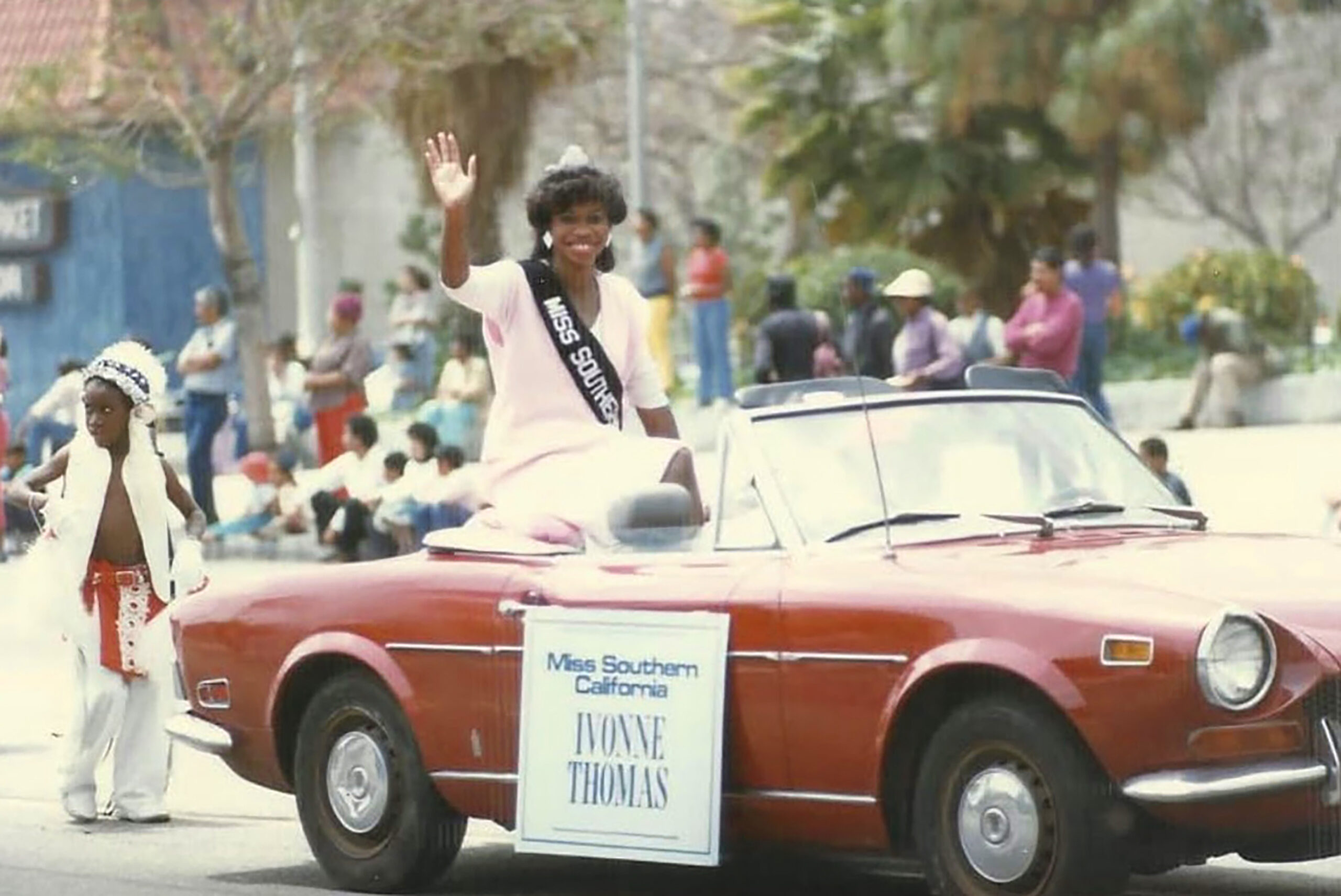
She also won the 1984 Miss West Los Angeles pageant, then went on to capture the Miss Southern California crown. (Fun fact No. 1: She twirled the baton in the talent competition. Fun fact No. 2: The gown she wore at the pageant — designed by Peaches — was displayed for a month at Seaside City Hall.)
Enlarge
No journalism jobs
Then reality set in for Thomas and her fellow college graduates: they discovered that journalism jobs were scarce.
But a recruiter was interested — if she could pass their tests — at the National Captioning Institute. She passed.
“I literally had no idea what closed captioning was at the time,” says Thomas. The work took her to Sunset Gower Studios in the heart of Hollywood — a place with a storied past, founded in 1912.
The sound studios there had once been stages for classic movies (“The Caine Mutiny,” “Funny Girl” and “Mr. Smith Goes to Washington”) as well as legendary TV sitcoms (“Bewitched,” “The Donna Reed Show,” “Father Knows Best” and “I Dream of Jeannie”). Multiple “Three Stooges” shorts were filmed there.
“You drive into that parking lot, look up, and the first thing you see is the Hollywood sign,” she says. But the job wasn’t exactly the stuff of Tinseltown.
“They were hiring editors to sit in a booth, pop a three-quarter-inch videotape into a machine, and transcribe every word being said on a TV program,” she says. “We spent a lot of hours doing that.”
It wasn’t the career of her dreams, but the promotions kept coming. Eventually she was managing the entire facility. She stayed for 13 years, then started her own company in the same line of work. But the career took her ever further from her original passion — sports journalism.
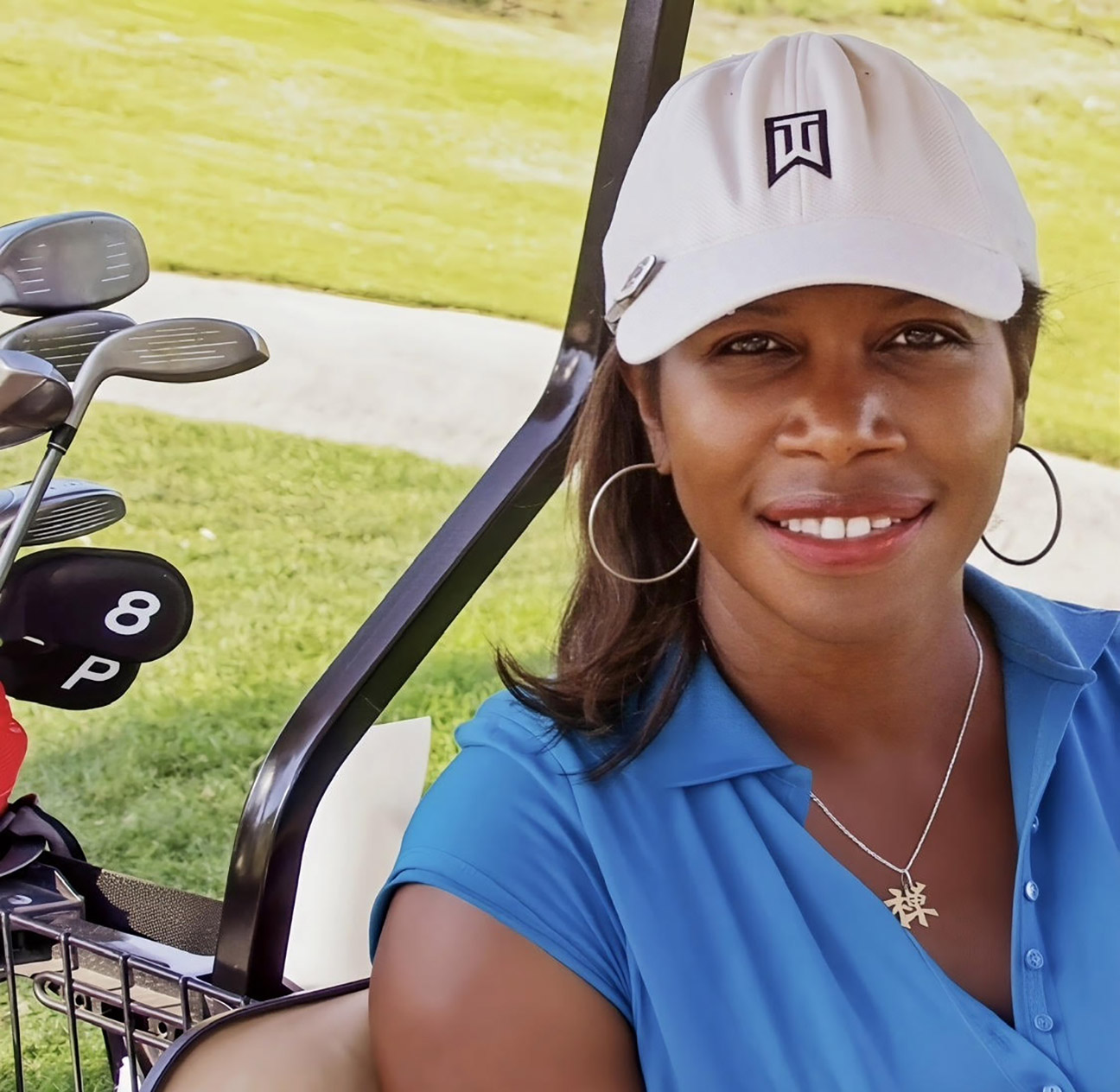
Finally, in 2010, she found a way to scratch that itch. She created an online outlet called ygolfmagazine.com, dedicated to “the 21st Century Woman Golfer.”
“I wanted to create something to introduce more women to the sport,” Thomas says. She did all the writing, organized clinics and shared her passion for a game she played four or five days a week, lowering her own handicap to 13.
Enlarge
Coming home
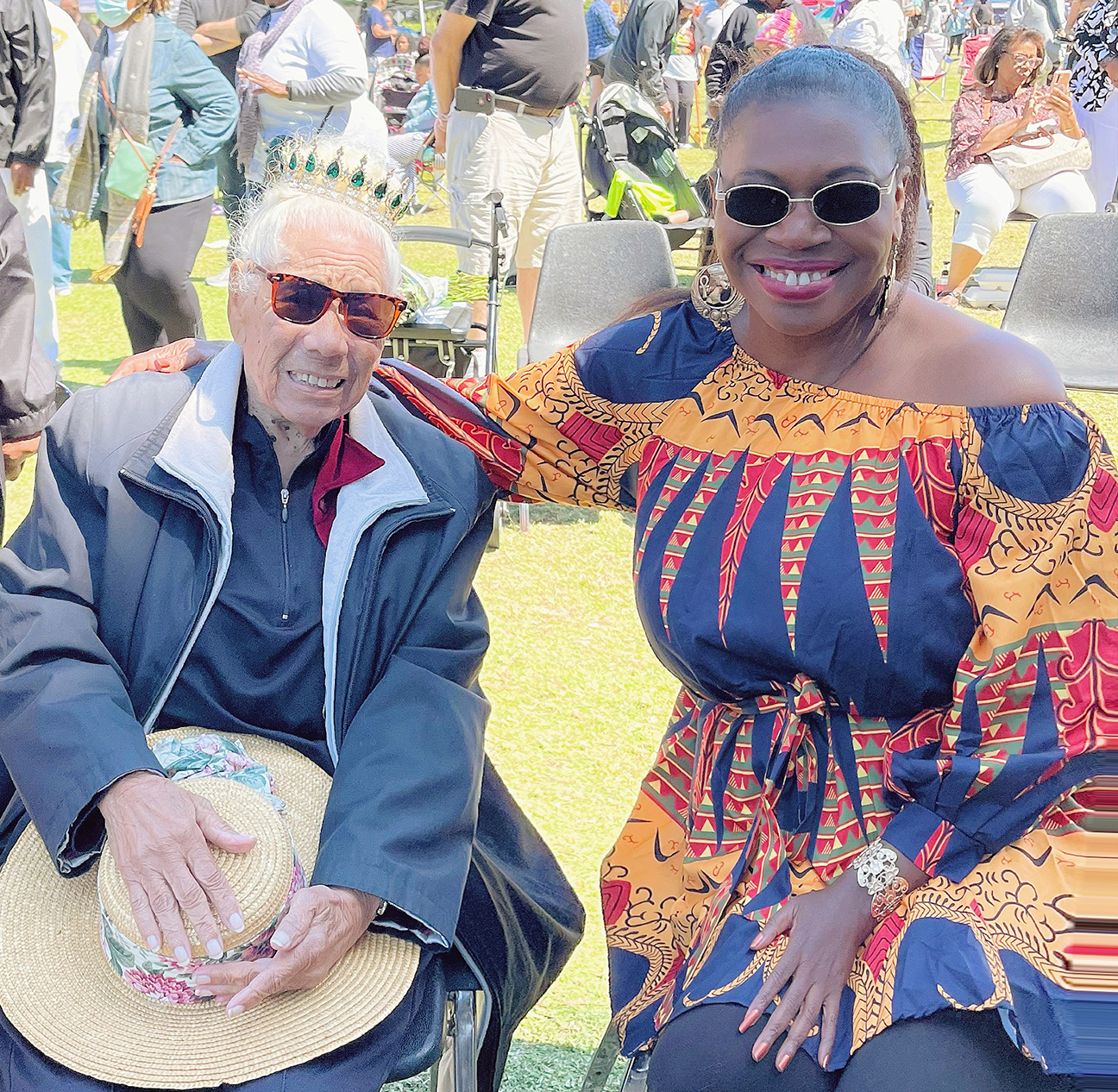
After 30 years in L.A., Thomas grew weary of the crowds and freeway traffic. She missed the Monterey Peninsula.
In 2011, her mother passed away. When her dad got sick in 2013, she came north to help Peaches with his care. He died the next year.
Her return to Seaside — and her childhood home — sparked a fresh romance with things she says she underappreciated as a teen: The breathtaking beauty of the bay. The slower pace of life. The dignity of Seaside’s Black community. The rich history of Fort Ord, now a park and national monument.
The three sisters, Yvonne, Brenda and Peaches, inherited the family home and moved in together.
Thomas got involved with local civic issues, accepted board appointments at nonprofits, raised funds for community groups and served as president of the Monterey County branch of the NAACP. She created a podcast, “Central Coast Conversations,” interviewing community leaders.
Still, one nagging aspiration remains, she says.
She’d like to revisit her journalism roots and write about Fort Ord and the early days of Seaside.
“This community is filled with human-interest stories that very few people know,” she says. “There’s so much history to be told.”
Enlarge

Have something to say about this story? Send us a letter.
SUPPORT NONPROFIT JOURNALISM 
GET OUR FREE NEWSLETTER