YOUNG VOICES |
Article and photos by Max English
If you’ve ever been to a car show and wondered why you see lowriders on display but very few on the road, there’s a reason for that.
Booming in the 1950s, customized vehicles were often a staple of the post-World War II communities in Southern California. Over time, stigma shaped the perception of cruising as disruptive and violent.
In 1958, California implemented anti-lowrider laws, prohibiting individuals from operating cars with suspensions below a certain level. Nineteen eighty-eight marked a constriction of these laws to include cruising in entirety, in many cases enforcing punishment if a car were to pass the same block three times consecutively.
After laws like this were enacted, many clubs had to change their approach to continue to uphold the culture.
“A lot of car shows became a thing because they couldn’t cruise. It was their only option,” said Kristen LaFollette, a Cal State Monterey Bay social studies professor who’s long had an interest in customized cars.
Enlarge
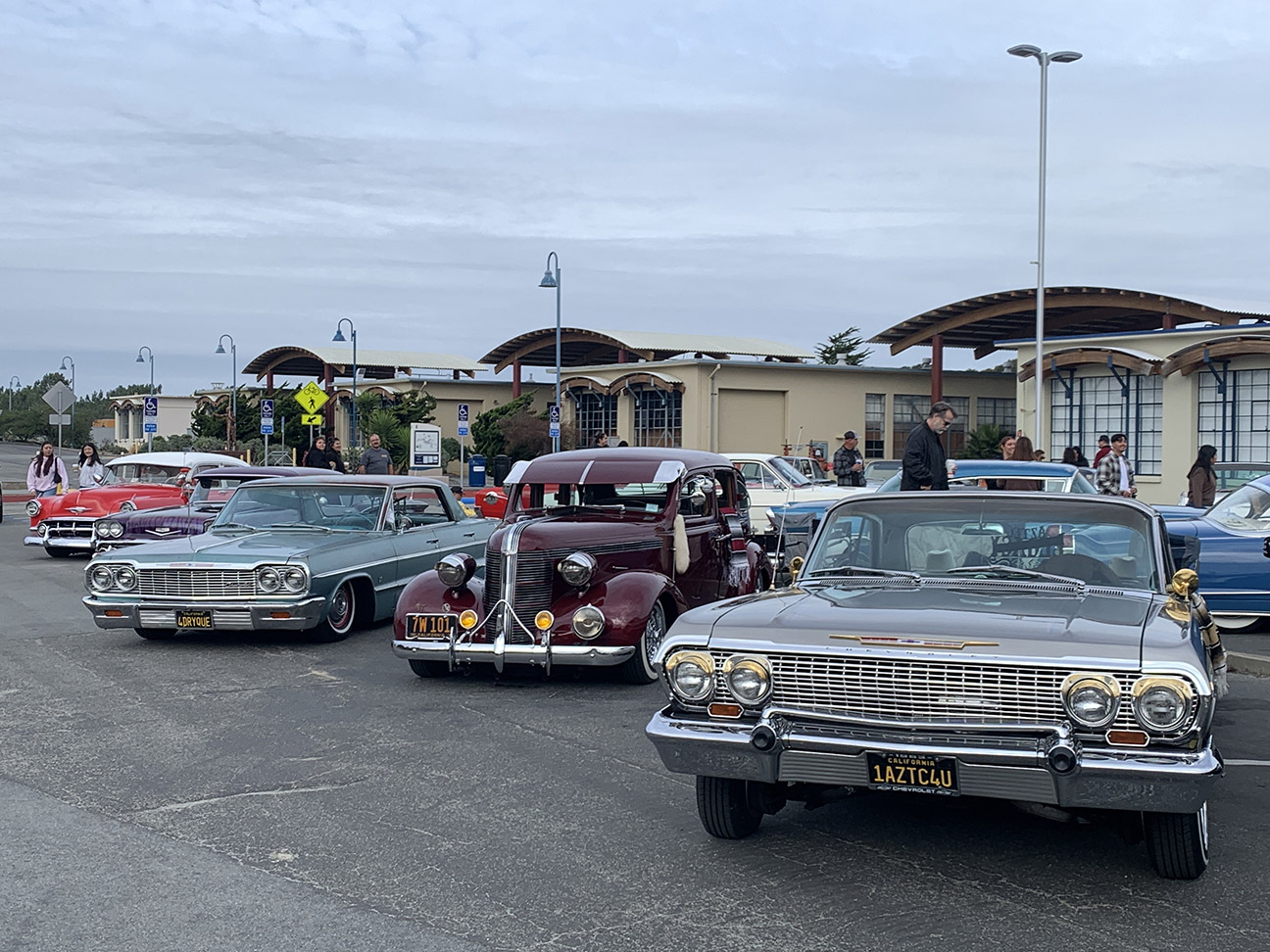
In 2022, California unanimously recognized the cultural significance of cruising and what it meant to the state’s communities. After its recognition, cities began to repeal cruising provisions, opening the possibility for cruising in sectioned areas.
Soon the autonomy of cities’ cruising provisions were recognized, leading to the introduction of AB 436, a state bill that would overturn sections of the California Vehicle Code that had previously made cruising illegal.
After approval from lawmakers, the bill was signed into law by Gavin Newsom. It came into effect on Jan. 1, 2024.
“After a cruising ban repeal, we wanted to celebrate that fact,” said LaFollette, explaining the main drive behind Cafecito con Carritos, an exhibition of lowrider cars often used for cruising, held at CSUMB in October.
“Cruising was always hurt by misconceptions. Hosting this gives people the chance to rewrite the narrative and share their histories.”
With the large cultural shift, a student-led project under the supervision of LaFollette contacted several notable individuals and groups in the Monterey County area.
After speaking to clubs in the Salinas and Pajaro Valley areas, such as Classic Memories, the Watsonville Riders and Family First, Cafecito con Carritos became her way of honoring those clubs.
“Lowriding is a unique cultural resource. Something that we hope to celebrate and preserve,” said LaFollette.
Enlarge
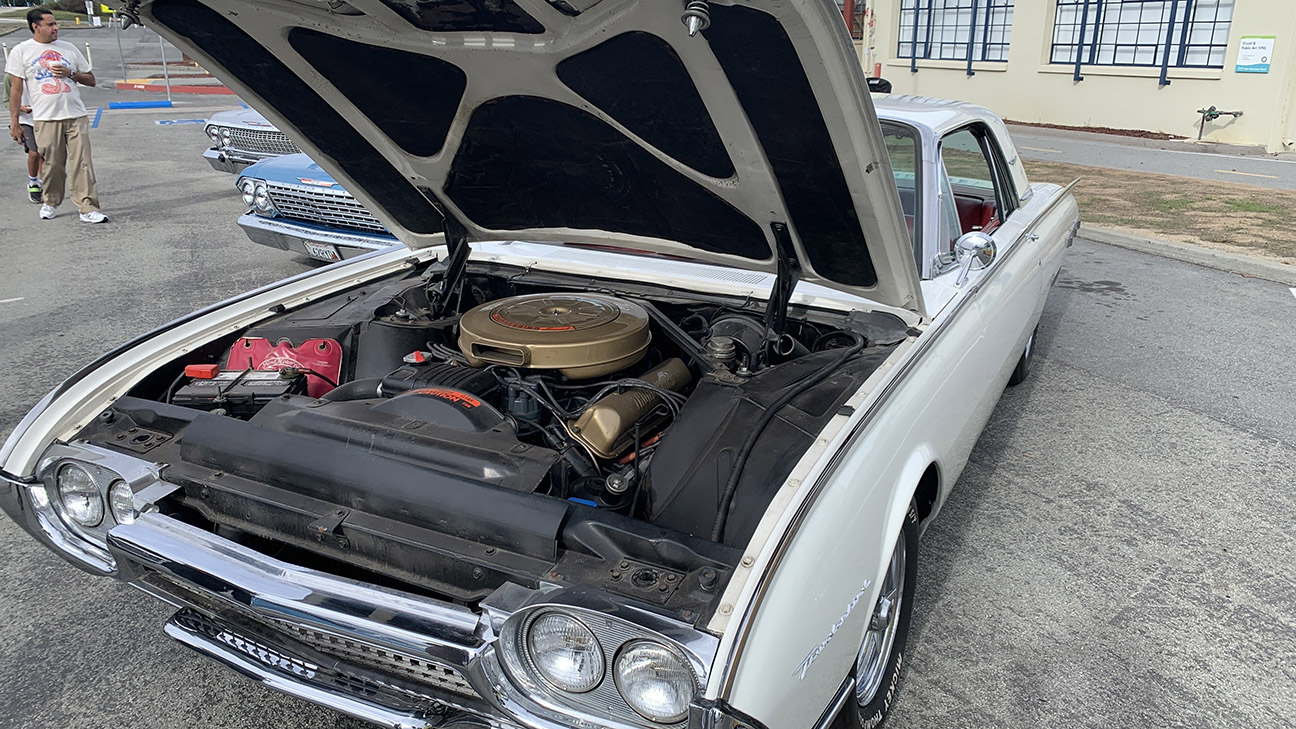
The CSUMB exhibition was open to the public, offering coffee on an overcast afternoon. The 124 attendees were a mix of students, locals and professors, several bringing their storied cars.
One of these vehicles was a 1962 Ford Thunderbird, which you can often see driving down Inter-Garrison Road. Its owner is Antonio Gallardo, who teaches at CSUMB.
“These aren’t just hunks of metal. They represent who we are. They are a place where I get to be seen for who I am,” said Gallardo.
From the subtle off-white exterior kept meticulously clean to the bright red interior, the car’s value to Gallardo is apparent.
“In the ‘60s, this car was a status symbol. When your kids went off you had the privilege of owning one of these,” Gallardo said, gesturing to his car. Even now, it’s a status symbol to him. At the event, he was smiling as he showed it to his former students, happy to explain its significance to any passersby.
“Cruising was always hurt by misconceptions. Hosting this gives people the chance to rewrite the narrative and share their histories.” Kristen LaFollette, Cal State Monterey Bay social studies professor
New generation
Gallardo isn’t alone in his relationship with his car. Jesse Santayo, a Marina resident, considers a formative memory with his father to be their shared love of cars. Standing beside a 1953 Chevy Bel Air, Santayo said, “my father owned one of these cars himself. When I saw this it took after my own heart.”
To many, cruise and car culture is a way to foster community. For others, like locals Carmen Barragan and Jose Urquizo, it’s a way to connect with the next generation.
Barragan and Urquizo are the co-founders of Salinas-based Aztec Legacy, a car club boasting 22 members. Since 2022, they have been offering students in higher education scholarships through the club.
Barragan is a teacher at Fremont Union School District in the San Jose area. “To me, seeing these kids succeed is so much, and getting to do it through something I’ve always loved makes it that much better,” he said.
Enlarge
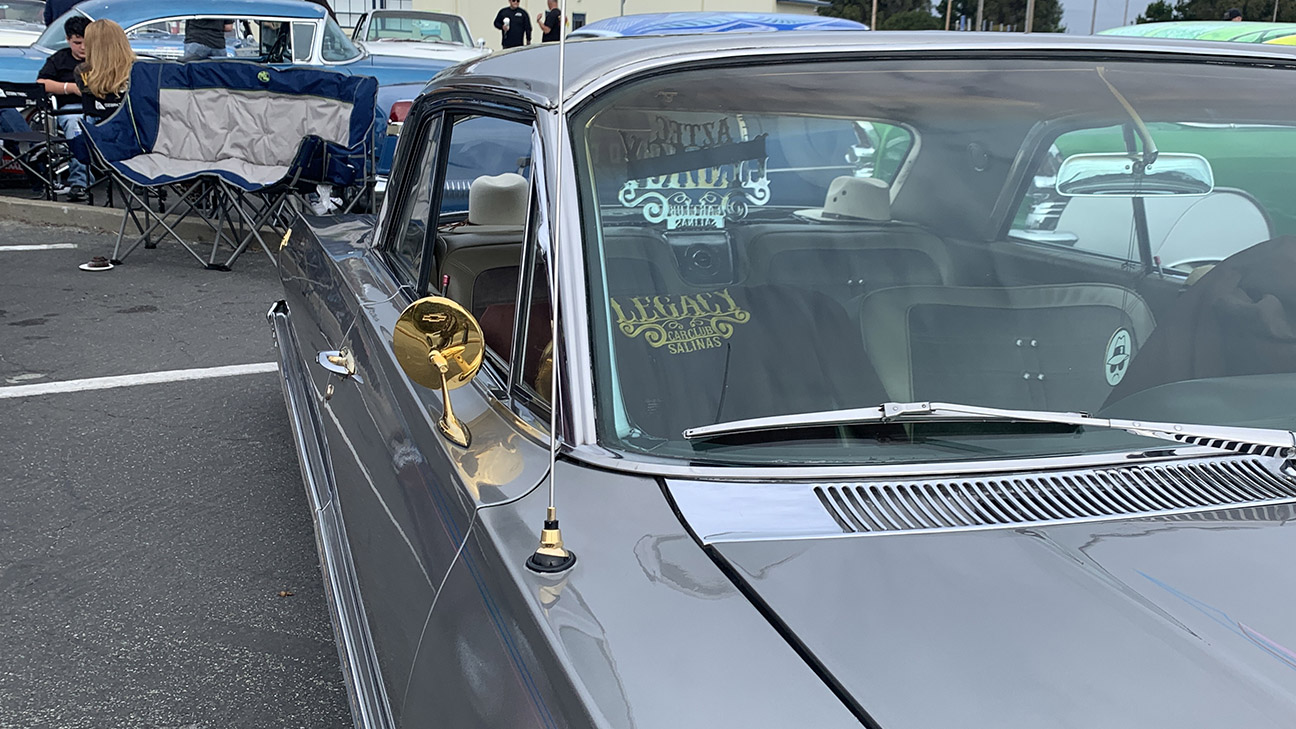
Barragan and Urquizo were at the CSUMB event to extend opportunities at a state university as well as build their club’s base. Until now, most of the students they served were studying in trade or community colleges.
“Events like this let us branch out so much more,” said Urquizo. Now the club is looking to sponsor students at CSUMB, both new and continuing.
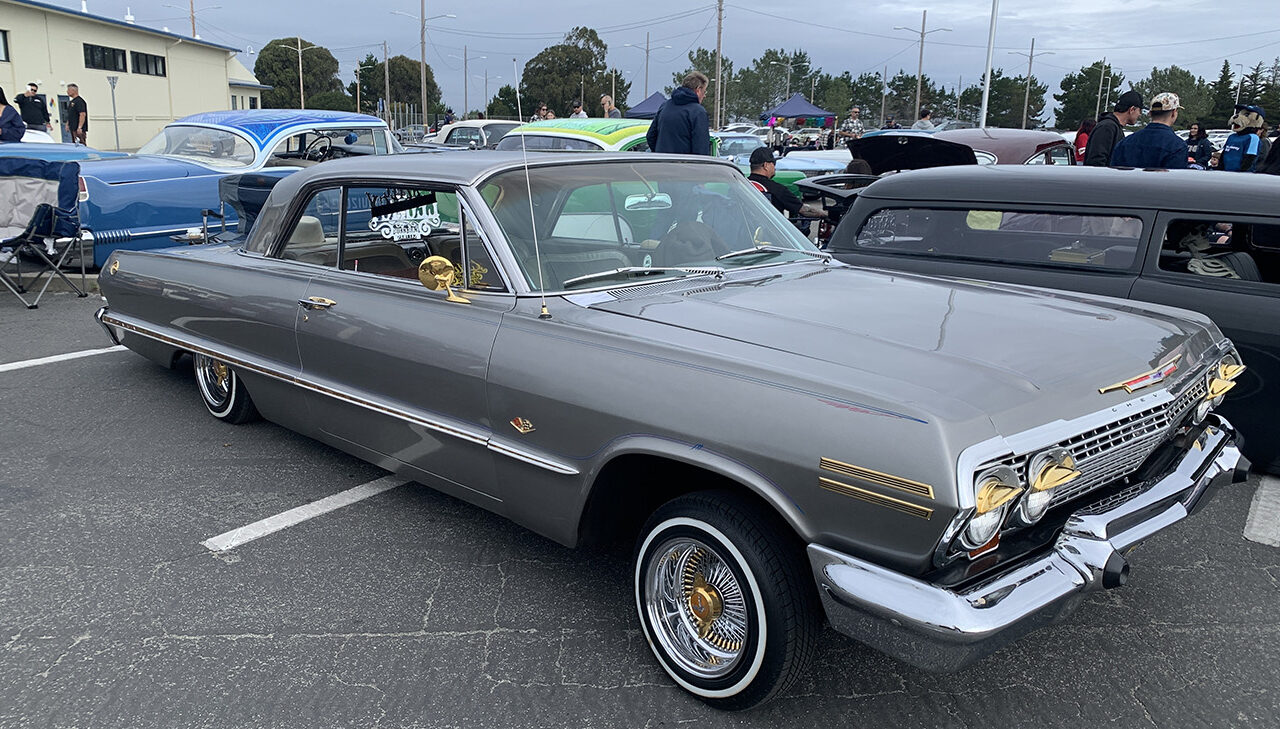
Drawing eyes was their 1937 Pontiac Silverstreak, the only car whose story could match the legacy the club hopes to represent.
“The car is only really the half of it. There’s always the person behind the car that has the story that makes the car what it is,” said Gallardo.
“These aren’t just hunks of metal. They represent who we are. They are a place where I get to be seen for who I am.” Antonio Gallardo, Cal State Monterey Bay teacher
With the cruising ban now lifted, LaFollette expects more car clubs to grow out of Salinas.
“I’m hoping more options means lowriding and cruising as a culture gets passed on through the generations,” said LaFollette.
Editor’s Note: An earlier version of this story first appeared in The Lutrinae
Enlarge

Have something to say about this story? Send us a letter.
SUPPORT NONPROFIT JOURNALISM 
GET OUR FREE NEWSLETTER