“Long before there were county lines, highways, or city boundaries, these hills, valleys, rivers and coastlines were home. They were places of prayer, ceremony, harvest, and family. They were classrooms where knowledge was passed from elders to children. They were living relatives, not commodities.” Sonya Tetnowski, Makah tribal member
FEATURED STORY |
Story and photos by Claudia Meléndez Salinas
Louise Miranda Ramírez, chairwoman of the Ohlone Costanoan Esselen Nation, has waited two years to get back some of the land that originally was home to her people. That is, if you start counting from the time the 84-acre parcel known as Tarpey Flats was purchased by the Big Sur Land Trust in April 2024.
More accurately, Miranda Ramírez has waited a lifetime to finally stand as the rightful owner of land that once belonged to her ancestors — a sliver of earth that is home to perennial and annual grasslands, coast live oak woodlands, maritime chaparral and Monterey pine forest.
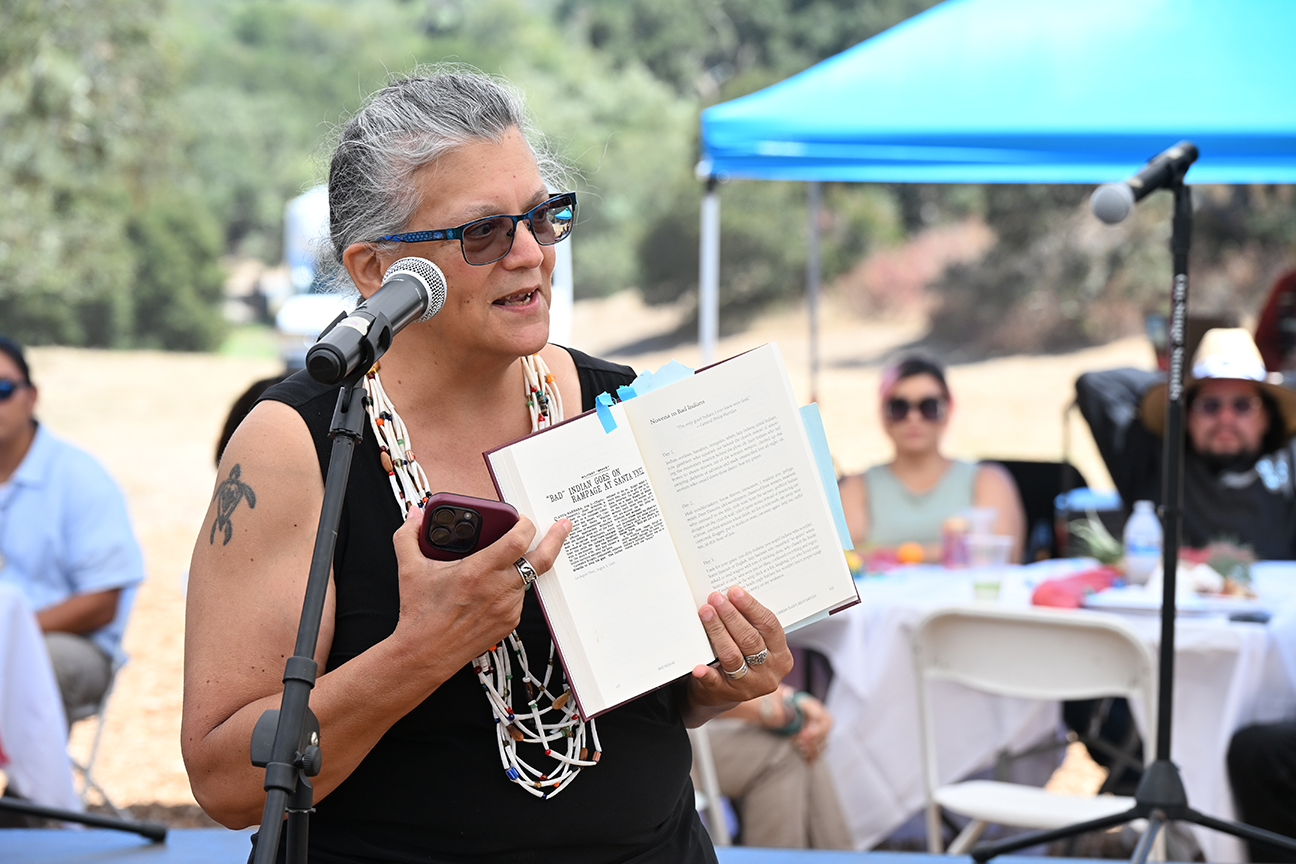
“Everything that Louise has done in the last 20, 25, 30 years of her life has been leading up to this moment and this place,” said Deborah Miranda, Louise’s sister and author of the tribal memoir “Bad Indians.”
“She had to learn the ropes. She had to learn the laws about remains, she had to learn about what are the possibilities of getting land back, how do we re-form as a tribe after being dispersed for so long. The way I started with the book was just a bunch of shards of information. She started with shards of a tribe and she had to reinvent us.”
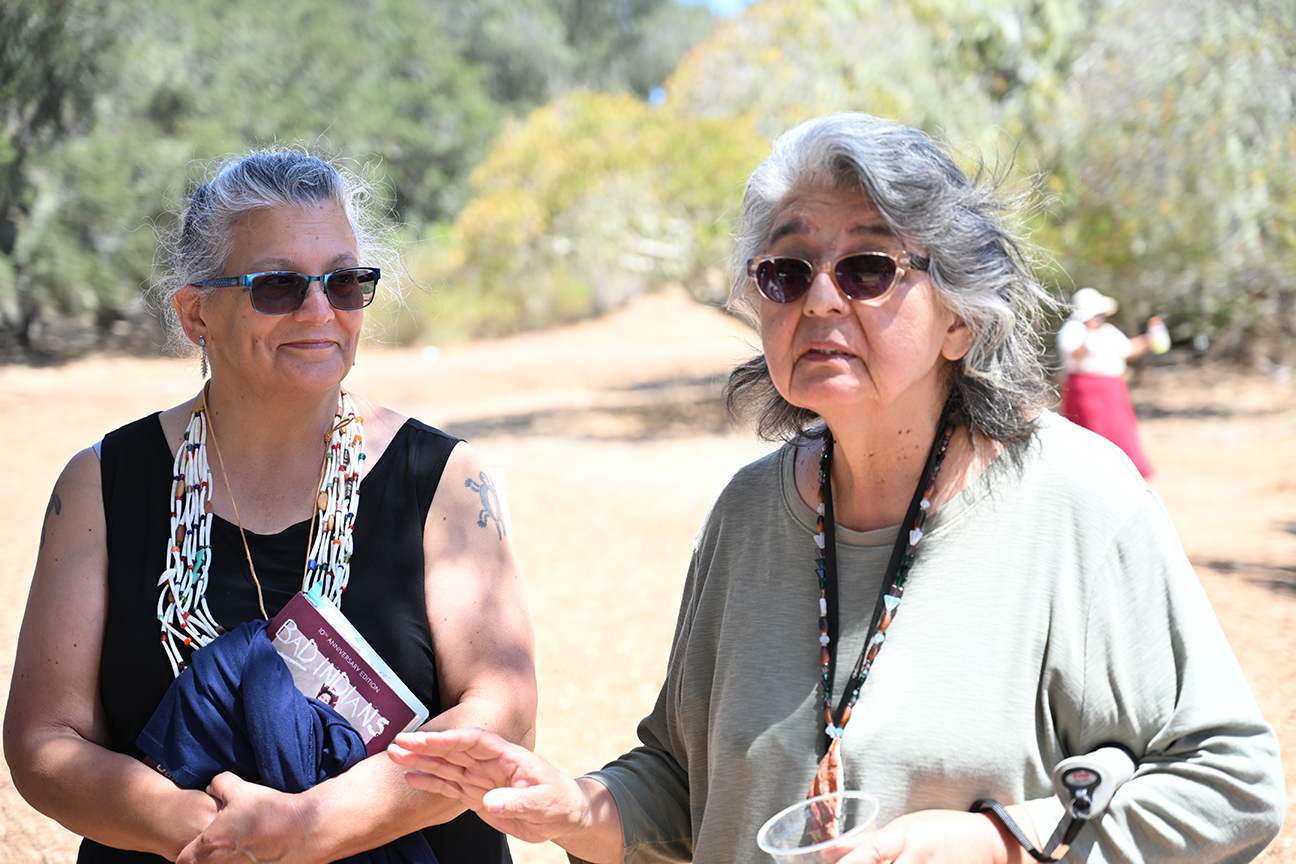
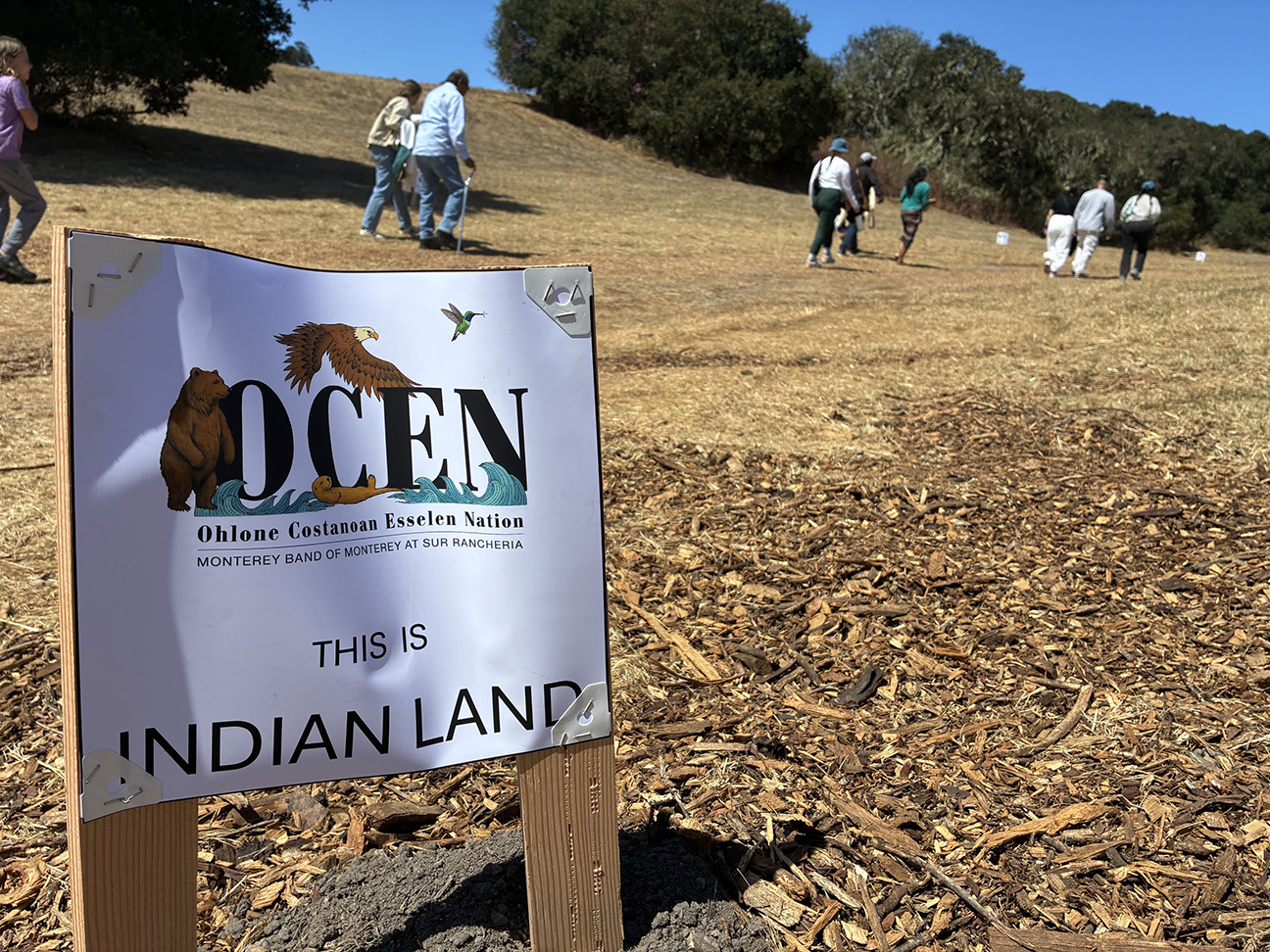
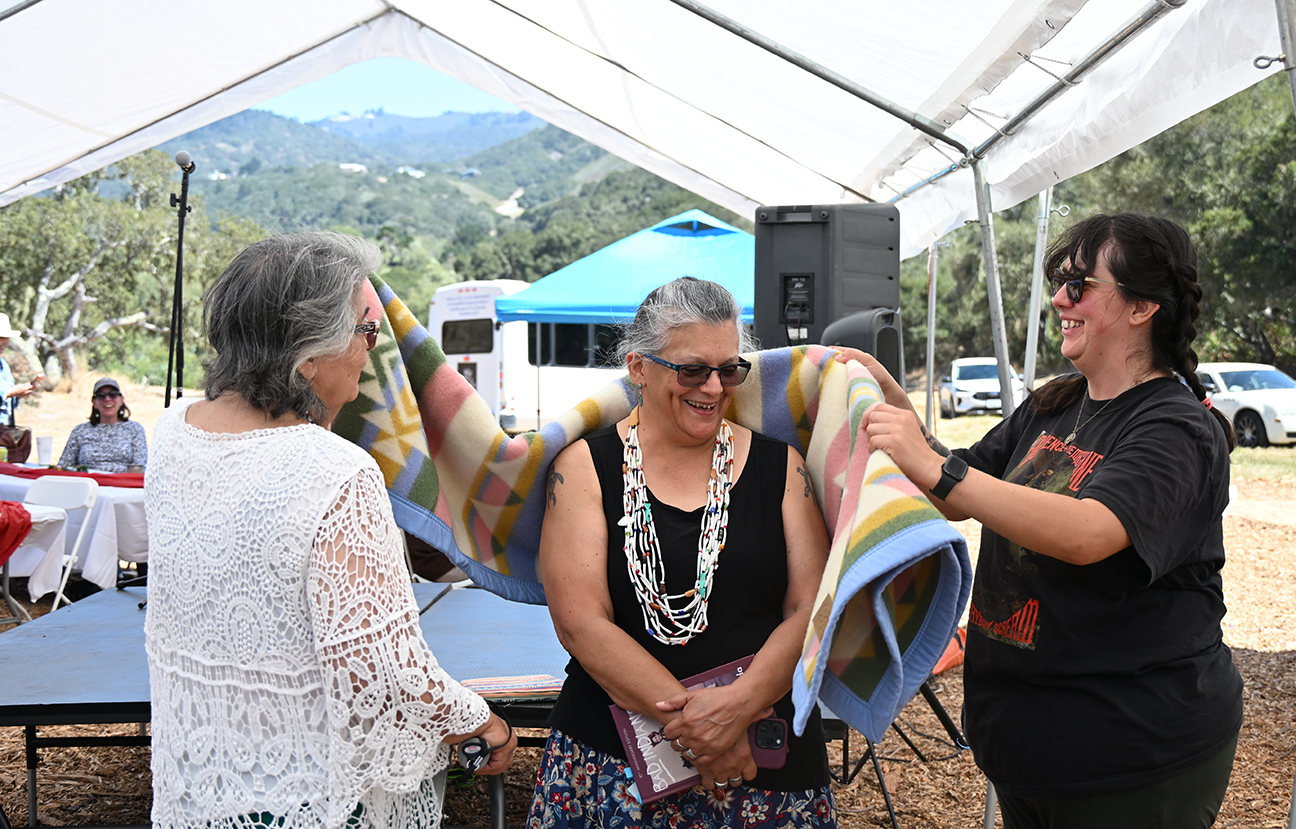
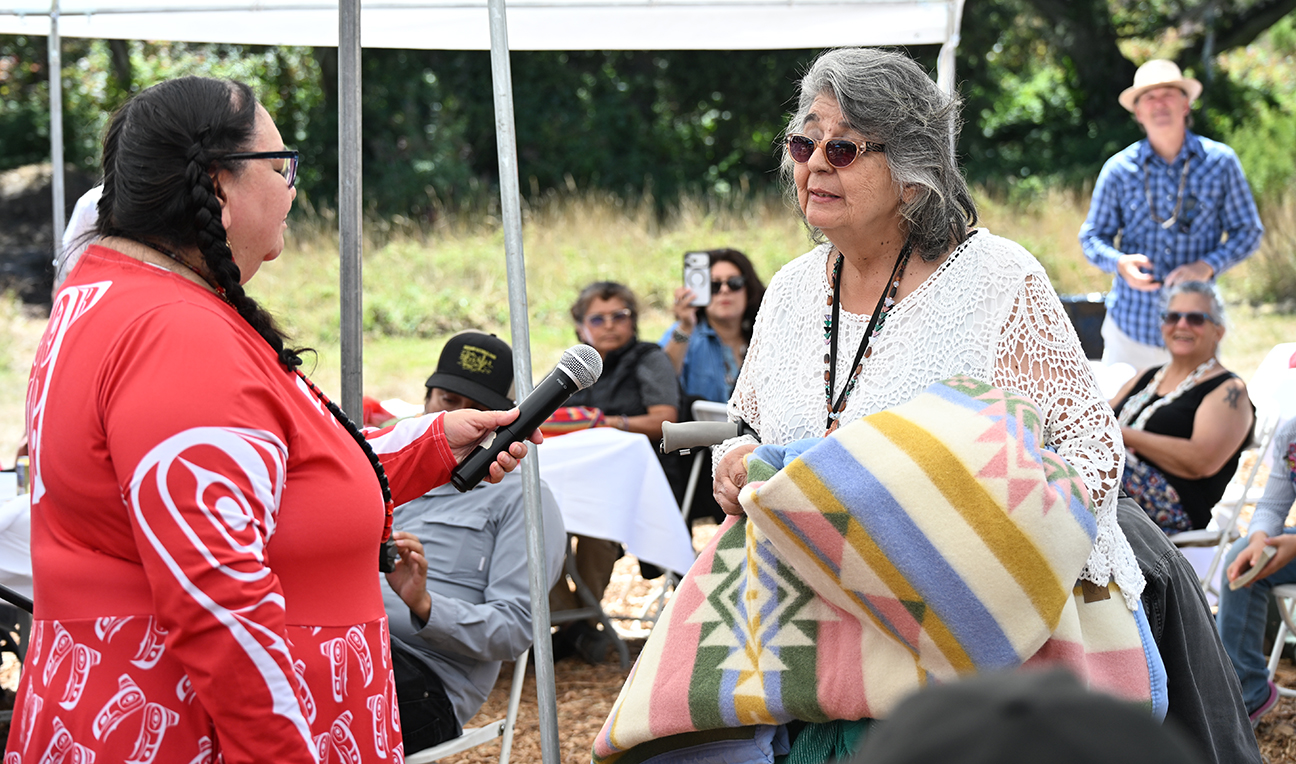
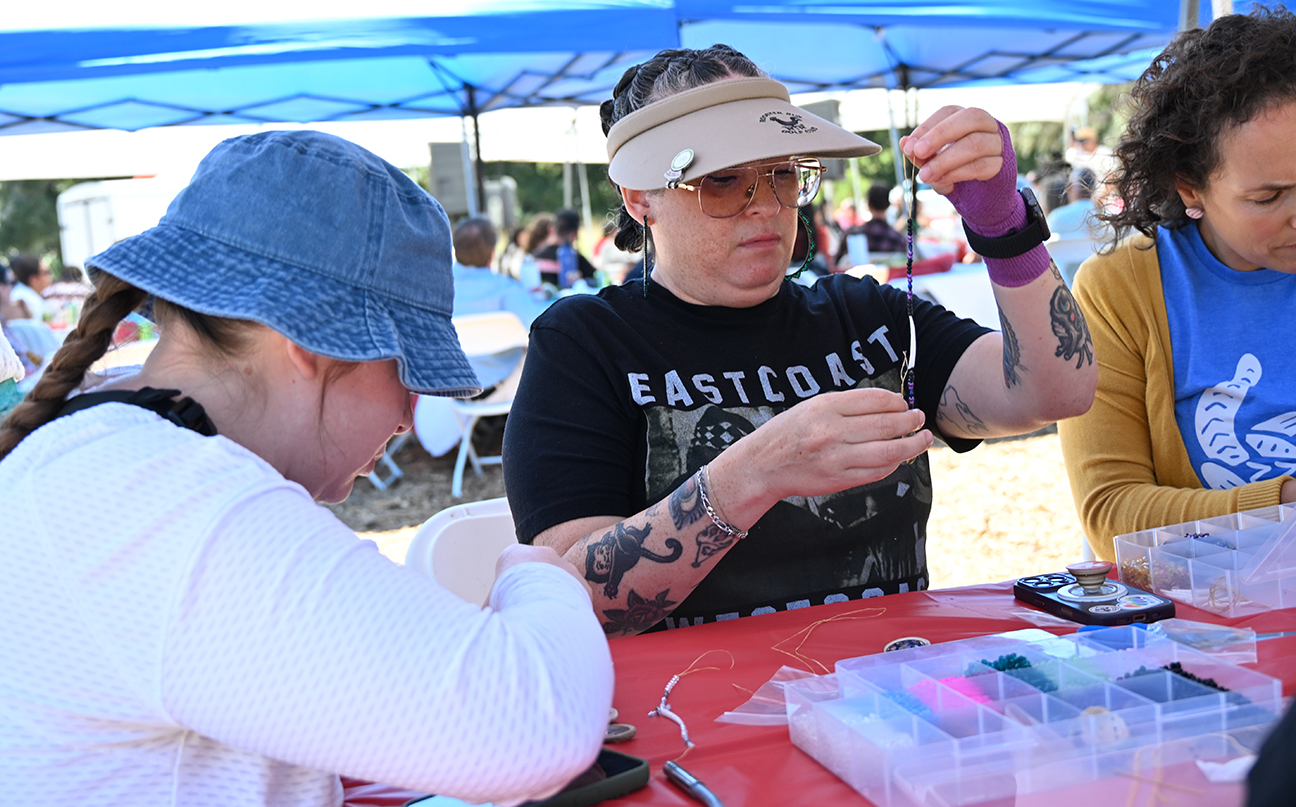
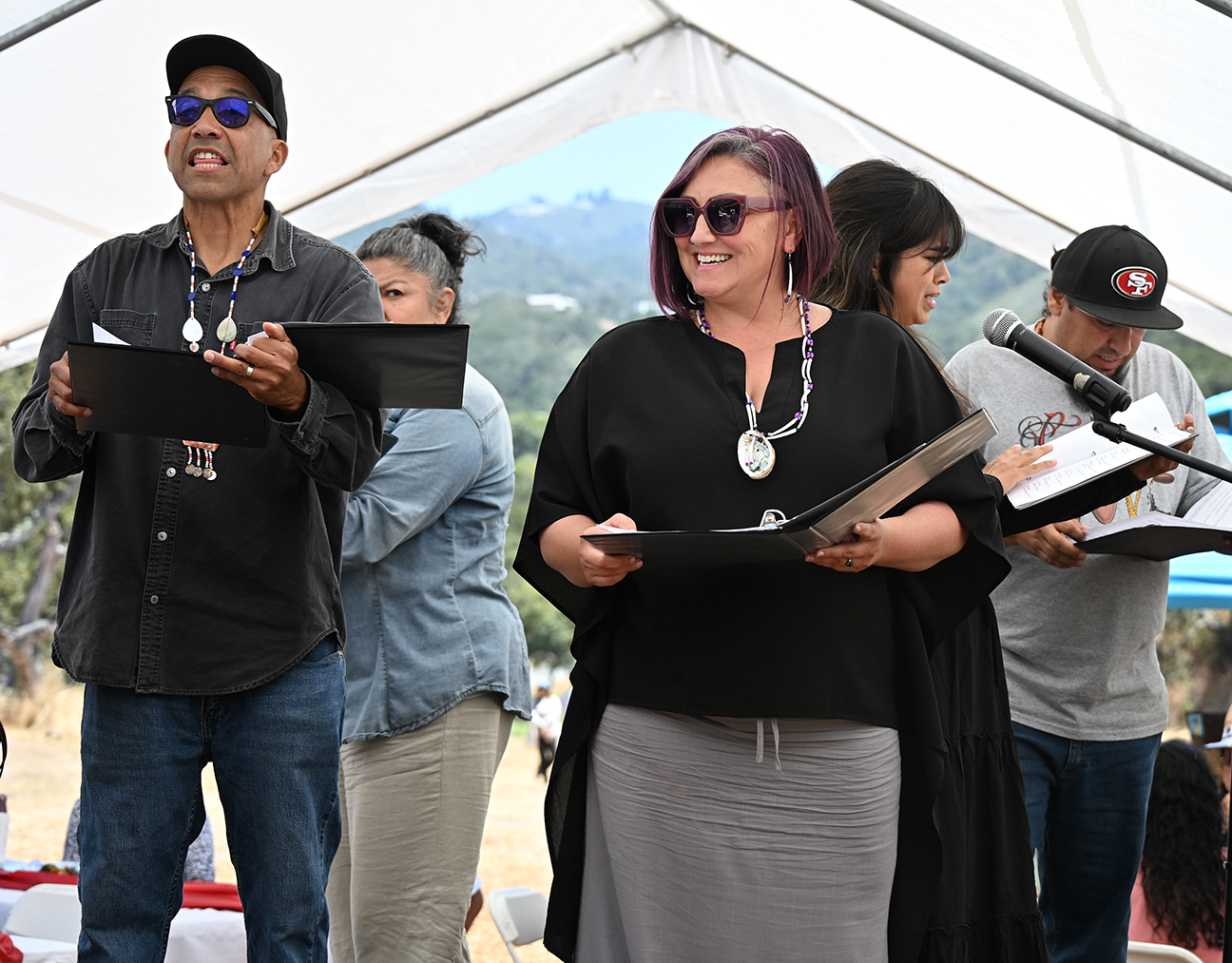
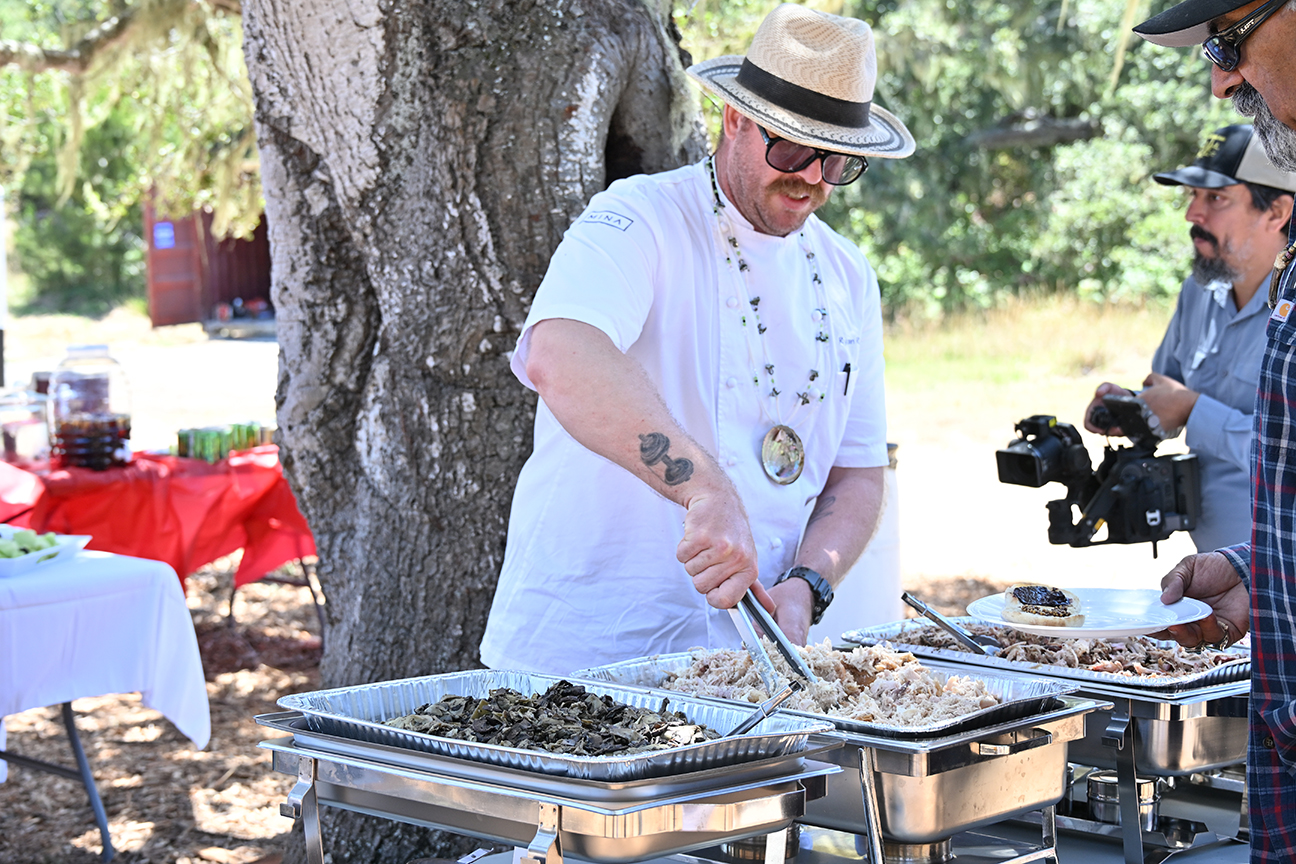
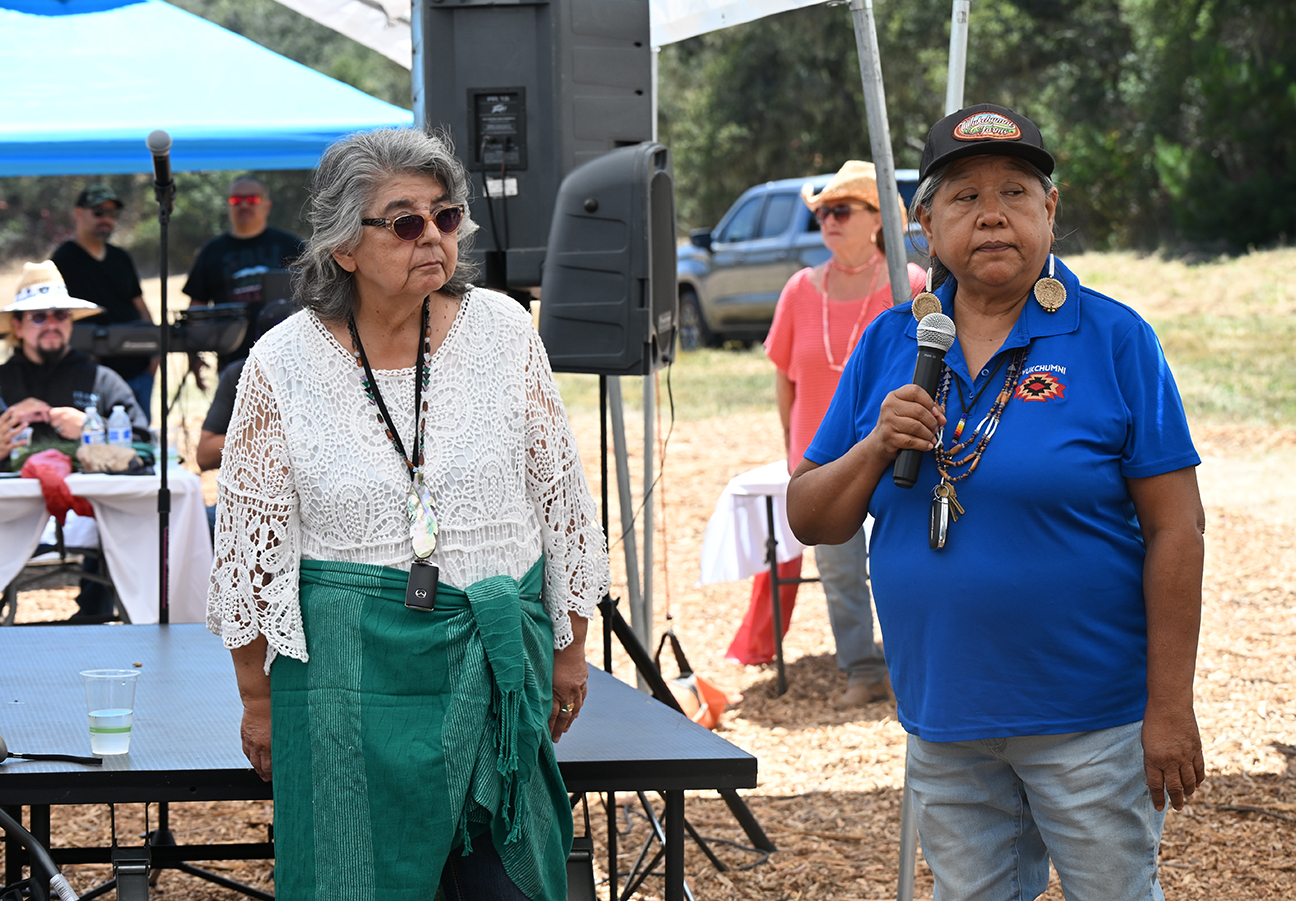
Miranda Ramírez and members of the Ohlone Costanoan Esselen Nation celebrated the transfer of the land to the tribe on Aug. 1 with food, music and poetry — a gathering where their ancestral language was spoken over and over in readings, songs and introductions.
“We are from here. We’ve always been here and we will always be here,” Louise told the crowd in English and Esselen.
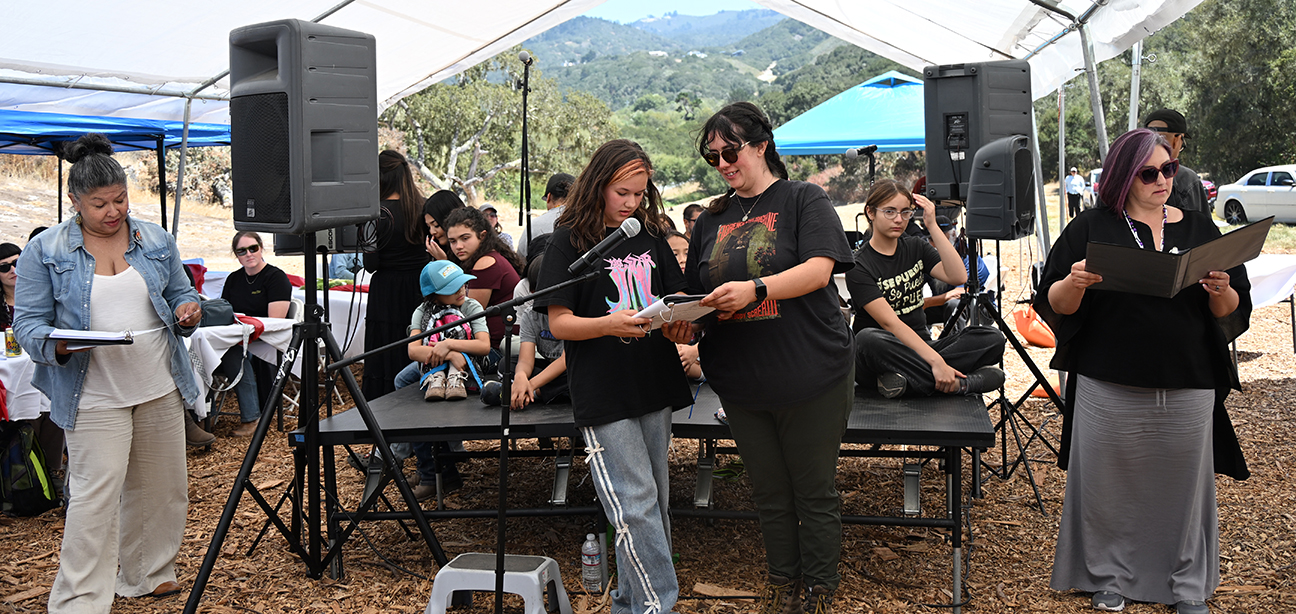
With the tribal council of seven women, she recited a prayer to the land, also in both languages.
“Today we ask the honorable creator to give life back to this land. We ask the creator to protect our homeland, Iwanomatsa. We ask the honorable ancestors to protect the earth that they walked and lived on. We ask the deer, the bear, the wolf, the eagle, the hummingbird, the owl, coyote and red-tailed hawk. We pray for healing of earth and hearts. We give tobacco, sage, mugwort and beads in our prayer, and we ask the creator to protect and bring us together as family.”
Tribal members traveled from all over California to share the momentous occasion — including Deborah, who now lives in Eugene, Oregon.
“She started with shards of a tribe and she had to reinvent us.” Deborah Miranda
Nicole Sandoval grew up visiting her grandmother, a small wrinkled woman who lived in a trailer park, spoke little English but was conversant in her native language. After years of being pushed to assimilate to mainstream U.S. culture, Sandoval and her siblings regained a bit of their Native heritage.
“I was in college when we had a naming ceremony at my tia’s house, and we planted a redwood on her property,” she said. “They wanted to have a naming ceremony for the kids of the lineage.”
Sandoval lives in Petaluma; her sister lives in Fremont, her youngest brother in Los Angeles, and another brother is in San Francisco. All gathered in Monterey for the ceremony.
“It’s pretty amazing to be here today,” she said. “As we’ve gotten older, we’ve gotten to be part of seeking the (ancient) knowledge. Watching Louise and my Tío Joe and the other cousins working so hard to get us California recognition and getting this land is amazing.”
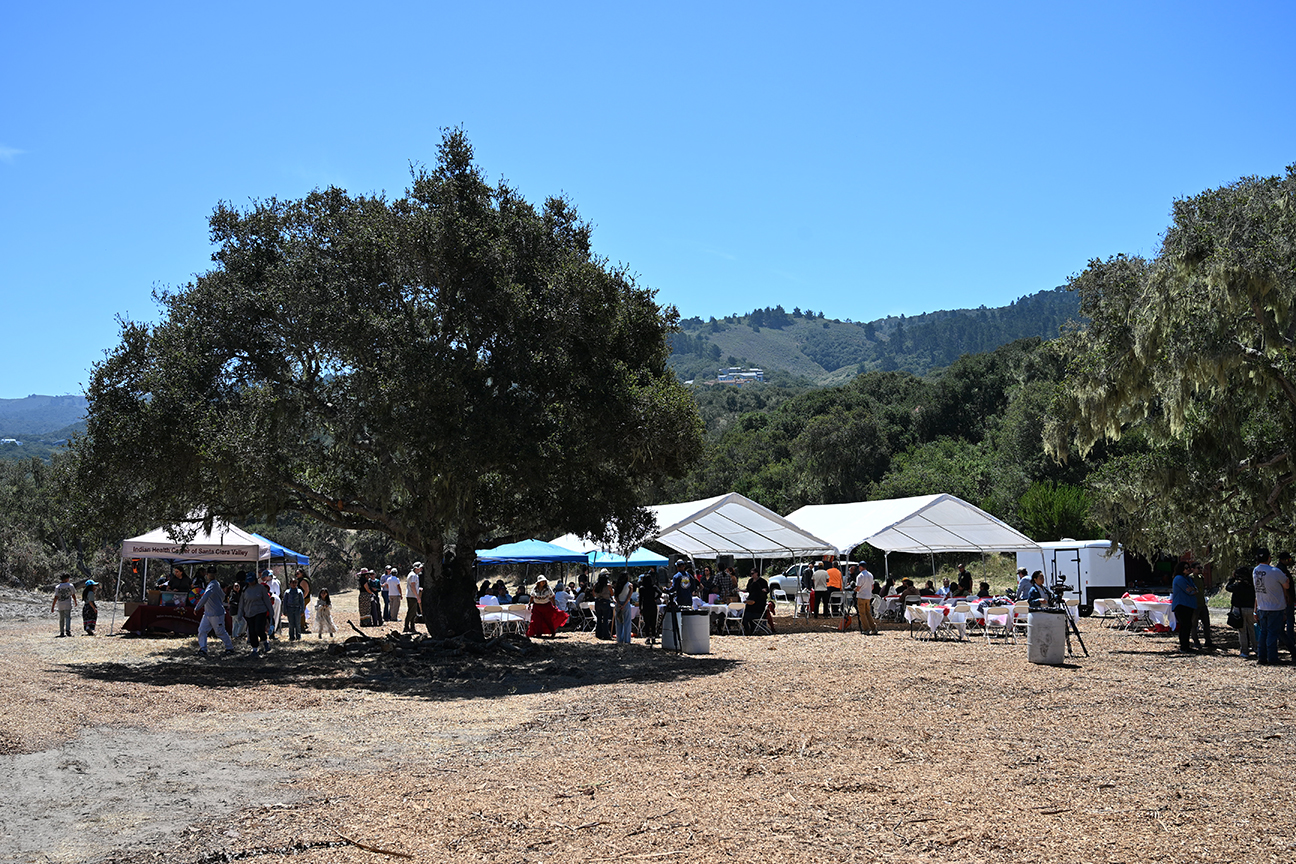
The land regained by the Ohlone Costanoan Esselen Nation (OCEN) is an 84-acre parcel across from the Monterey Regional Airport on the south side of Highway 68. The transfer was financed with funds from the California State Coastal Conservancy. The Big Sur Land Trust facilitated the transaction, as the land was ostensibly acquired for conservation and preservation. It was originally on the market for residential and commercial development, with plans to build up to 37 single-family residences.
Years of developing relationships and managing bureaucracies went into the project: identifying the land, purchasing it, and acquiring the funds to transfer the parcel to OCEN. Just transferring the title to the tribe after the Big Sur Land Trust closed escrow took more than two years.
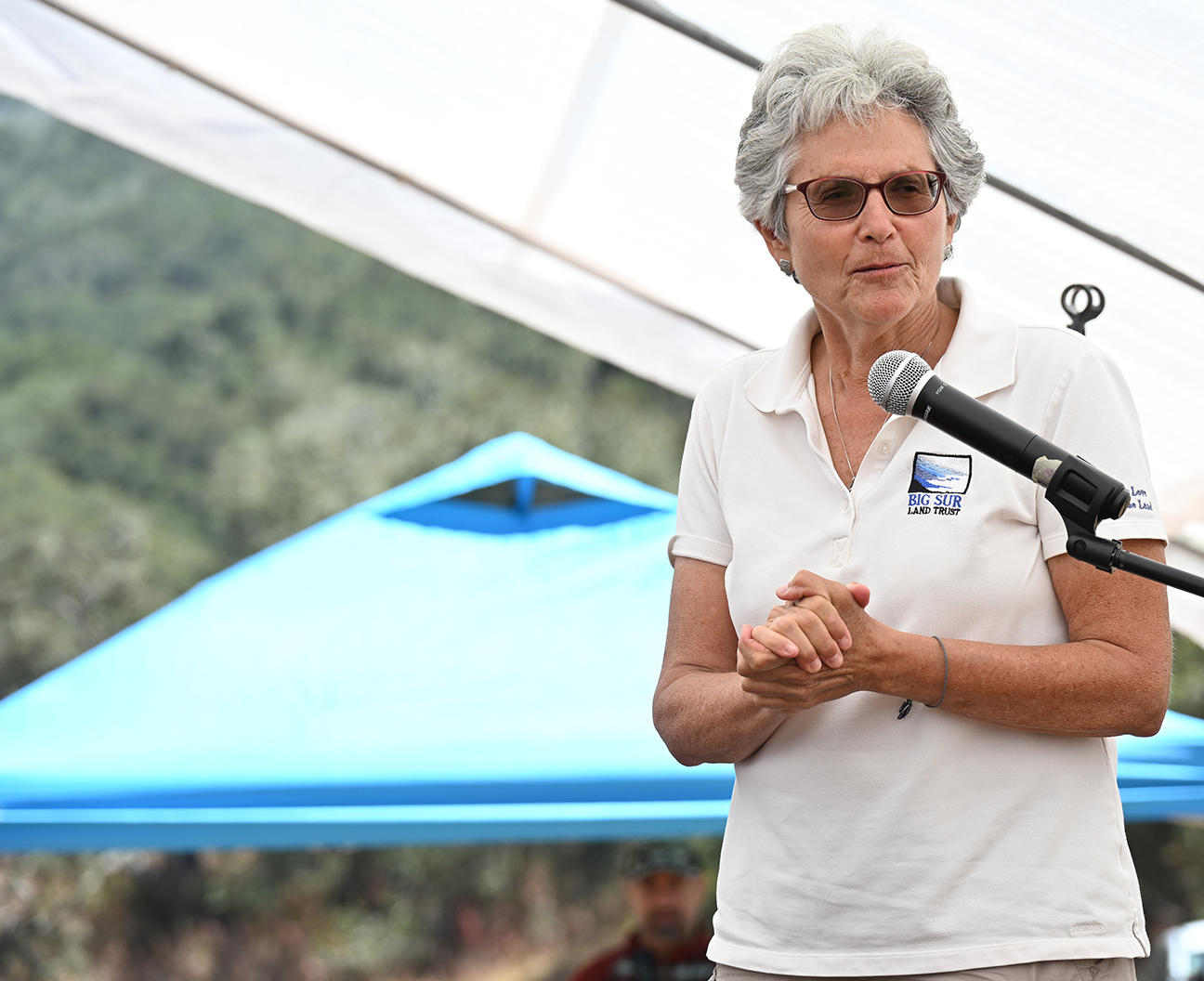
“It takes time, it took even longer” for the entire process, said Rachel Saunders, vice president of conservation for Big Sur Land Trust. “Prior to that we worked to acquire the land. We only work with willing sellers. You need to develop relationships, you need to find funding and working with state agencies,” she said. “There are times when portals are open to apply for grants. Usually a land acquisition takes two to four years to accomplish if you try to get public money to support it.”
Miranda Ramírez wanted young tribal members to get acquainted with the land and receive stewardship training, Saunders said, — which also took time.
“We co-developed a basic stewardship plan that the tribe can use as they see fit. All of that took time to get funding, to set up systems, to schedule these days on the land with what Louise referred to as the ‘land knowledge keepers.’ We’d love it to be simple, but we need to make sure we follow a set of standards and practices,” she said.
“Indigenous peoples are not returning to the land. They never left it. What is returning is recognition. What is returning is respect. What is returning is the opportunity to restore a relationship that should have never been broken.” Sonya Tetnowski
In March, Miranda Ramírez became very sick and had to be hospitalized. Her hemoglobin levels dropped to a critically low level, with no apparent explanation. “The doctor told me ‘You have no blood,’” she said. When she recovered and came home from the hospital, she demanded the process be expedited.
“I want to go through escrow,” Miranda Ramírez told Deidre Monroe, senior land acquisitions manager for the land trust. “If I’m going to die, let this place be in my people’s name. Let’s not extend it any more.”
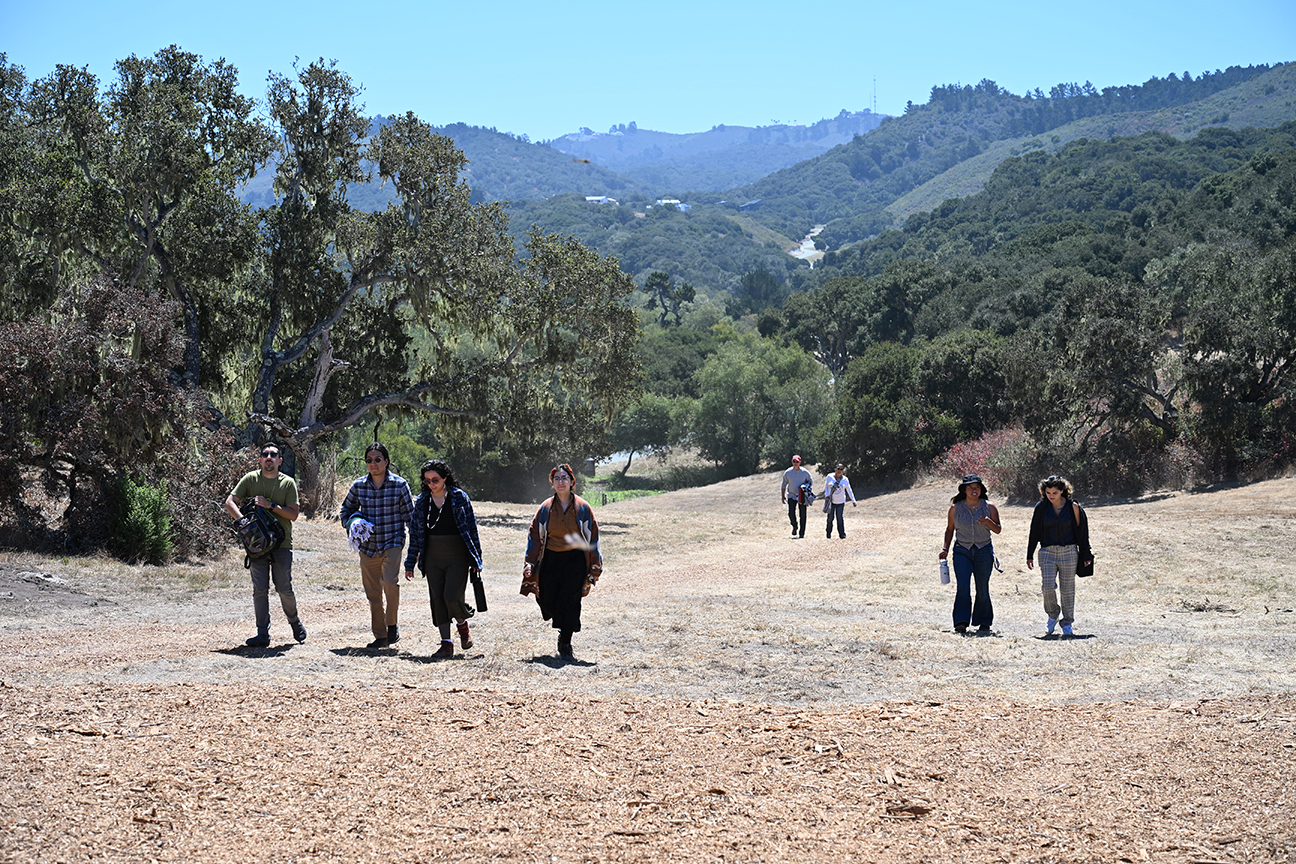
Escrow closed in June. In early July, Miranda Ramírez, other tribal members and a group of volunteers began their work on land stewardship. Weekend after weekend, volunteers from a Palestinian solidarity group, the Salinas-based nonprofit MILPA and other community members helped rake, cut down bushes, and cleaned the area to welcome people to the celebration.
On Aug. 1, the nation shared their success with tribal members and friends on the land where their ancestors undoubtedly roamed centuries ago.
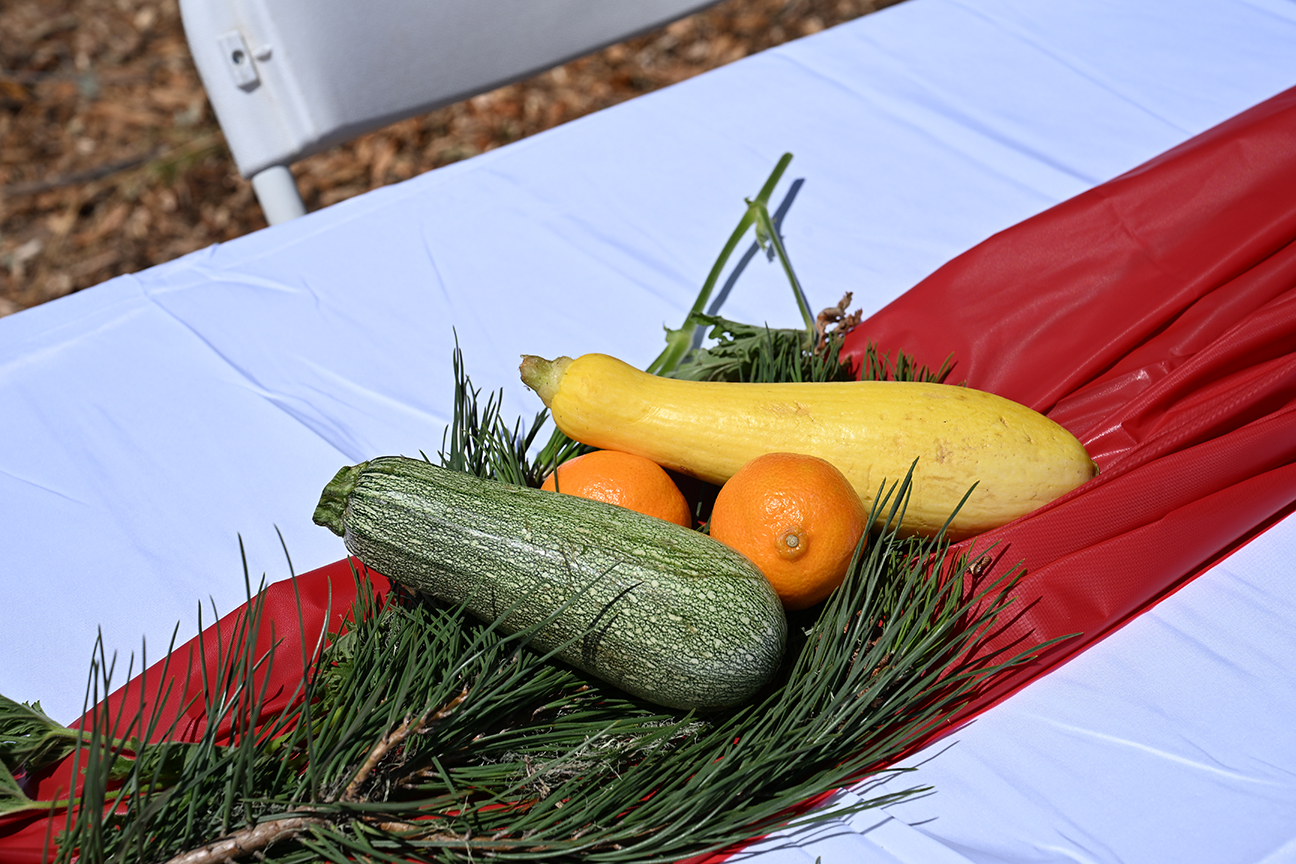
Those attending shared meals made with Native ingredients and listened to an excerpt from “Iya: The Ex’celen Remember,” a play written by local artist and activist xago Juárez that was inspired by Miranda Ramírez’s stories.
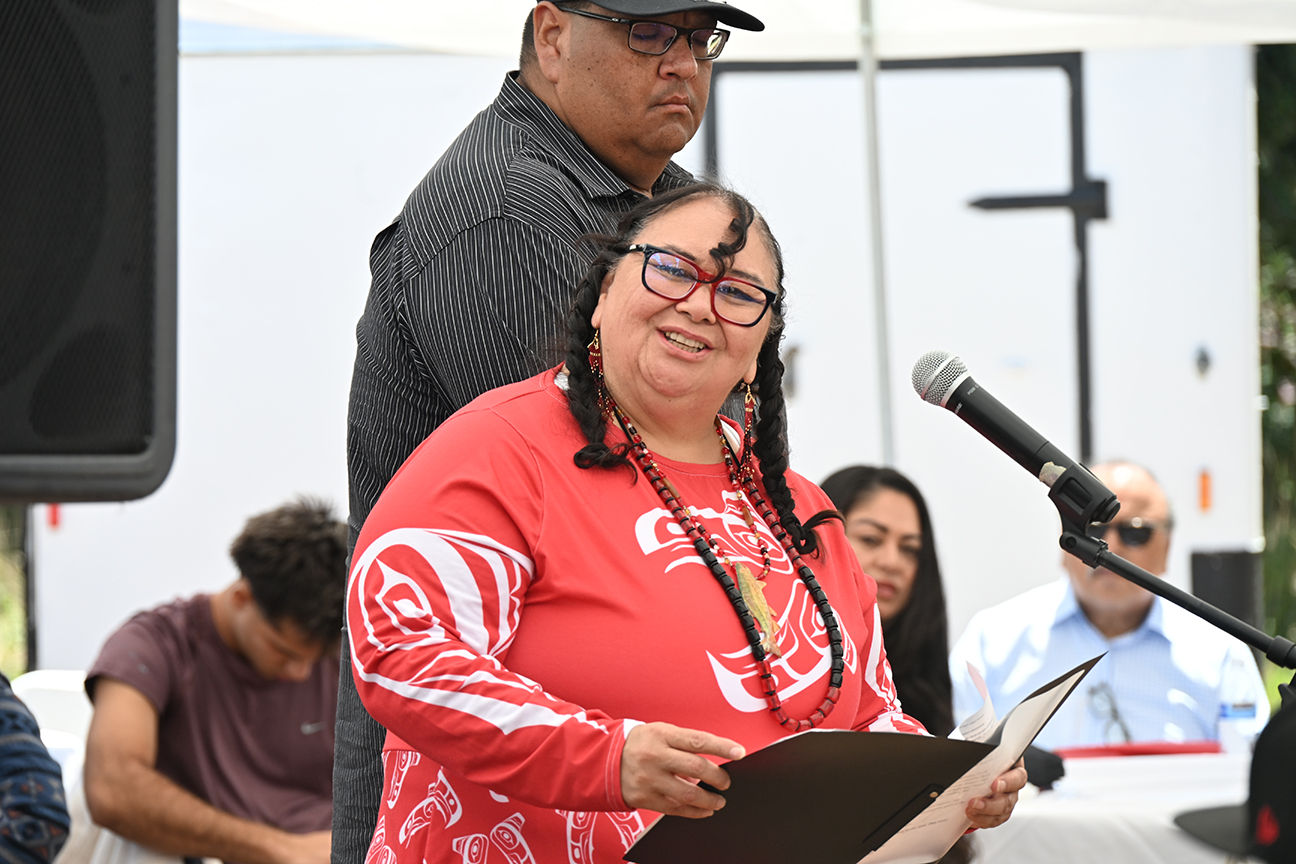
Sonya Tetnowski, CEO of the Indian Health Center of Santa Clara Valley, read a heartfelt examination of the day’s meaning.
“The Esselen people have carried something that no deed, no law and no government could erase: Their identity. Their culture. And their sacred responsibility to care for this land,” Tetnowski said. “While history brought displacement, disposition and unimaginable hardship, it never extinguished the spirit of the Esselen people. Today reminds us of a profound truth: Indigenous peoples are not returning to the land. They never left it. What is returning is recognition. What is returning is respect. What is returning is the opportunity to restore a relationship that should have never been broken.”
Miranda Ramírez has big plans for the land. Stewardship, of course. And a community center, a place where tribal members can gather, learn stories, their language, and get to know one another. A vegetable garden so tribal members can receive food and never go hungry. A special place where the remains of her ancestors, once kept in museums as artifacts, can finally rest in peace.
But the road ahead remains treacherous. Already, the tribe has had unpleasant encounters with members of the Monterra Ranch Homeowners Association, with whom they share an access road. Originally, Miranda Ramírez believed Tarpey Flats allowed an easement to Monterra to access the luxury development, but the rights may not be clear-cut. Legal teams may have to get involved, and the tribe does not have deep pockets — or any pockets at all.
The nation was never told the easement was on their land, “and now we have no choice but to have a surveyor come out. It’s going to be difficult,” Miranda Ramírez said. “We haven’t even met. Why should we have any problems?”
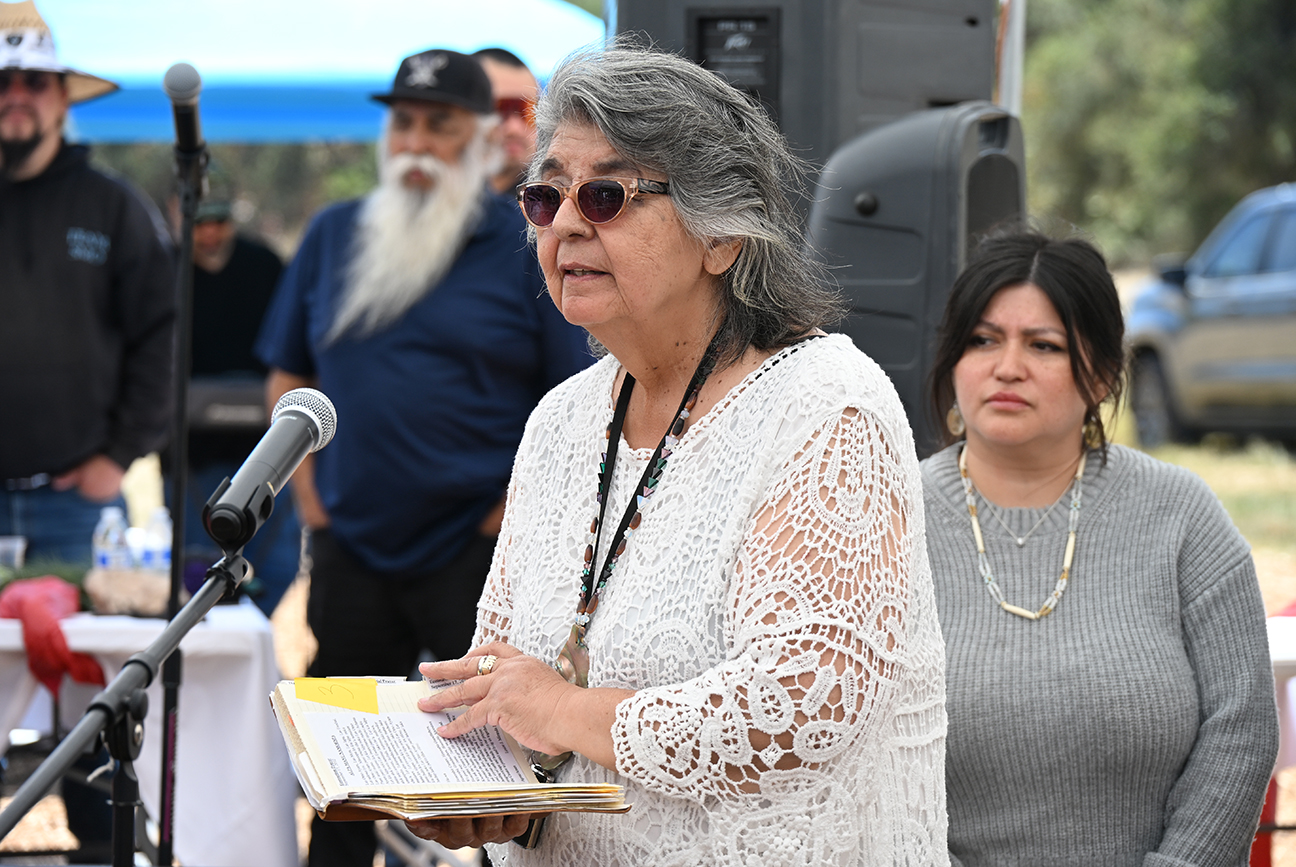
The chairwoman had planned a perfect day for the celebration. She would wear her regalia and open with a blessing. Instead, she was running around making preparations, and the day did not evolve as she had envisioned.
Still, it was a sunny morning with gentle winds rustling the leaves of nearby oaks.
“The area is beautiful, and because volunteers came — MILPA came out, a Palestine support group, an archaeologist from San José State helped rake, cut down bushes — that space was clean because they came out. Weekend after weekend, they came out and worked there.”
A lot of effort went into turning that untamed piece of land into a space that could accommodate guests, even for a day, and Miranda Ramírez wants to acknowledge it — a reminder that a lot more work is needed and that other members of the tribe should get involved.
“My granddaughter stayed in a tent and is still cutting back things,” she said. “From now on, that’s where we need to meet.
“It’s just beginning. Our life there is just beginning.”
FEATURED IMAGE |
Enlarge

Have something to say about this story? Send us a letter.
SUPPORT NONPROFIT JOURNALISM 
GET OUR FREE NEWSLETTER