FEATURED |
By George B. Sánchez-Tello
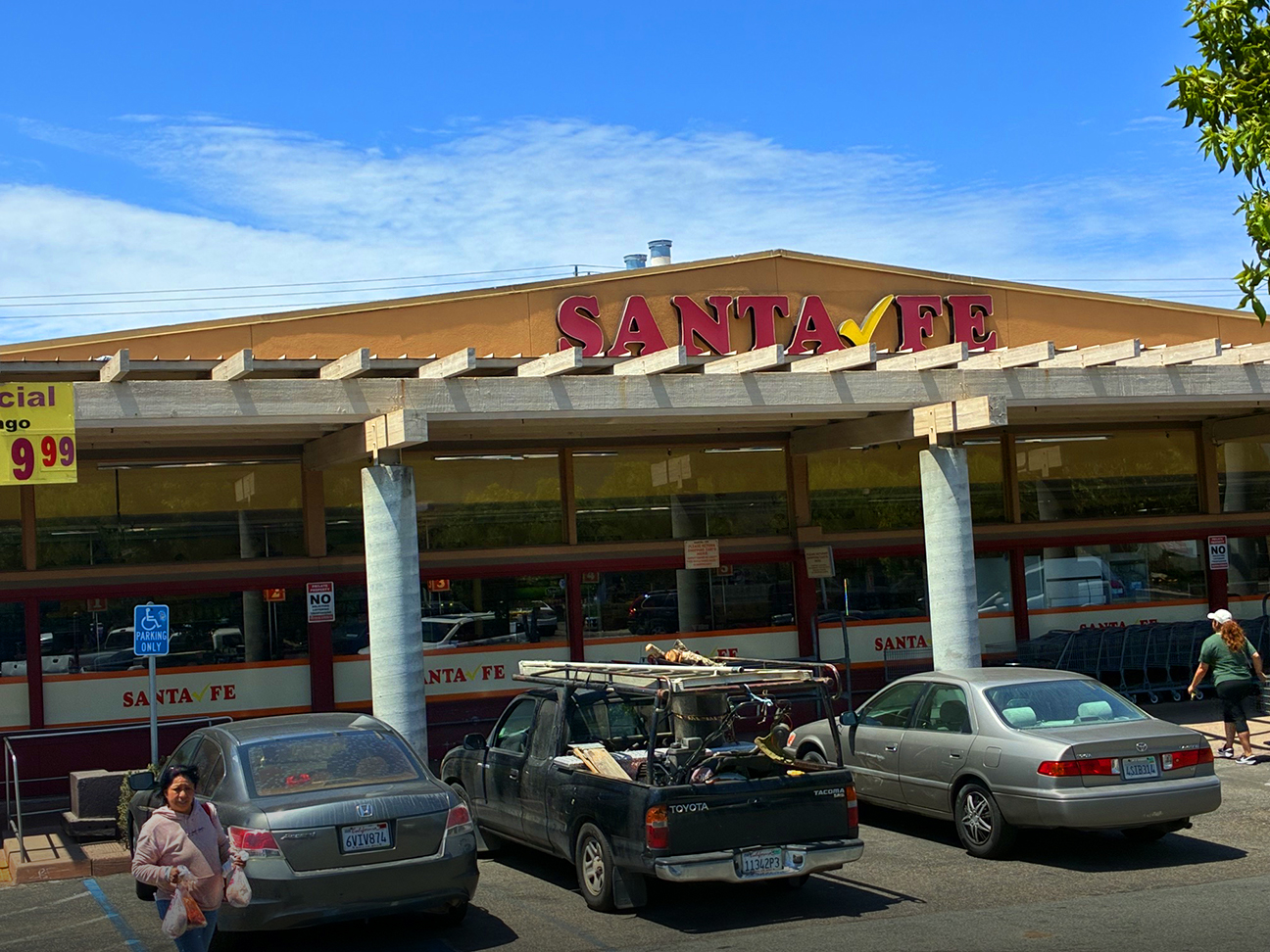
Lenny Canul is the office manager for Santa Fe Foods, a local food chain with ten markets across San Francisco’s South Bay, the Central Coast and Central Valley. Santa Fe’s only market in Salinas, on 1017 N. Main, offers customers a unique fruit and vegetables program that prompts weekly phone calls.
“They’re actually actively calling to find out when the program is coming back,” Canul said.
Since 2023, low-income customers who qualify for food assistance can get a dollar-for-dollar rebate on fruits and vegetables. But every year since the program debuted, its popularity has exhausted state funding, forcing customers — and managers like Canul — to wait for the state to re-fund the program.
“They look forward to it every month for that extra $60,” Canul said. “When we ran out the first time, there were calls after calls asking when the program is coming back.”
In July, the food aid program — the CalFresh Fruit and Vegetable EBT Pilot Program — received a $20 million lifeline in the state’s new budget.
But recent data reveals only around 1,200 of the more than 50,000 eligible families across Monterey and Santa Cruz counties are using the resource. The program is currently only available at one food market in the region. Its limited access along with low state funding has stunted the program’s growth. Advocates also fear the chilling effect of immigration dragnets that have kept families from seeking healthcare may be a factor.
‘We’ve believed in the program since day one.’
CalFresh is the state’s version of the federal Supplemental Nutrition Assistance Program, or SNAP, that used to be known by its vouchers — food stamps. CalFresh recipients are low-income — individuals earning $1,696 or less per month, according to the U.S. Department of Agriculture.
For the past year, Monterey County Social Services has seen a decline in applications for public healthcare programs generally, including Medi-Cal, California’s public health insurance, and CalFresh, said Annette Gallegos of Monterey County Department of Social Services. While applications among seasonal workers in hospitality and agriculture tend to dip this time of year, the decline is more pronounced.
Households participating in CalFresh peaked in April 2025 — more than a year ago — when more than 32,000 families in Monterey County and 22,000 families in Santa Cruz County used their eligible food aid, according to the state’s Department of Social Services. In May 2026, those numbers decreased to roughly 29,000 and 20,000.
Even fewer households are using the fruit and vegetable pilot program.
While 50,706 households across Monterey and Santa Cruz counties are eligible, approximately 1,200 — 1,175 in Monterey County and 48 in Santa Cruz — actually use their Fruit and Vegetable EBT benefits, according to Denisse Becerra, a senior policy associate with Fullwell, a San Francisco Bay Area food policy and advocacy organization that oversees the program.
“We want affordable food options for all recipients; the extra $60 a month is a good way to promote nutrition.” Lenny Canul, Santa Fe Foods
The program’s history, from its 2018 inception to current reliance on pilot funding, somewhat explains the low use on California’s central coast.
As a pilot program, the state relies on nonprofit community organizations to act as intermediaries between the government and food markets to test the program. Currently three organizations — Fullwell, Ecology Center, an urban health and wellbeing organization in Berkeley, and the Altman Clinical and Translational Research Institute at U.C., San Diego — oversee 92 participating markets, from Mendocino to San Diego.
The nonprofit organizations were tasked with identifying markets willing to test the program, explained Grecia Marquez-Nieblas, a senior manager with Fullwell. Some markets were interested in the concept but not willing to be the first, she said. But someone in information technology at Santa Fe Foods heard a presentation on the program at a food conference and was willing to volunteer his time to set up the accounting technology, like sales scanners, Marquez-Nieblas and Canul said.
“We’ve believed in the program since day one. We knew there was a program needed that would be welcomed into the community,” Canul said. “We want affordable food options for all recipients; the extra $60 a month is a good way to promote nutrition.”

Because it’s a pilot program, funding and availability has been intentionally small to test interest and develop technology that can be easily integrated into more food markets, Marquez-Nieblas said, but as a result, funding has often ended early, creating gaps in continuity.
This year, as in previous years, food advocates sought $100 million to expand the program. But for the past two years, the state has faced budget shortfalls, even forcing cuts to popular programs. In addition, Sacramento had to consider the impact on health and food aid from cuts included in H.R. 1, or the One Big Beautiful Bill Act.
“At a time when the federal government is gutting our social services, the program has been crucial to combating food insecurity statewide.” Alex Lee, California Assembly Member
This year, funding for the fruit and vegetable pilot program were exhausted by June 30. But just days later, with passage of the state budget, Gov. Gavin Newsom allocated $20 million in the next fiscal year for the food aid program. The program was also extended until June 2028 — an additional year beyond its original sunset date. California Assembly Member Alex Lee announced the funding.
“At a time when the federal government is gutting our social services, the program has been crucial to combating food insecurity statewide,” Lee said in a press release. “It serves as a national model for reducing hunger, delivering real dollars back into the pockets of over half a million people.”
State Sen, John Laird, whose district covers Santa Cruz, San Benito and Monterey counties, said he supports the fruit and vegetable pilot program as well.
“CalFresh is one of the most effective ways we can help working families, seniors, and children keep food on the table,” Laird said in an email. The pilot program, he said, “is helping people put food on the table. As we continue to balance our budget priorities, it deserves thoughtful consideration as part of our long-term fiscal planning.”
The pilot effort should ‘ now become a full program due to its success, Marquez-Nieblas said.
The Santa Fe Foods market across from the rodeo grounds on Salinas’ Main Street is the only location that offers the program for residents in Monterey, Santa Cruz and San Benito counties, Becerra said. There are four additional Santa Fe stores — in Seaside, Gonzalez, Watsonville and Castroville — that could quickly implement the program with additional funding, she added.
As experts review food aid programs — like the fruit and vegetable pilot, food banks and Market Match, which allows EBT use at participating farmers markets — state agencies not only worry about budget cuts and limited availability but also the impact of federal immigration policy.
“Increased immigration enforcement may reduce take-up of public benefits to an uncertain degree,” noted the state’s Legislative Analyst’s Office in a report on state food aid and the impact of H.R. 1.
Research organizations and policy groups like the Urban Institute, University of California, Los Angeles Latino Policy & Politics Institute, and California Legislative Analyst’s Office, have recorded drops in healthcare access, including food aid, since 2019, explained Benyamin Chao, supervising policy manager for health and public benefits with the California Immigrant Policy Center. Among low-income mixed-status families, where some members are undocumented while others are citizens or residents, there is a lack of trust in interacting with government agencies, especially the federal government, Chao said.
“It is a climate of fear,” he said, citing the frequent images on television and social media of immigration agents dragging people from cars and porches as well as the latest shootings by federal agents. “It comes down to trust, especially for the families that are eligible.”
Among Monterey County’s partners who work directly with residents, fear of immigration is one reason fewer people are seeking the government aid they’re eligible for, Gallegos said.
And for those who do use the pilot program, customers are anxiously awaiting the next restart, Canul said. She knows, she said, because she gets seven to 10 calls a week asking when the program will return.
FEATURED IMAGE |
Enlarge

Have something to say about this story? Send us a letter.
SUPPORT NONPROFIT JOURNALISM 
GET OUR FREE NEWSLETTER