FEATURES |
George B. Sánchez-Tello
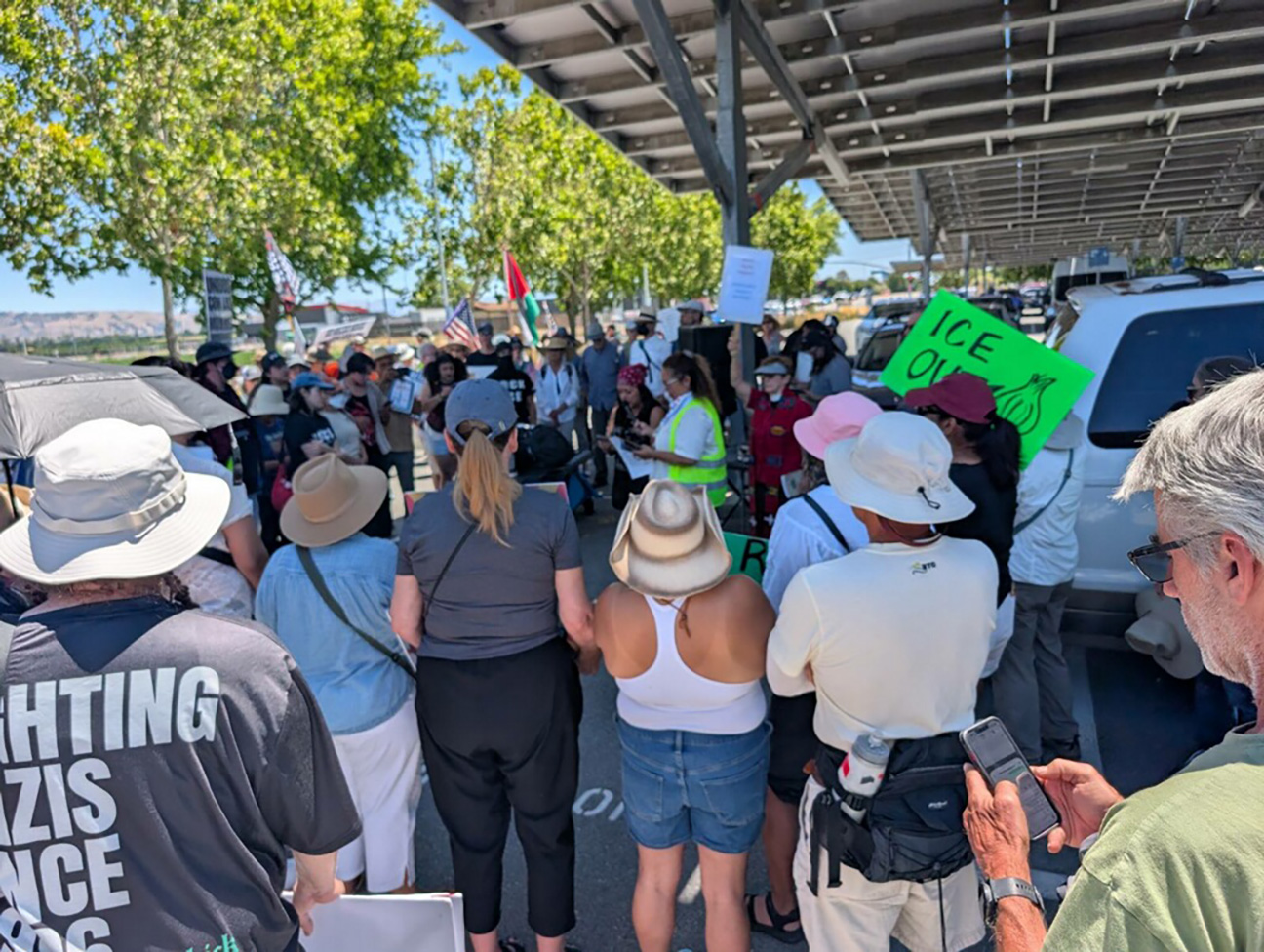
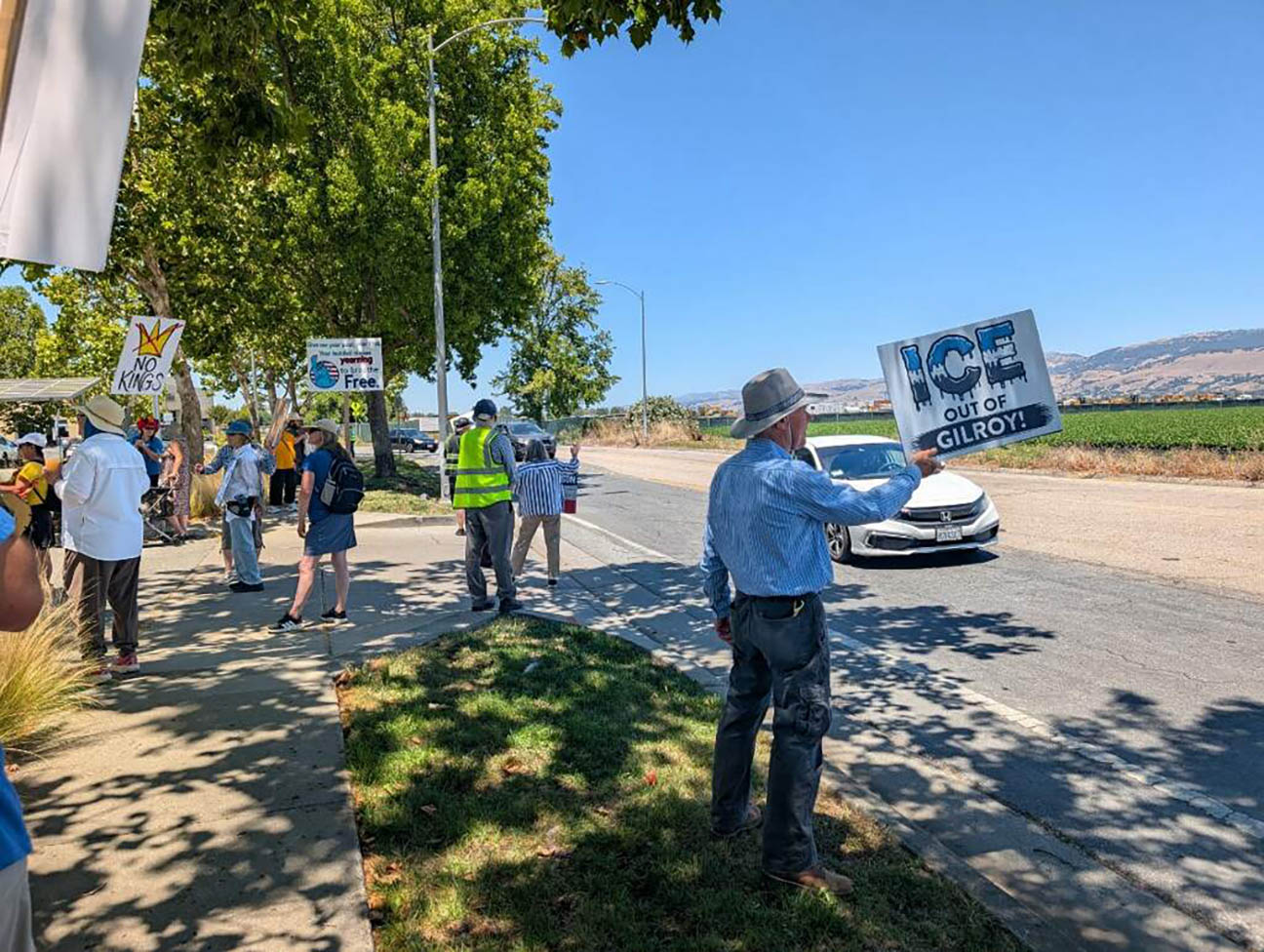
The impact of a detention center in Central or Northern California — and the likely ensuing dragnet — will not stay within its city or county boundary, warn immigrant rights advocates. A new ICE facility built in a place like Gilroy or the North Bay would open up the broader region — possibly all of the state north of Kern County — to increased surveillance, racial profiling, raids, detentions and deportations.
“We cannot freeze; we must mobilize to stop this,” said Adriana Melgoza, executive director of the Watsonville Law Center and a member of Monterey County Solidarity Network, a human rights advocacy organization.
“This is not the end, this is the beginning. A facility in our proximity, like Gilroy, can be devastating for our community. They need to recognize it’s not in our county, but it will target our county.”
The joining of Monterey and Santa Cruz counties with Santa Clara County and the state attorney general to block the construction of an immigrant detention center in Gilroy underscores the broader impact of the Trump Administration’s deportation plans.
The recent revelation of an agreement between Elmwood Capital Group, a real estate company, and the federal government for a 20,000-square-foot detention facility on 7240 Holsclaw Road, first published by San José Spotlight, came in the wake of secretive and still unexplained cooperation between Immigration and Customs Enforcement and the Fort Hunter Liggett Police Department, operating in South Monterey County on the largest U.S. Army reserve installation in the continental U.S.
Before that, immigrants rights advocates and residents had rallied against reported interest in repurposing the Federal Correctional Institute, Dublin, a shuttered federal women’s prison roughly 100 miles north of Monterey County, as well as a potential detention facility at Travis Air Force Base in Fairfield, about 150 miles north.
"It’s not in our county, but it will target our county.” Adriana Melgoza, executive director of the Watsonville Law Center and a member of Monterey County Solidarity Network, a human rights advocacy organization
A recent investigation of federal immigration detention centers by the California Department of Justice noted ICE “may seek to open additional facilities” in California and has been interested in doing so for at least two years.
“In August 2024, the U.S. Department of Homeland Security (DHS) issued a Request for Information for facilities that could be used for detention in ICE’s San Francisco Enforcement and Removal Operations (ERO) Field Office’s jurisdiction, which includes the Central Valley and Northern California regions,” reads the report.
“The federal government doesn’t have the capacity in these areas,” explained Bruno Huizar, detention and deportation policy manager for the California Immigrant Policy Center.
Limited detention space in Central and Northern California has prevented wide-spread raids and surges, Huizar said. But that could change with a single facility.
“Any detention center will increase arrests,” Huizar said.
A 2022 report co-authored by the Detention Watch Network, Immigrant Legal Resource Center and Ceres Policy Research group supports Huizar’s claim. Undocumented individuals in counties with detention facilities that have 50 or more beds are more than twice as likely to be apprehended than in counties with less capacity or no detention facilities, according to “If You Build It, ICE Will Fill It: The Link Between Detention Capacity and ICE Arrests.” Counties like San Bernardino that have the highest number of detentions are home to or near detention facilities, the report found, and counties in Southern California and Texas that are home to multiple detention centers have the highest rates of apprehensions.
“As detention capacity increases, so do ICE apprehensions,” states the 10-page report.
Enlarge
Another way to consider the significance of a proposed detention facility like the one near Gilroy is to look at cases when threatened raids never came about, organizers said.
In fall 2025, President Trump announced an ICE surge for the San Francisco Bay Area. Organizers in the region identified staging locations for federal agents in places like Alameda. But the surge never came. Local media suggested it was the region’s sanctuary policies that protected them, but such policies have not protected communities in Southern California. Trump himself posted that Silicon Valley elite used their influence with him to stave off the raids.
But organizers suggest it was something much simpler that preempted the surge: logistics and the lack of large detention facilities to hold detainees.
“Community organizing to rid Northern California of ICE detention centers has achieved a bottleneck in federal agents’ operations because they have to take people far away for detention,” explained Alex Mensing, communications director for the California Collaborative for Immigrant Justice.
Local pressure on city and county government officials has been successful across California, say immigrant rights advocates. Residents pressured Dublin City Council and Alameda County Supervisors to oppose ICE taking over the Dublin women’s prison. The city of Livermore is reportedly considering joining their neighbors in opposition.
Residents have also forced local governments to halt making space in county jails available for detainees by ending contracts with the federal government. The Yuba County Sheriff’s Department ended its contract between the local jail and ICE. Contra Costa County did the same in 2018. In Southern California, local pressure on city councils and county supervisors led to canceled contracts between ICE and jails in Glendale, Santa Ana and the city of Orange.
‘They can detain any one of us’
The largest immigration detention facilities in California are eight privately run prisons. The state Department of Justice’s recent Immigrant Detention in California report noted they are all in remote locations in Southern California — the Mojave Desert, Imperial Valley, San Joaquin Valley and the U.S.-Mexico border.
The closest facility to Monterey County is in McFarland — a town more than 200 miles away and at least a 3.5-hour drive. The logistics of moving large numbers of detainees far distances are complicated and limit what is feasible, though that hasn’t always stopped ICE.
Detainees from Monterey County are currently being held in California City Detention Center and Mesa Verde ICE Processing Center in Bakersfield, Melgoza said.
“Anyone can be subject to indefinite ICE detention, which is stripping our constitutional rights piece by piece.” Bruno Huizar, detention and deportation policy manager for the California Immigrant Policy Center
Public opinion has turned against Trump’s deportation agenda after mounting deaths in detention facilities, the killing of human rights activists in Minnesota, as well as images of a U.S. senator pepper-sprayed by federal agents in New Jersey. But immigrants rights advocates are concerned about expansion in light of the Department of Homeland Security’s $170 billion budget — with an additional $70 billion approved in June — making it the largest law enforcement agency in the U.S., with a budget larger than most nations’ militaries.
“Their number one agenda item is mass detention and deportation,” Huizar said.
Immigration detention is not limited to undocumented people, Huizar noted.
“All immigrants are subject to detention, including individuals with green cards, visa holders, citizens and non-citizen alike,” he said. “Anyone can be subject to indefinite ICE detention, which is stripping our constitutional rights piece by piece.”
Huizar offered the example of George Retes, a disabled U.S. Army veteran of the Iraq war. Retes worked at Glass House Farms, a cannabis farm in Camarillo raided last summer, and was held for three days by ICE at the Metropolitan Detention Center in downtown Los Angeles.
“If ICE can racially profile, arrest and detain a U.S. citizen veteran, they can detain any one of us,” Huizar said.
Enlarge

Have something to say about this story? Send us a letter.
SUPPORT NONPROFIT JOURNALISM 
GET OUR FREE NEWSLETTER