FEATURES |
By George B. Sánchez-Tello
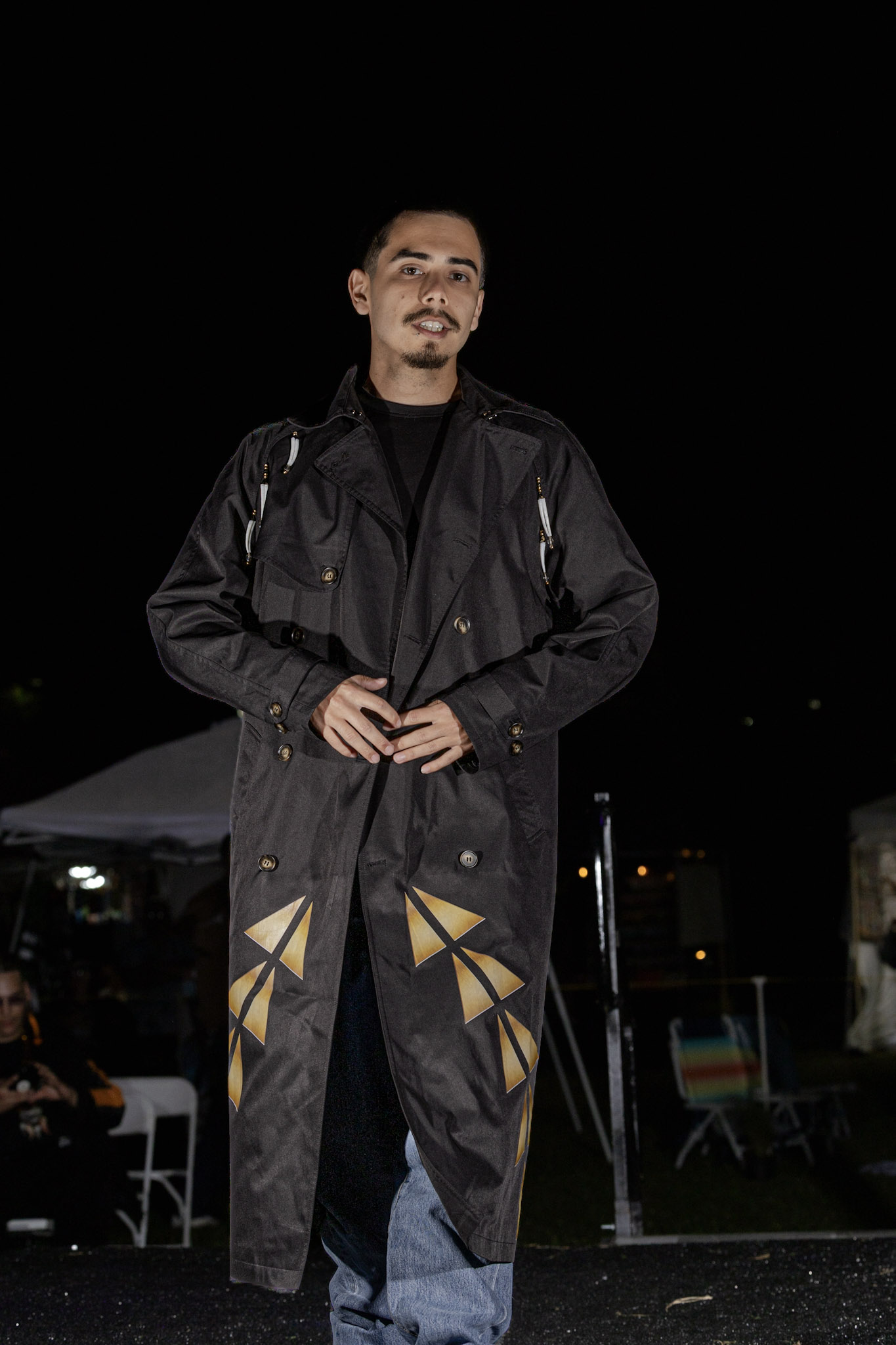
In the twilight of a Southern California day, Native youth begin changing their clothes in a county park. Their dressing rooms are shower tents and sheets hung from lines tied under canopies. Ribbon skirts hang alongside denim outfits, puffer jackets and even a trenchcoat on clothing racks tagged and labeled for models and designers. A deejay is playing The Halluci Nation, a duo of Native artists who mix traditional drum songs with techno and house. Models sit patiently as artists apply makeup.
Rise of the Red Runway has begun.
The event is the first Native fashion show by and for the Carmel Band of Rumsen Indians, who now mostly live in Southern California — more than 300 miles from their ancestral home along the Carmel River. The show is the second iteration of the tribe’s “youth takeover” a youth-organized opening of the powwow. The first one, last year, featured a demonstration of young people learning to speak Rumsen, their traditional language.
The visible presence of Indigenous people, — in events like a fashion show in public spaces like the park — is very important, Tribal Council advisor AnisaMarie Villa says during a panel discussion before the show.
“To be here, to be strong, to be proud of who we are, what we are and what we make is such a huge thing for me,” Villa said.
For people who have survived slavery, genocide, displacement, discrimination — and loss of land, language and traditions — a powwow that begins with youth is a statement of cultural prosperity.
Rise of the Red Runway is an opportunity for the next generation to develop confidence, pride and understanding of their heritage, tribal members explain. The youth takeover also offers the chance to organize a cultural event, as the planning and logistics of future powwows will eventually fall on these young people. To celebrate their culture and identity so far from their homeland speaks to the tribe’s cultural resilience and endurance.
Staged on the northeast corner of Arcadia Community Regional Park, east of Los Angeles, the fashion show takes place at the center of the powwow arena, a space traditionally reserved for dancers. This evening, the space is filled in with a small stage with two wings and a small runway flanked by two rows of folding chairs. Lighting illuminates the models and their clothes.
The arena is enclosed by approximately 30 pop-up canopies for spectators. A second layer of canopies is set back from the crowd and occupied by vendors of food, souvenirs and regalia like feathers and beadwork.
The clearing edges up against a canopy of oak trees and pines. The region’s iconic non-native palms sway above. The trees separate the powwow and fashion show from familiar suburban sites nearby: a donut shop, a liquor store, a Denny’s diner and an auto dealer.
“At one point, we were not allowed to do what’s taking place today. So I want to continue with this message that we are still here, not just surviving but thriving.” Jose "Hands" Lopez
The night’s master of ceremonies is Jose “Hands” Lopez, an Indigenous designer and emcee from the Hopland Band of Pomo Indians. Members of the Carmel Band of Rumsen Indians met Lopez at the Hollister Powwow at Bolado Park in Tres Pinos in November. There, Lopez and Rumsen youth participated in a fashion show. One of the featured designers was Rebekah Jarvey, who danced at the powwow and later displayed her work, which has been featured around the world and included in Nike’s N7 Indigenous collaboration.
Youth Council treasurer Amber Gutierrez explains the impact of the experience.
“The smiles, the confidence and growth in one night that the fashion show gave to our youth was everything for us, so we wanted to bring that home,” she says during the pre-show panel discussion in Arcadia.
Guillermo Morales, who helped organize the youth takeover, says his 10-year-old daughter Marissa cried with nervousness when she was initially asked to model in Hollister. But the glamour of modeling one-of-a-kind clothes and being pampered by a hair and makeup artist was transformative.
The youth council’s preparation for their own event in Arcadia continued to build her confidence, he says.
“It brought these kids together in positivity and confidence but also learning how to work as a youth council,” Morales says. “We’re trying to build them for the future, because they are the next generation.”
| RISE OF THE RED RUNWAY |
Photos by David Cobbos for Atomic Photography.
How does a group of people end up celebrating survival and cultural pride 332 miles south of the river that gives them their identity? Diane Castro Arenas, the tribe’s vice chair, helps explain.
“We helped build the mission in Carmel,” she says. “Do you want the fourth grade version or the real version?”
“Work” implies choice, agency and a wage, none of which were had by the Native labor force that built the California missions, spanning Sonoma to San Diego, and including Santa Cruz, San Juan Bautista, Carmel, Soledad, San Antonio and San Miguel. California Indians were slaves under the Spanish Colonial system, and later Mexican, Californian and U.S. republics.
In 1851, California Governor Peter Burnett led a genocidal campaign against Natives and continued the displacement begun under Spanish missionaries and accelerated by the California gold rush.
The Carmel Band of Rumsen Indians made their way south away from Monterey County, working on ranches and missions until they came to Southern California, explains Castro Arenas, eventually settling in places like La Presa, where a small stone dam diverted water to the San Gabriel Mission. Today it is the headquarters for Sunnyslope Water Company.
There, the tribe’s families dispersed along the region’s valley, foothill and high desert communities, Castro Arenas says.
Morales, who is Castro Arenas’ nephew, adds that only within his lifetime — since the 1970s— has it been safe for the tribe to reveal their identity and begin speaking Rumsen again.
Growing up alongside Catholics and Christians, Morales remembers being told his Native traditions were “witchcraft.”
“You learn to adapt; that’s why ceremony stays secret because a lot of people don’t understand,” Morales explains.
But a powwow in one of the region’s largest public parks and the artistic statements from the youth takeover reveal more than adaptation.
“This is emotional, to a certain extent for me, because I’ve been learning about our history and what our people have come through; I just want to say at one point, we were not allowed to do what’s taking place today,” said Lopez. “So I want to continue with this message that we are still here, not just surviving but thriving.”
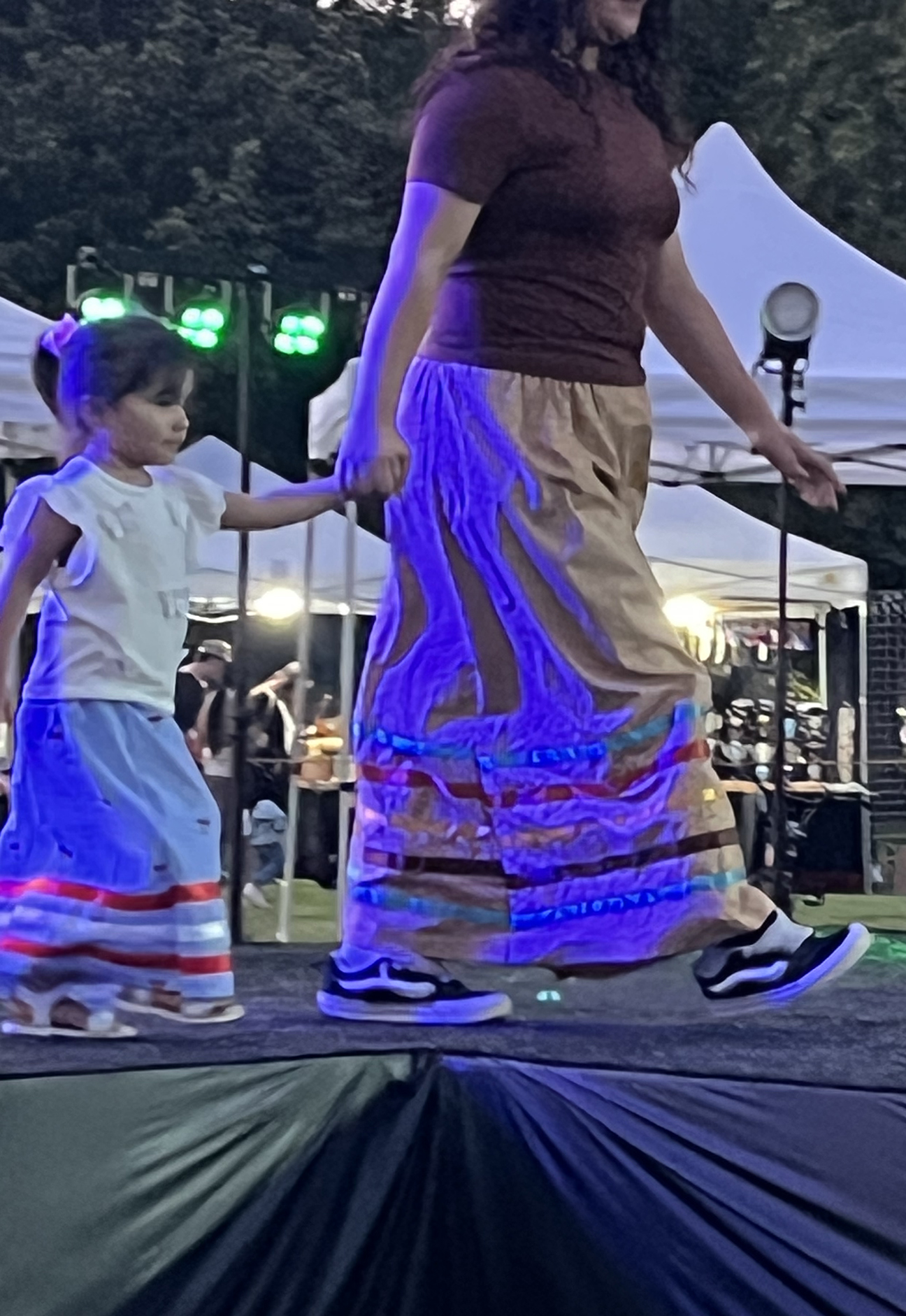
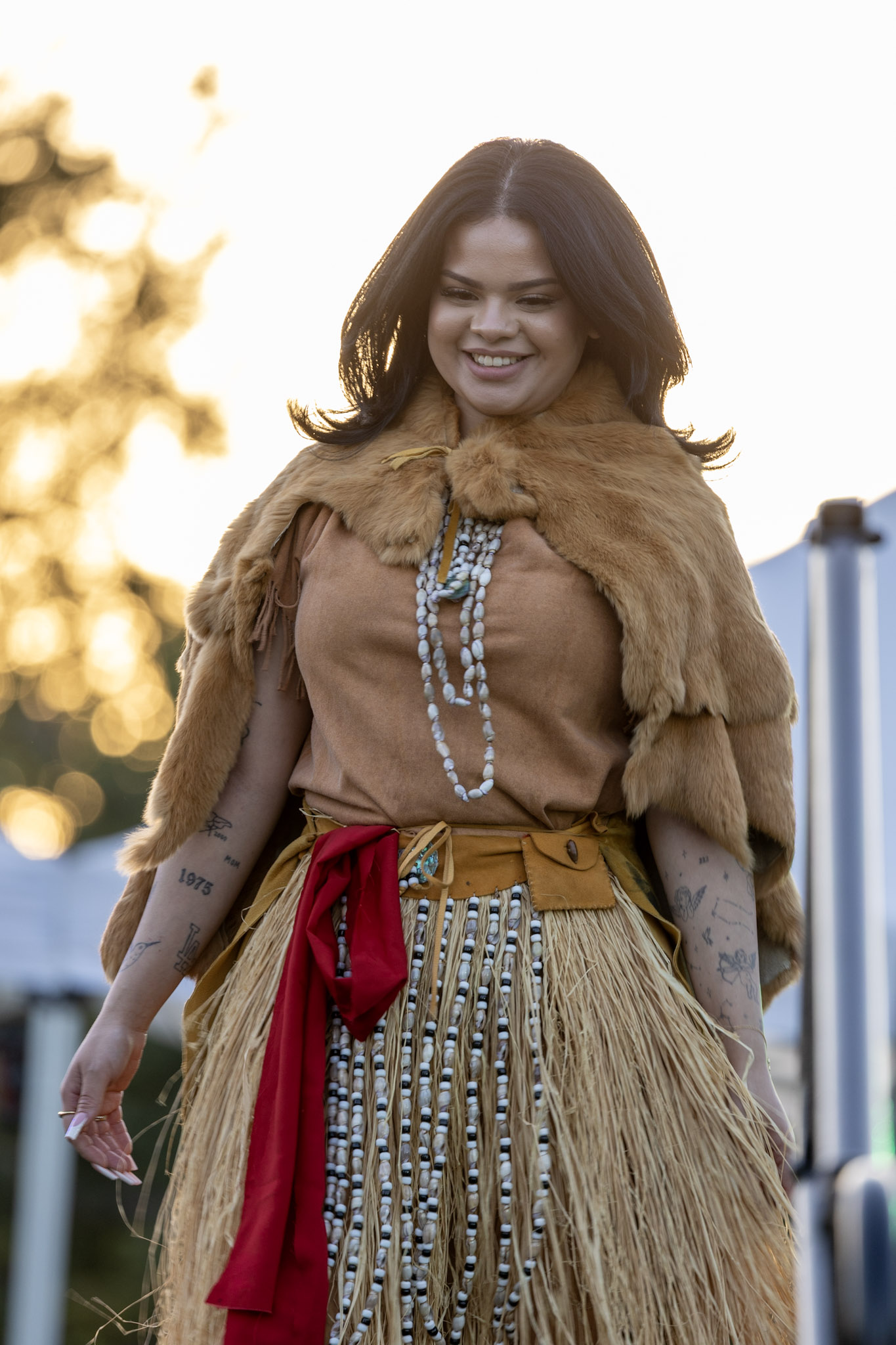
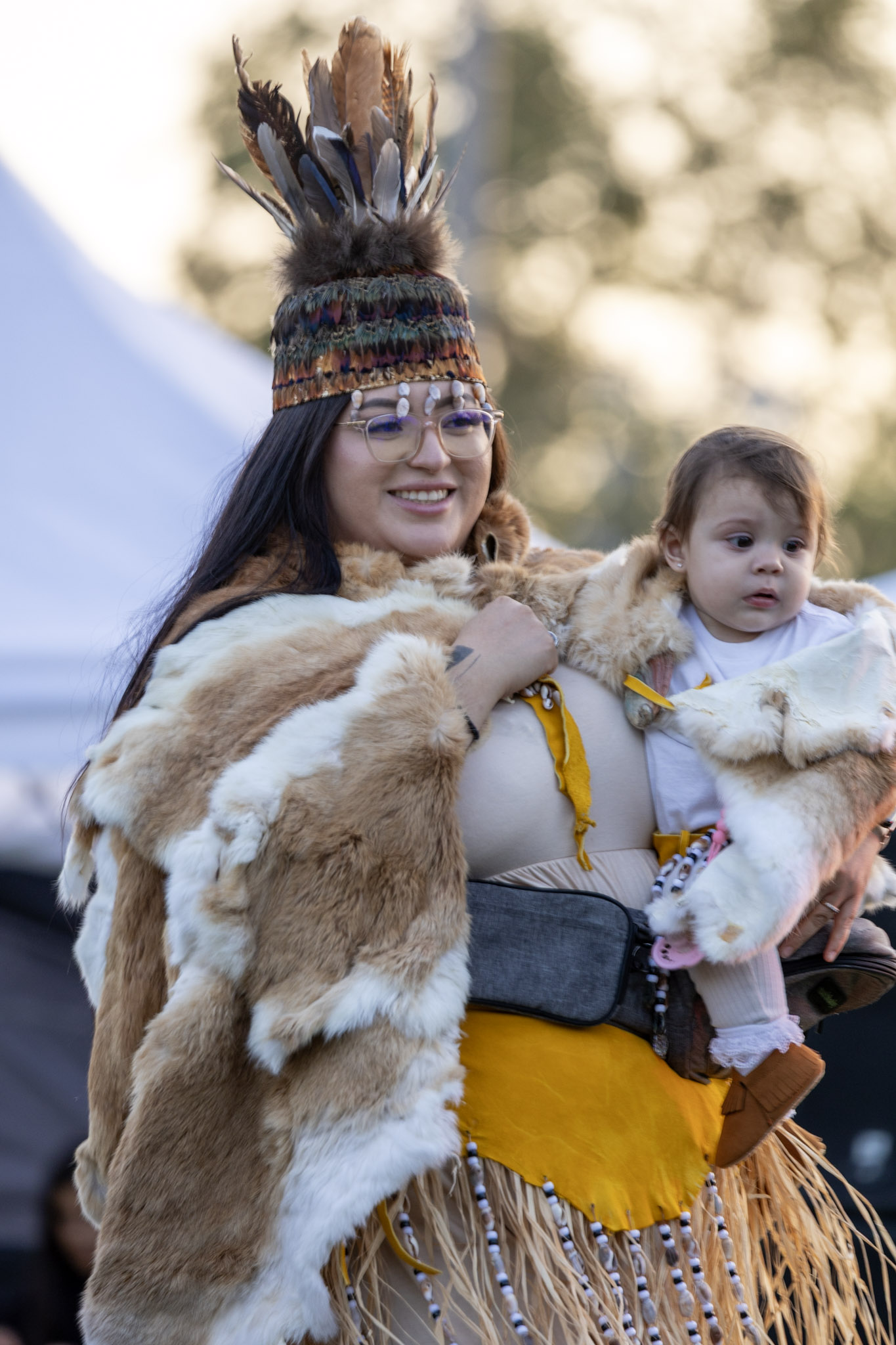
Before the modern fashion begins, there is a parade of regalia — traditional and sacred clothing. The materials reflect the natural world around the Rumsen families: skirts made of tule reeds and willow — as well as redwood bark, deer hides, rabbit fur, abalone and olivella shells for detail, decoration and basket hats.
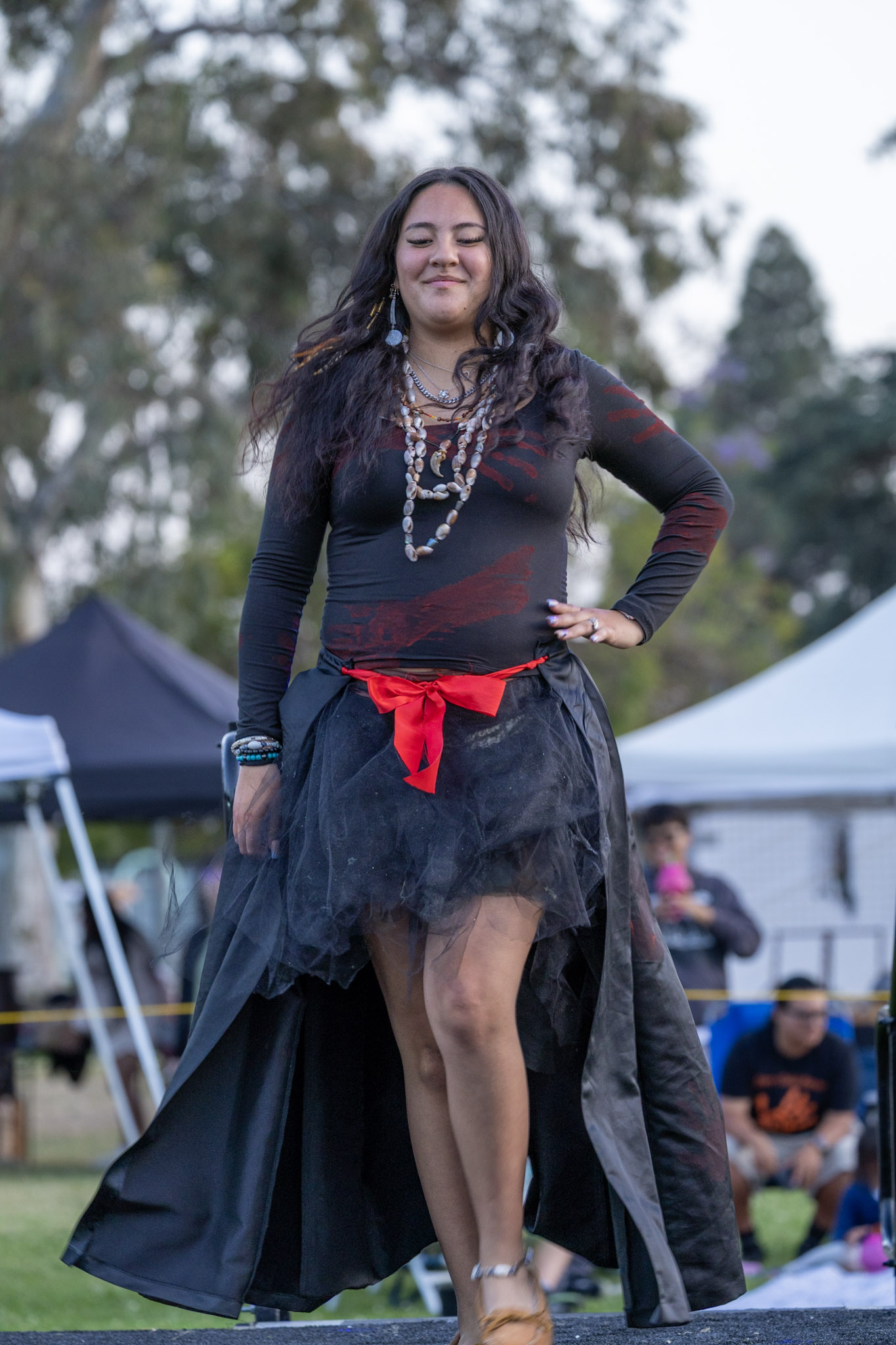
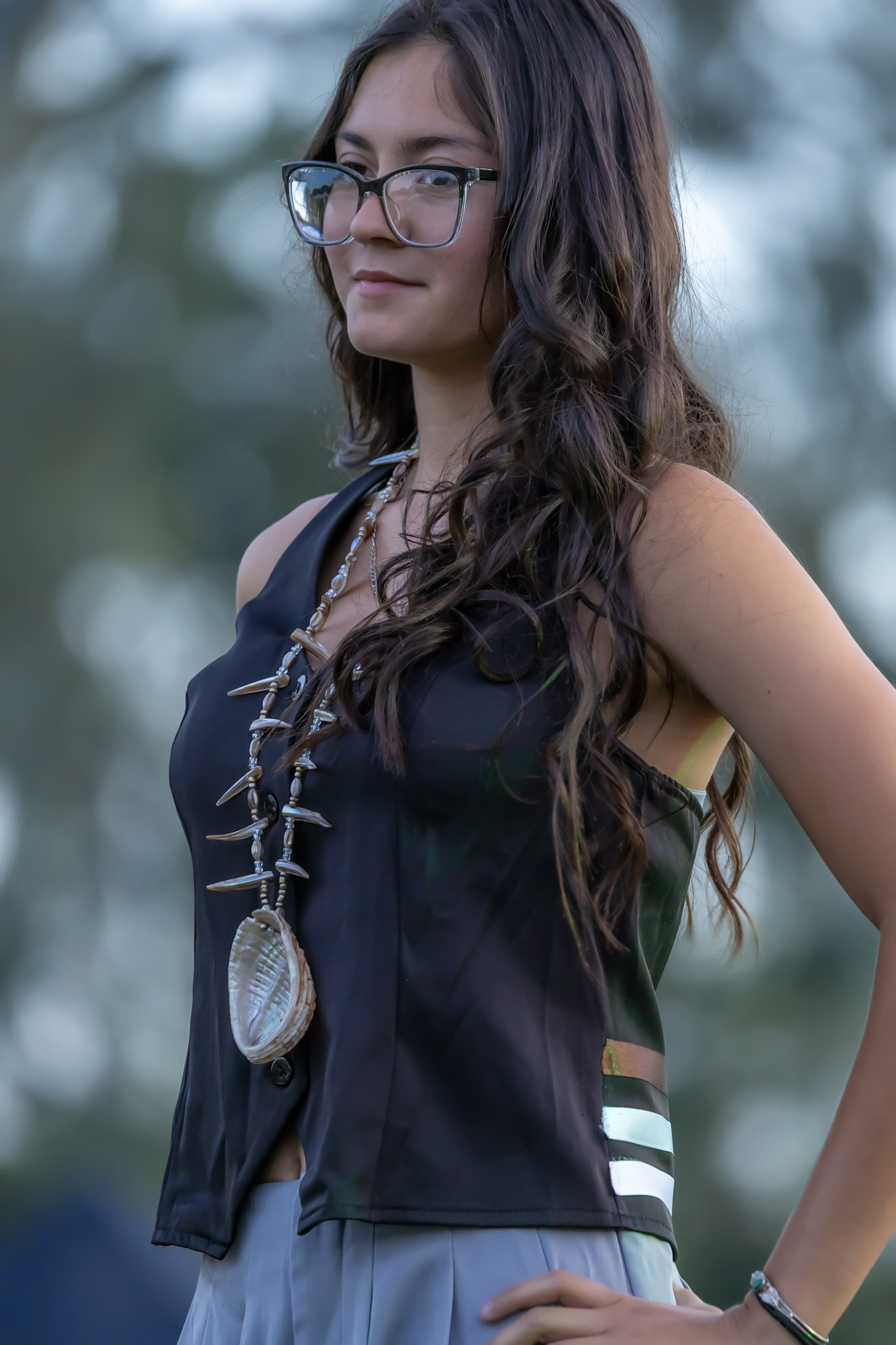
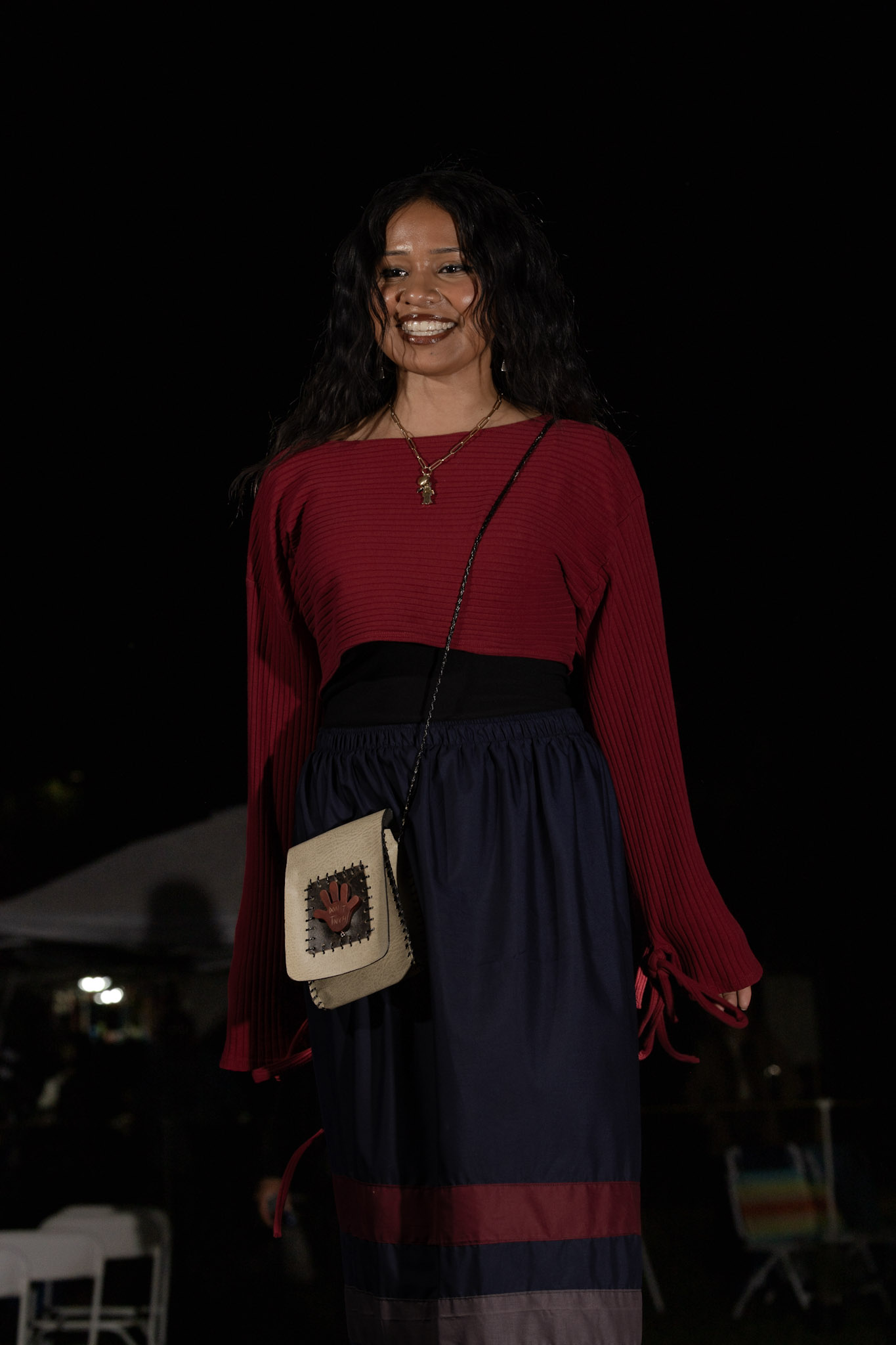
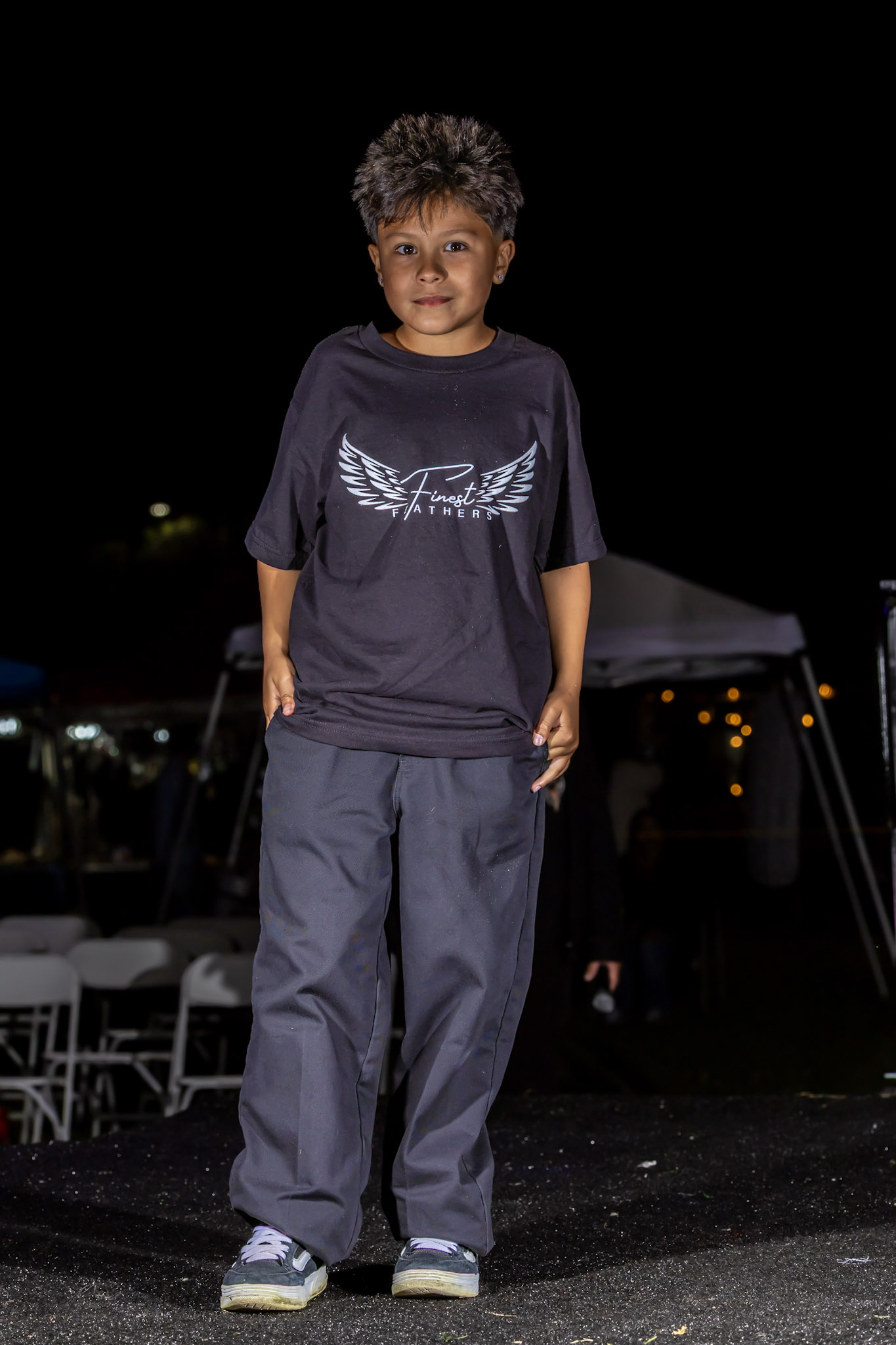
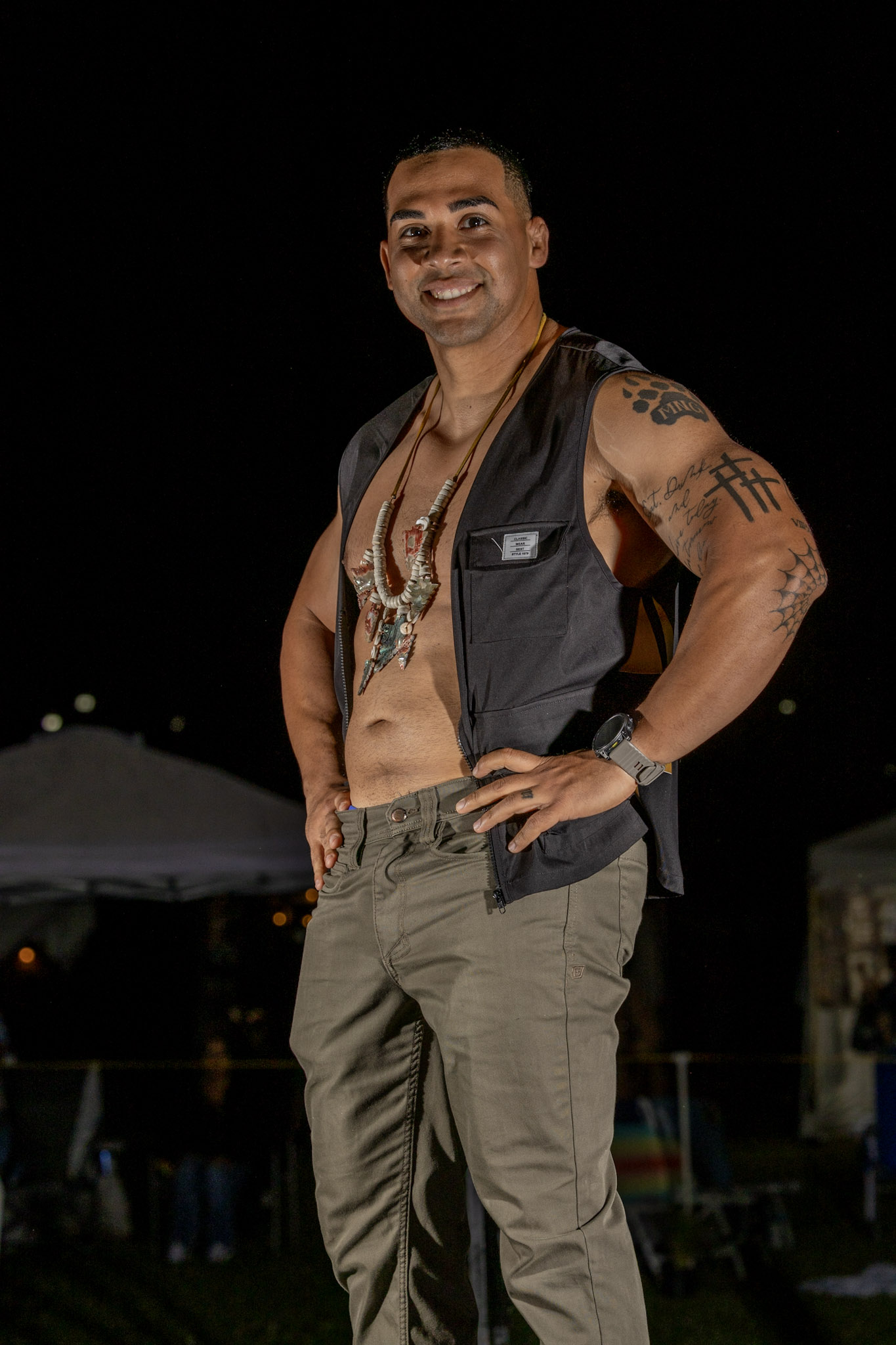
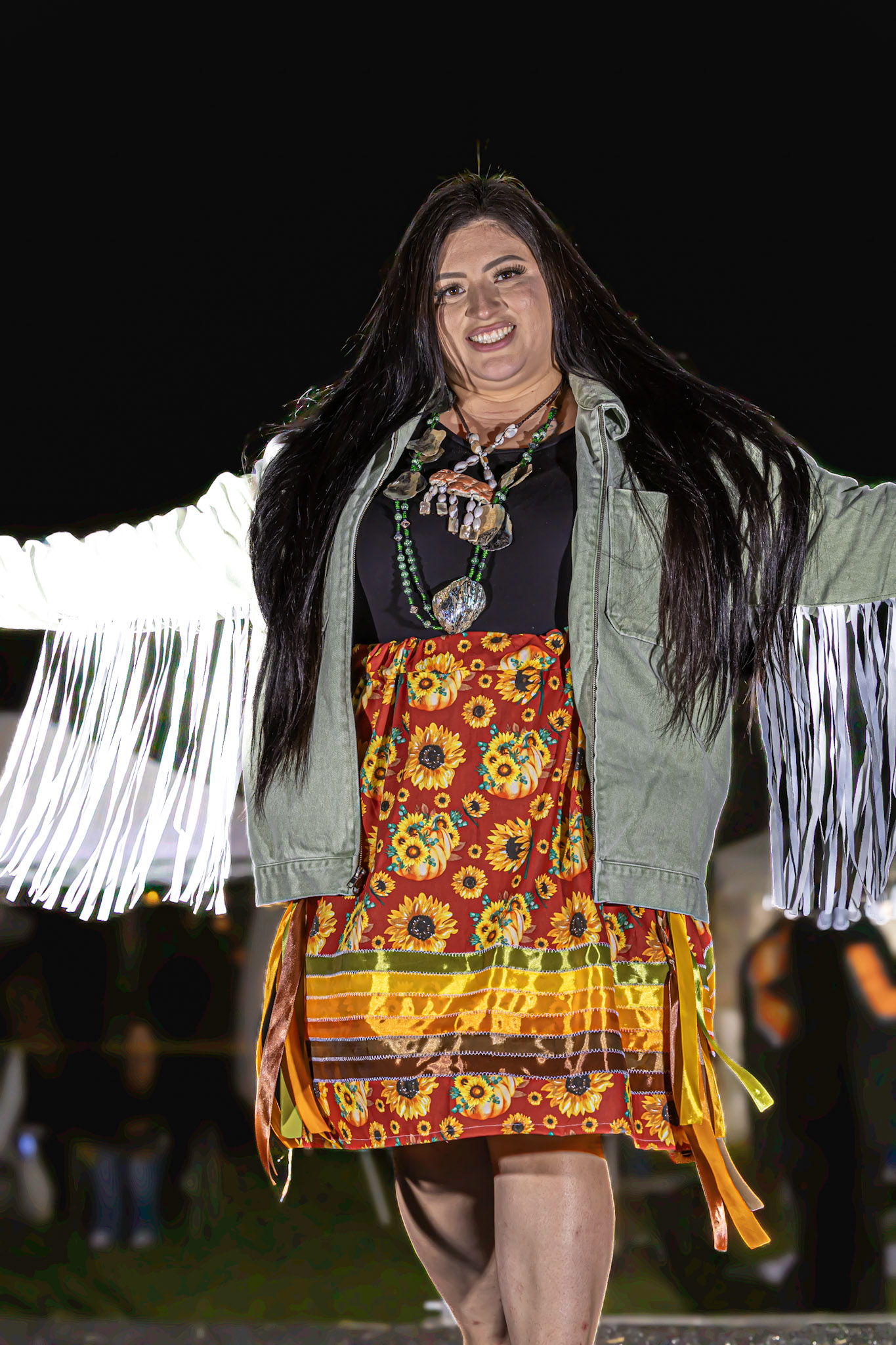
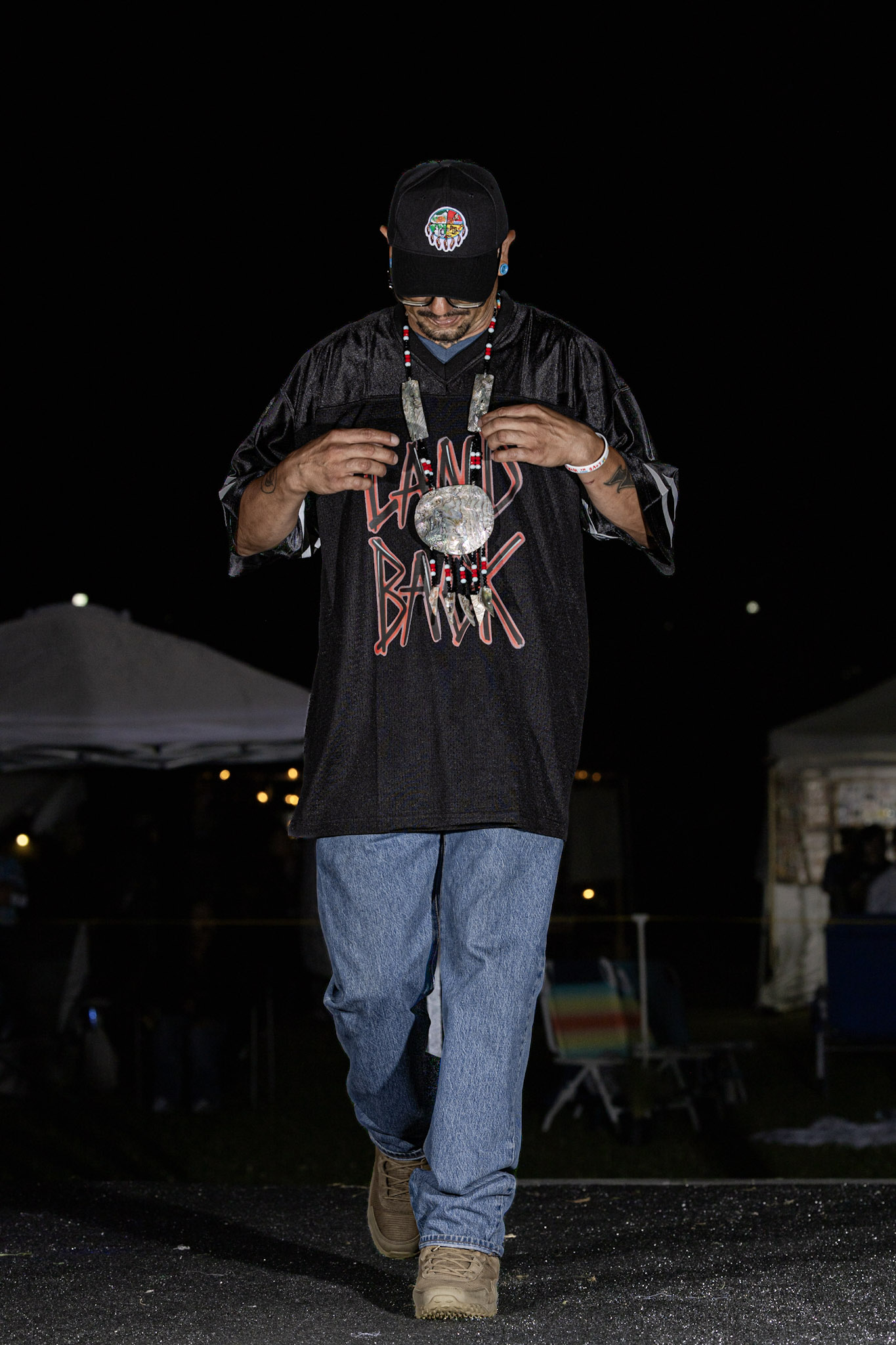
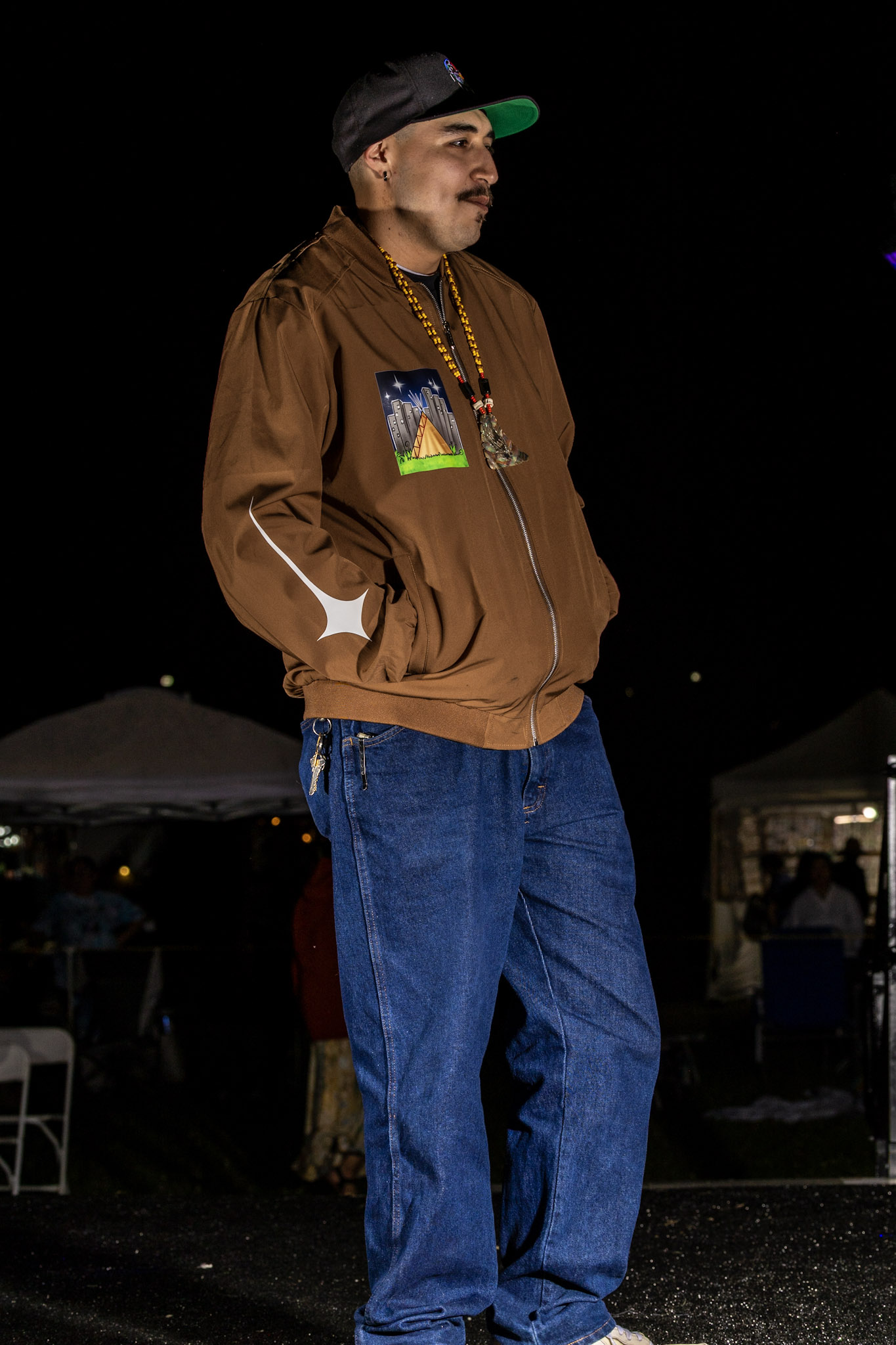
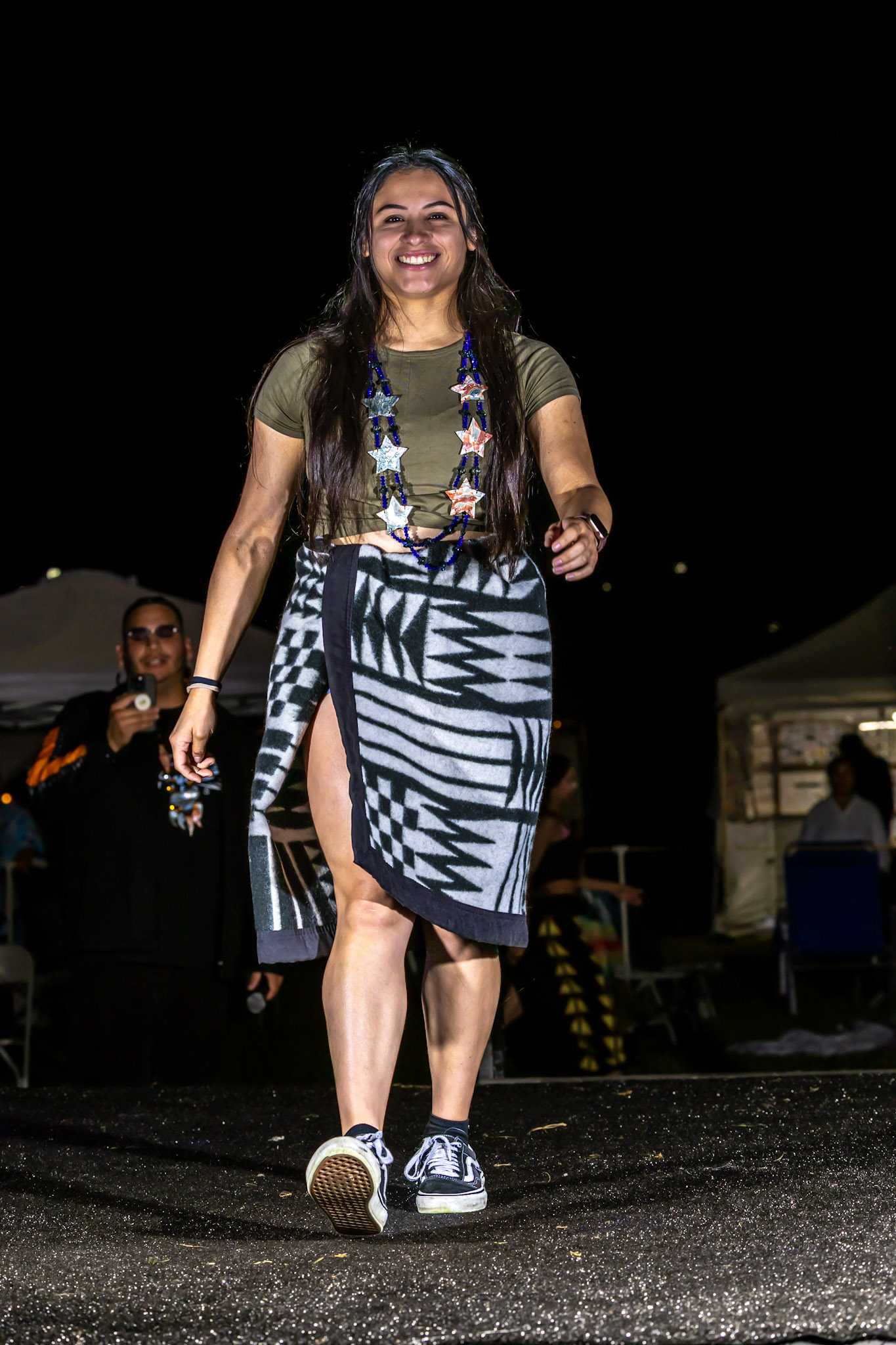
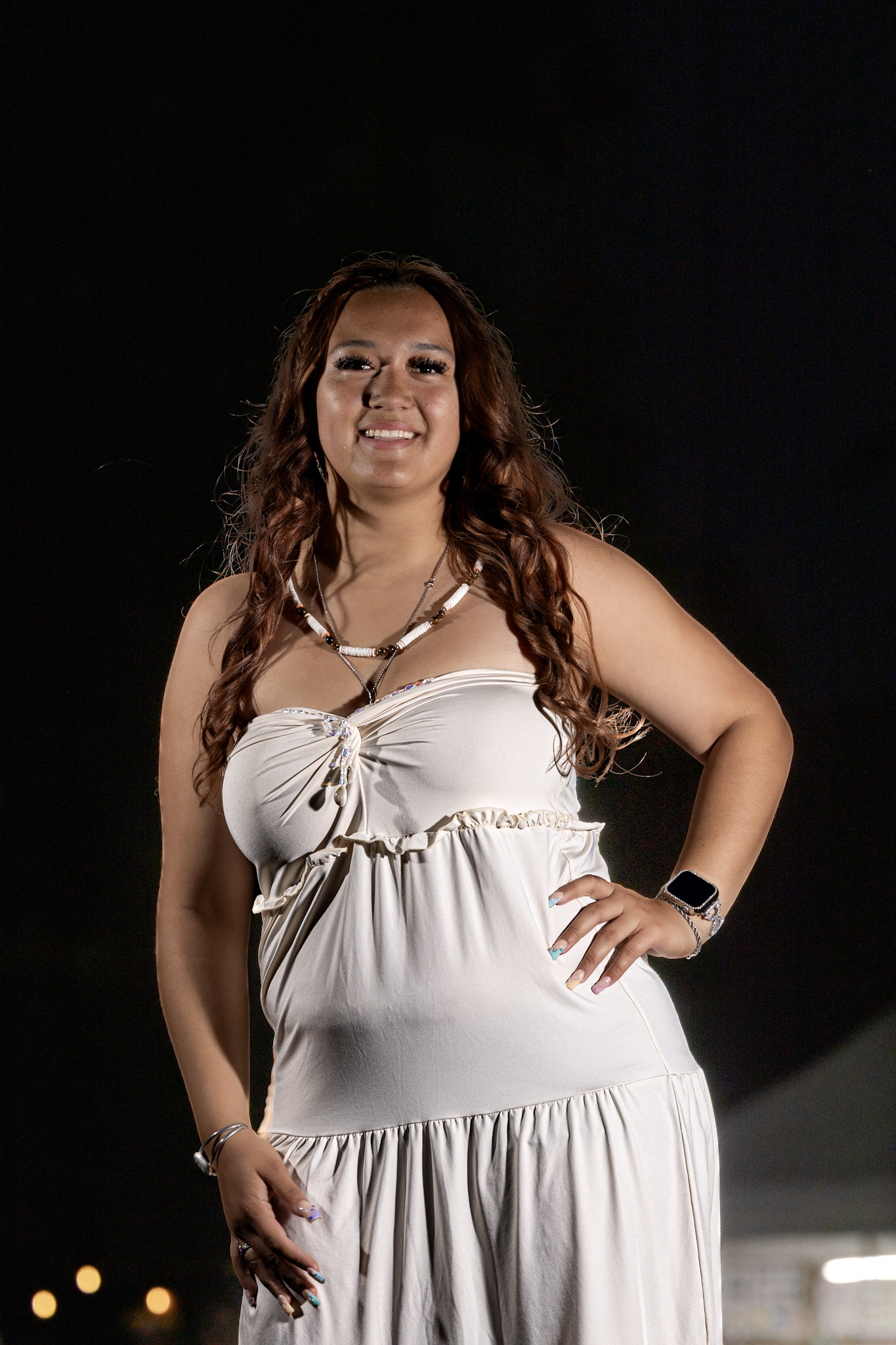
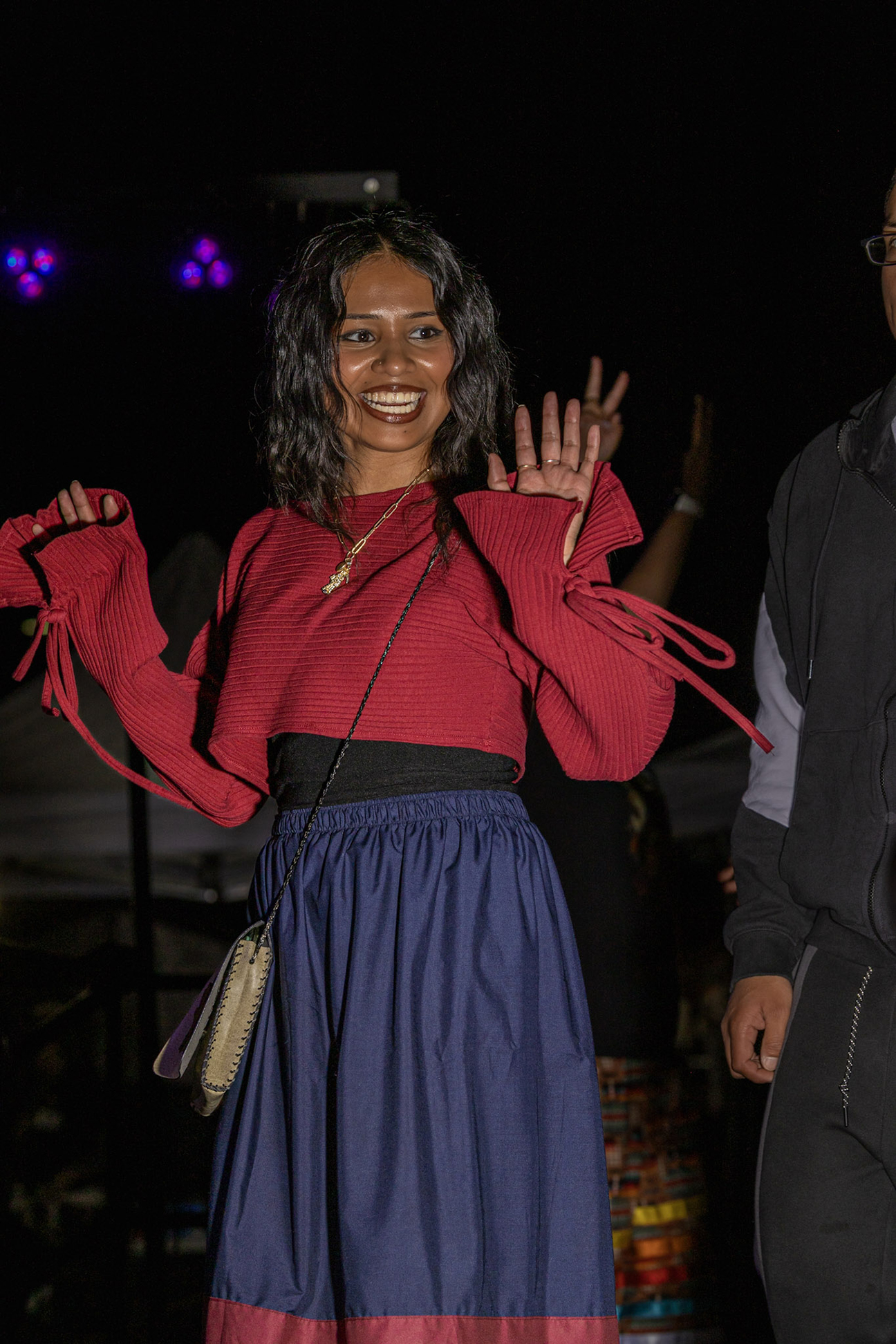
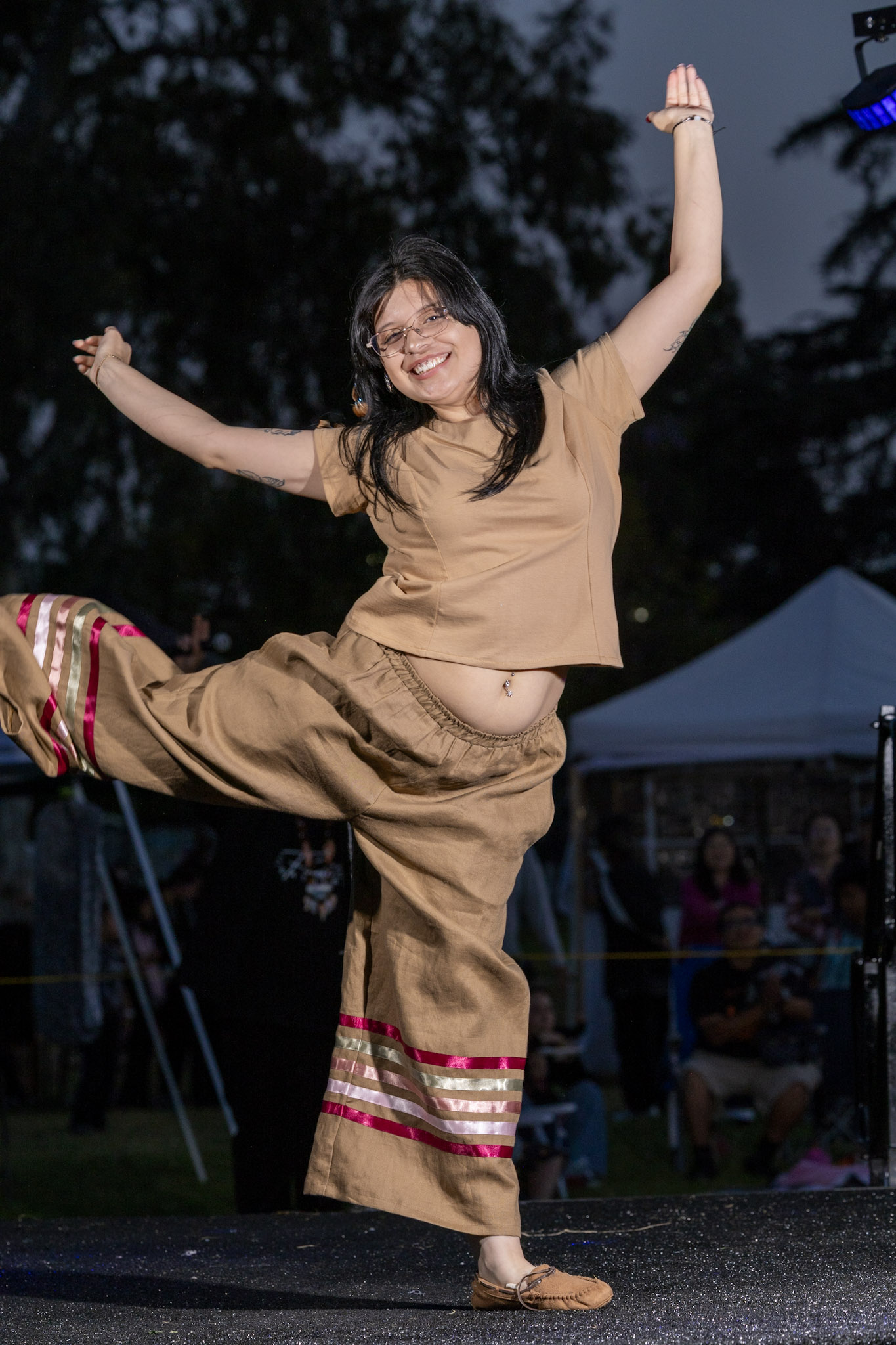
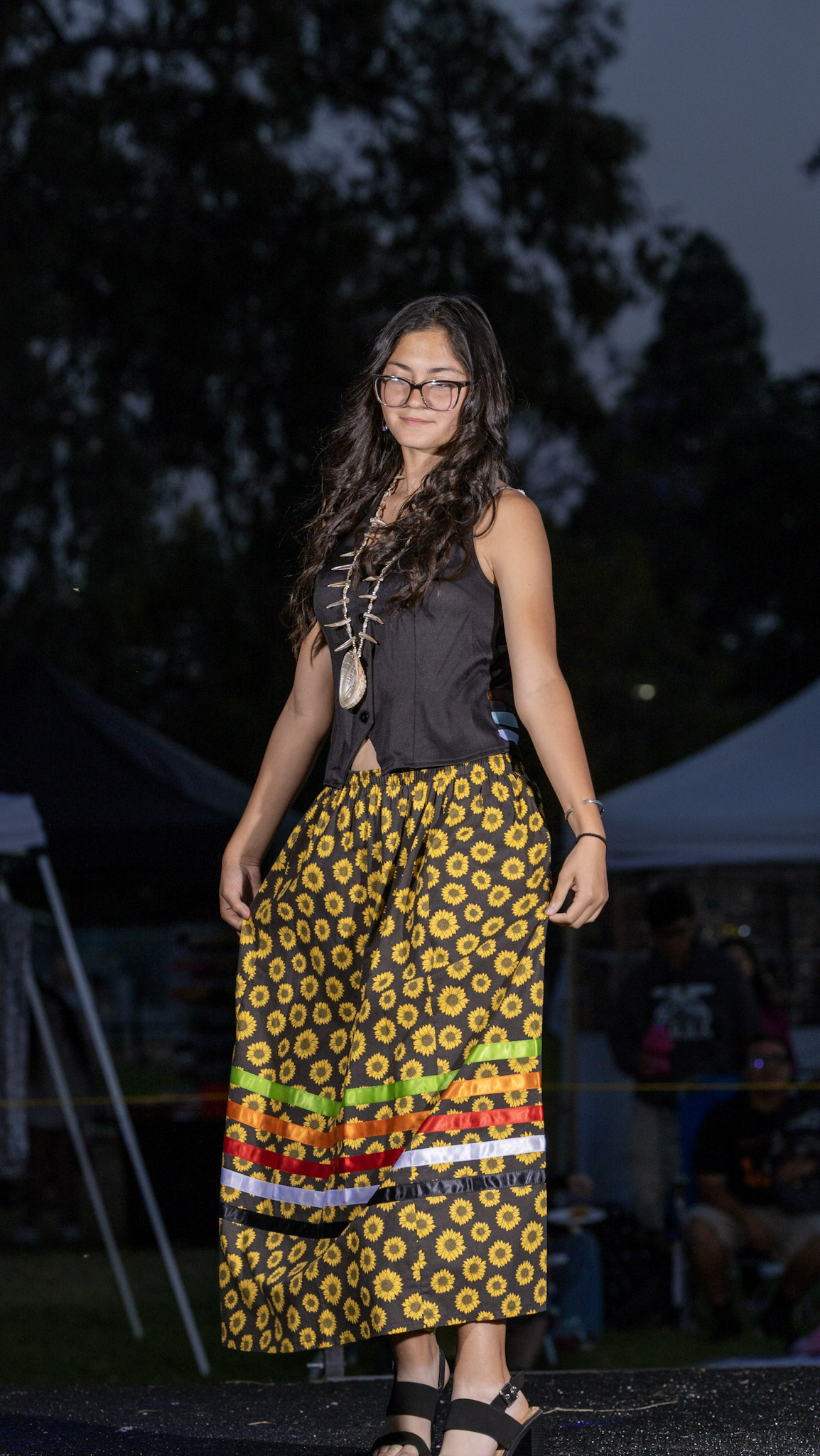
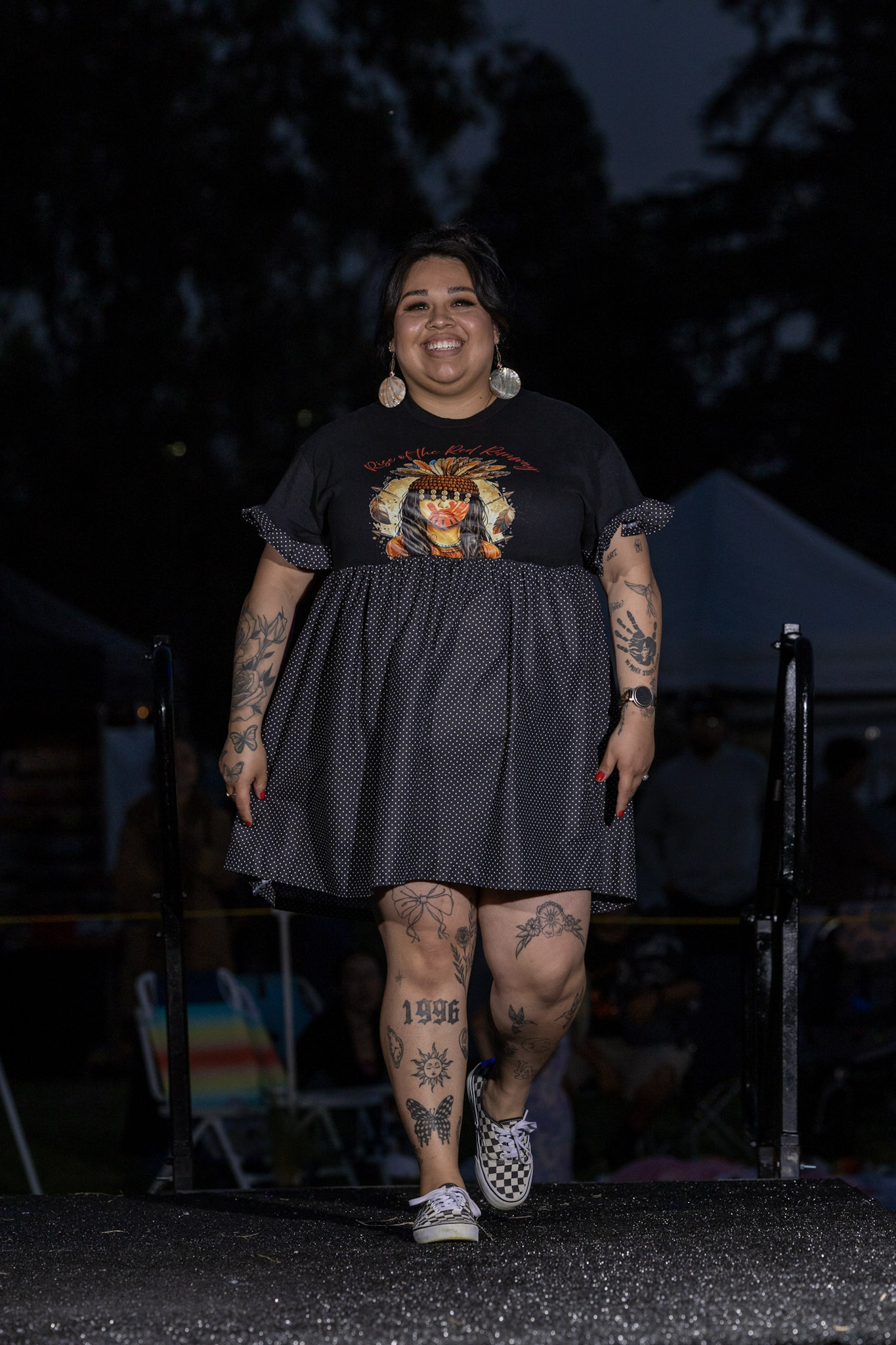
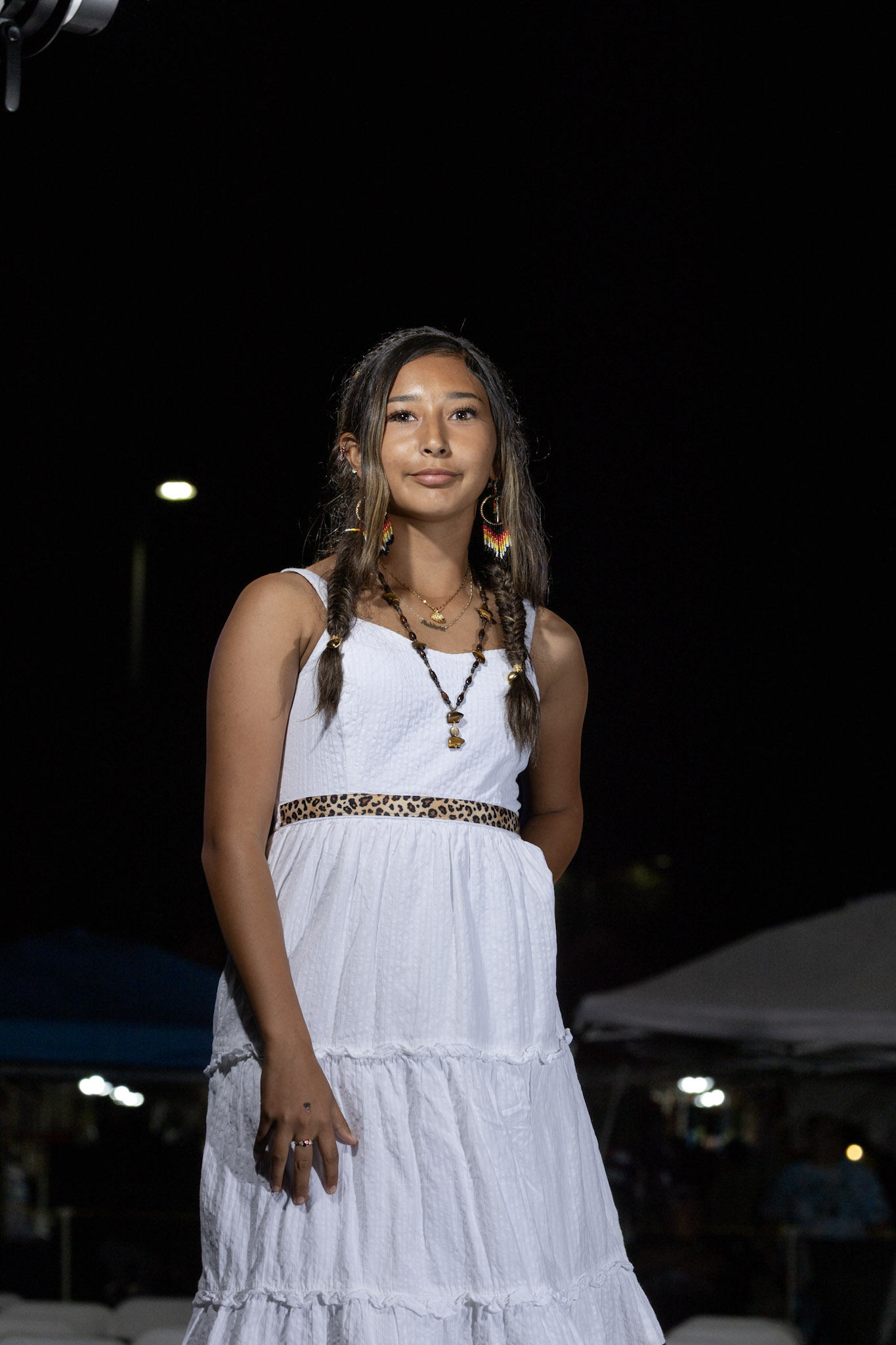
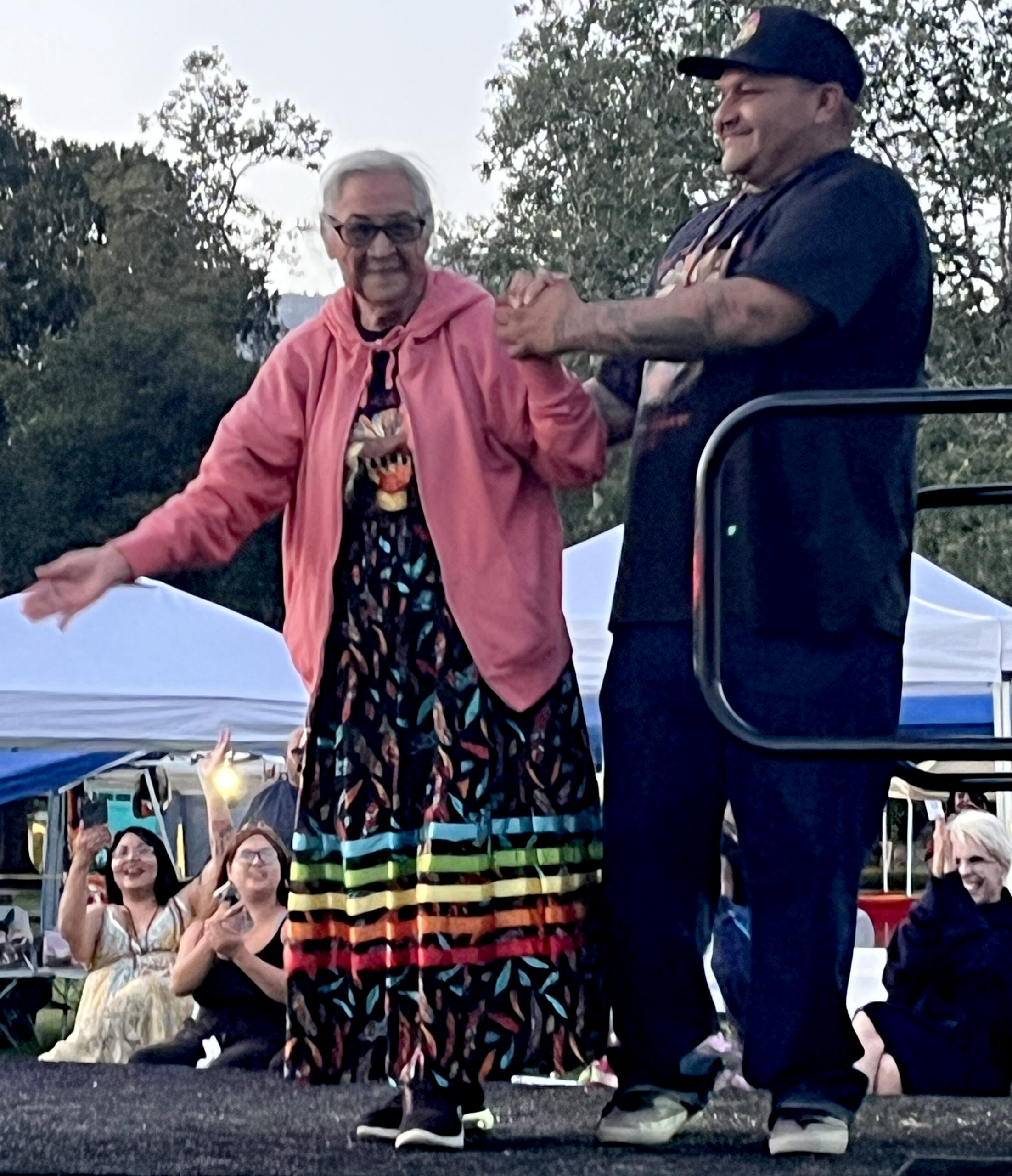
The fashion show features modern clothing with nods to heritage: the present and future. Models wear variations of ribbon skirts, with patterns like a day-glow alien head with metallic silver and black ribbons by Christina Soriano — modeled by Eivanna Cardoza — or a shimmering silver and pink cocktail dress with pale pink-hued ribbons at the edge by AnisaMarie Villa and modeled by Brianna Retamal. Another outfit by Villa applies the distinct ribbon skirt embellishments to a work-friendly outfit of gray wide-leg women’s trousers and black waistcoat, or vest, — a nod to 70s chola style — accentuated by an abalone shell necklace and modeled by Catalina Retamal.
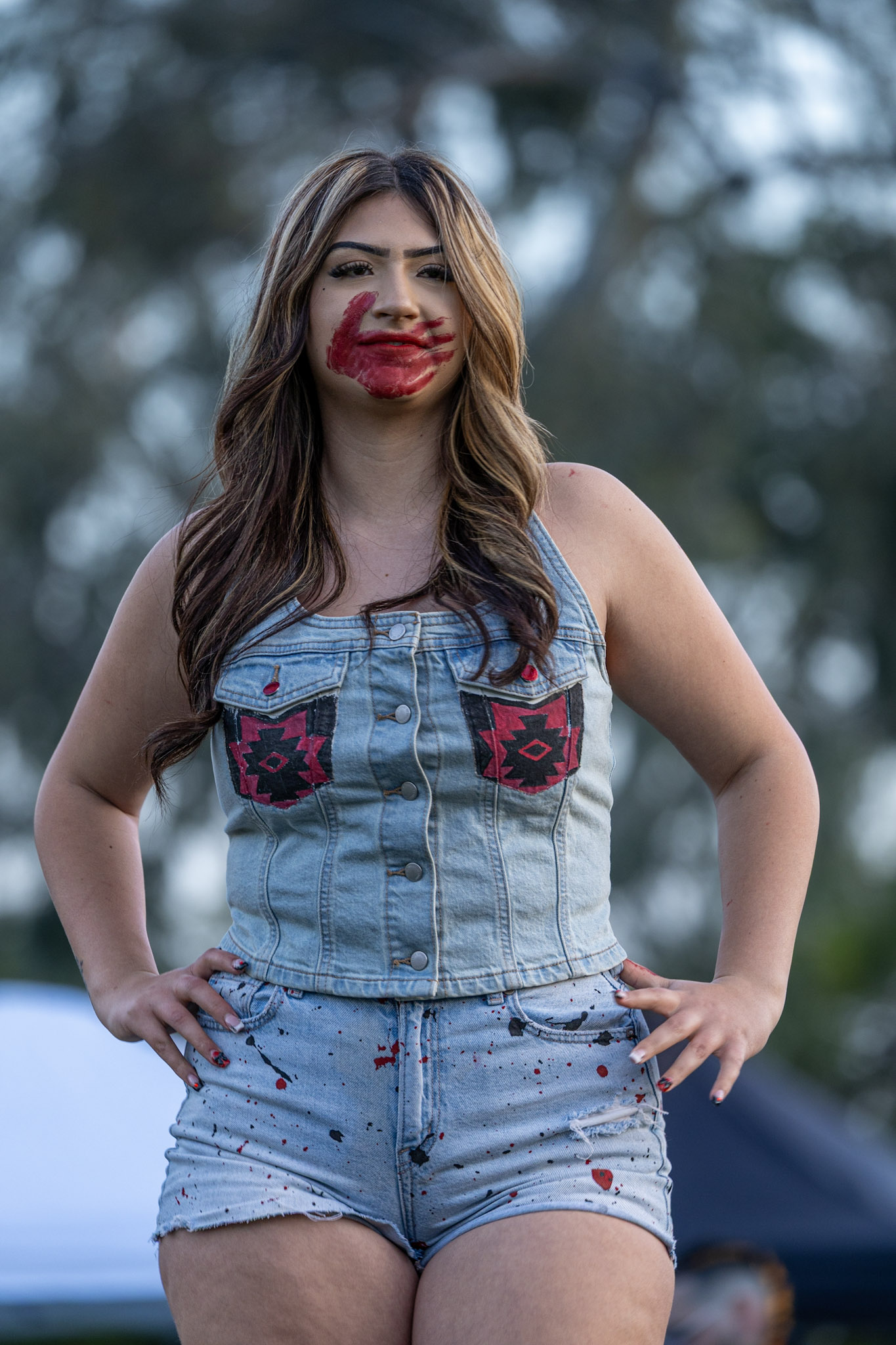
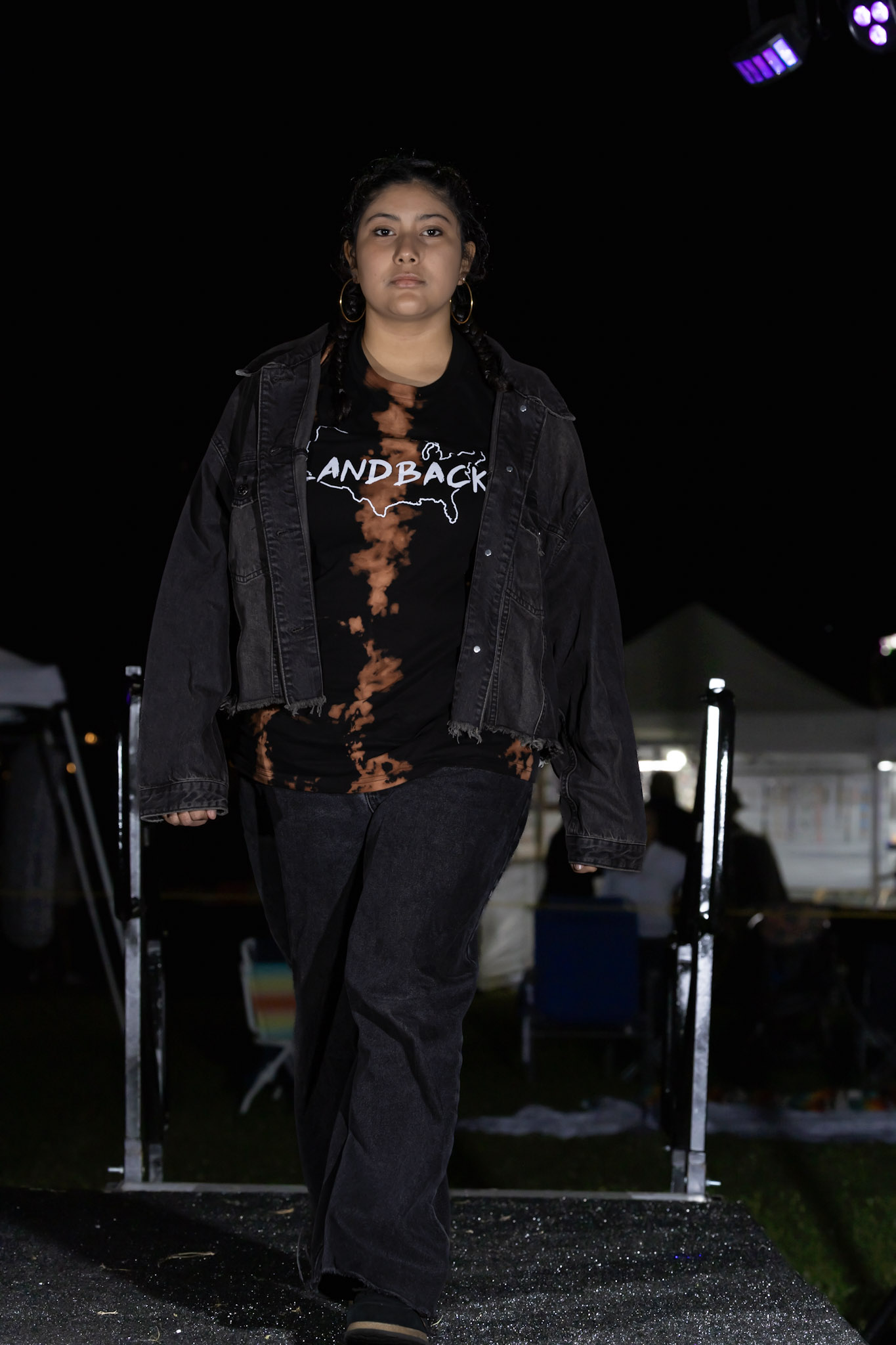
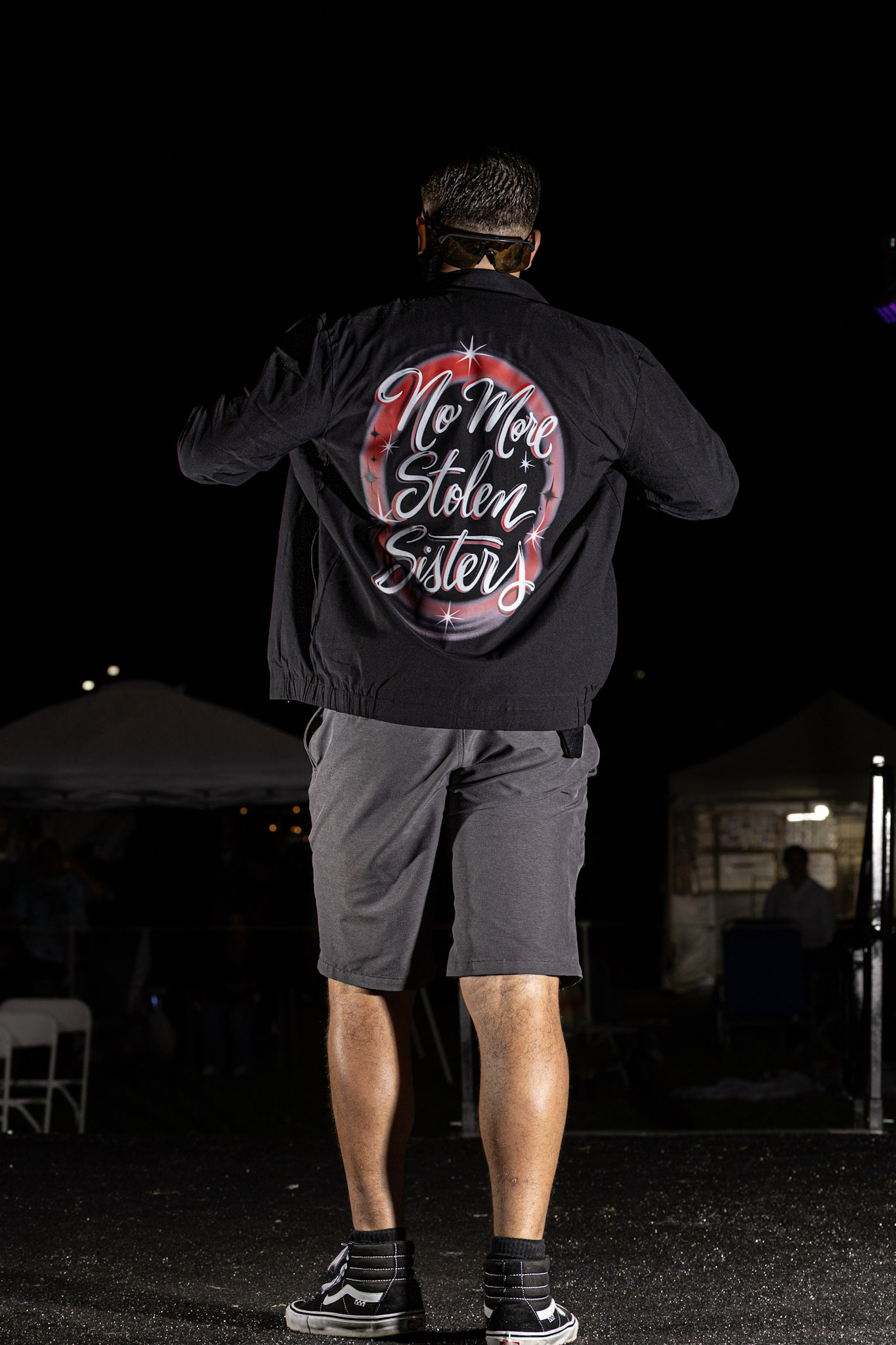
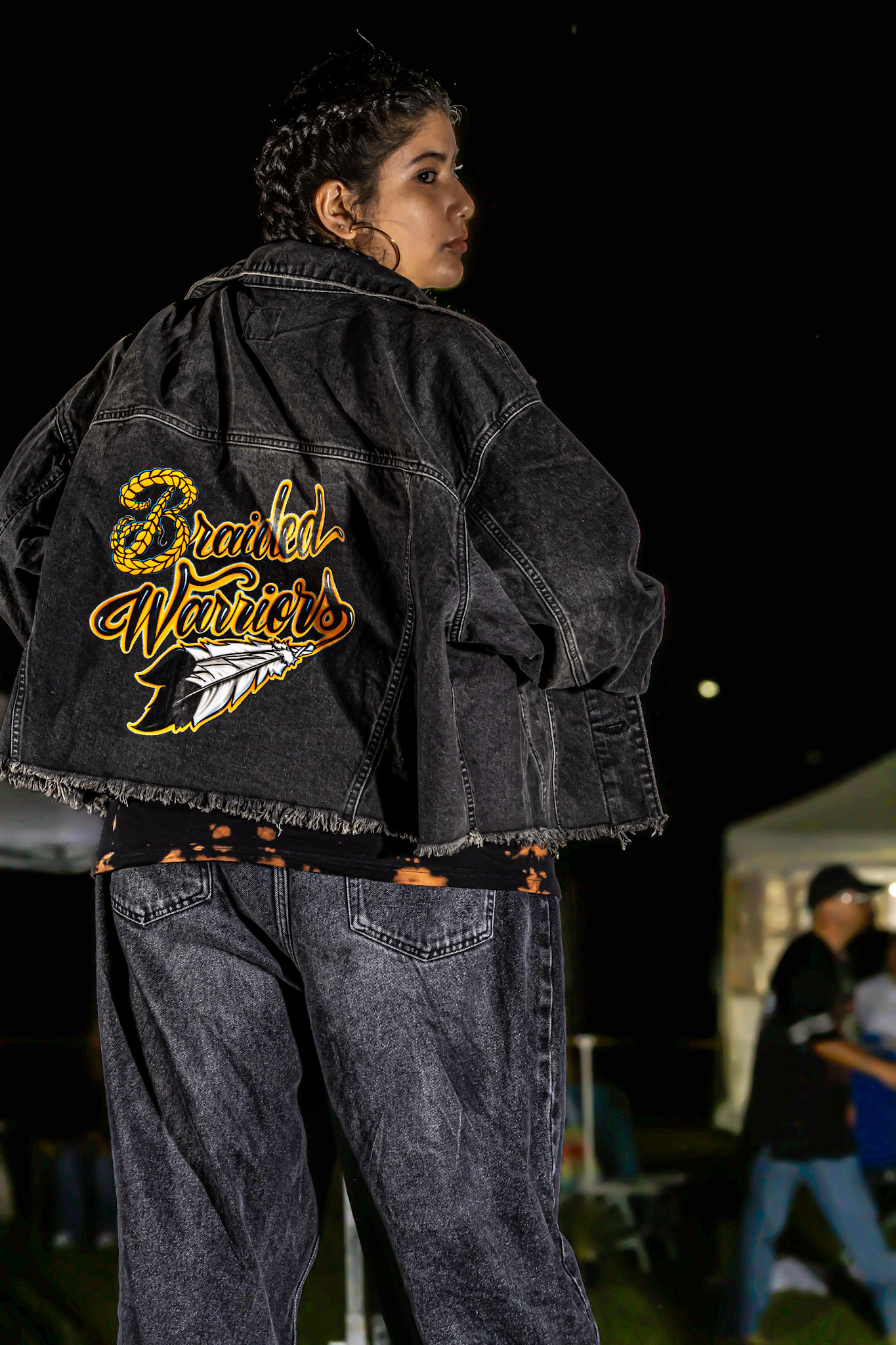
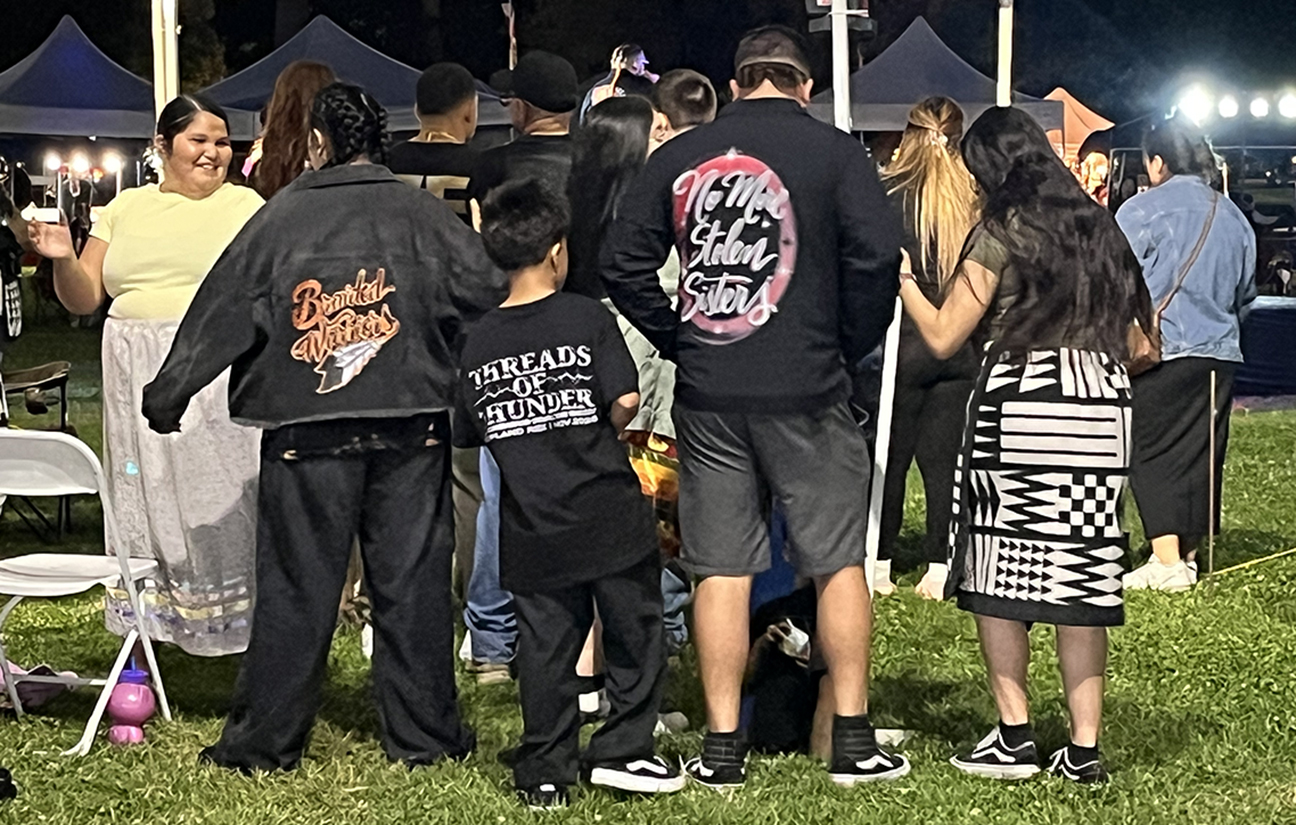
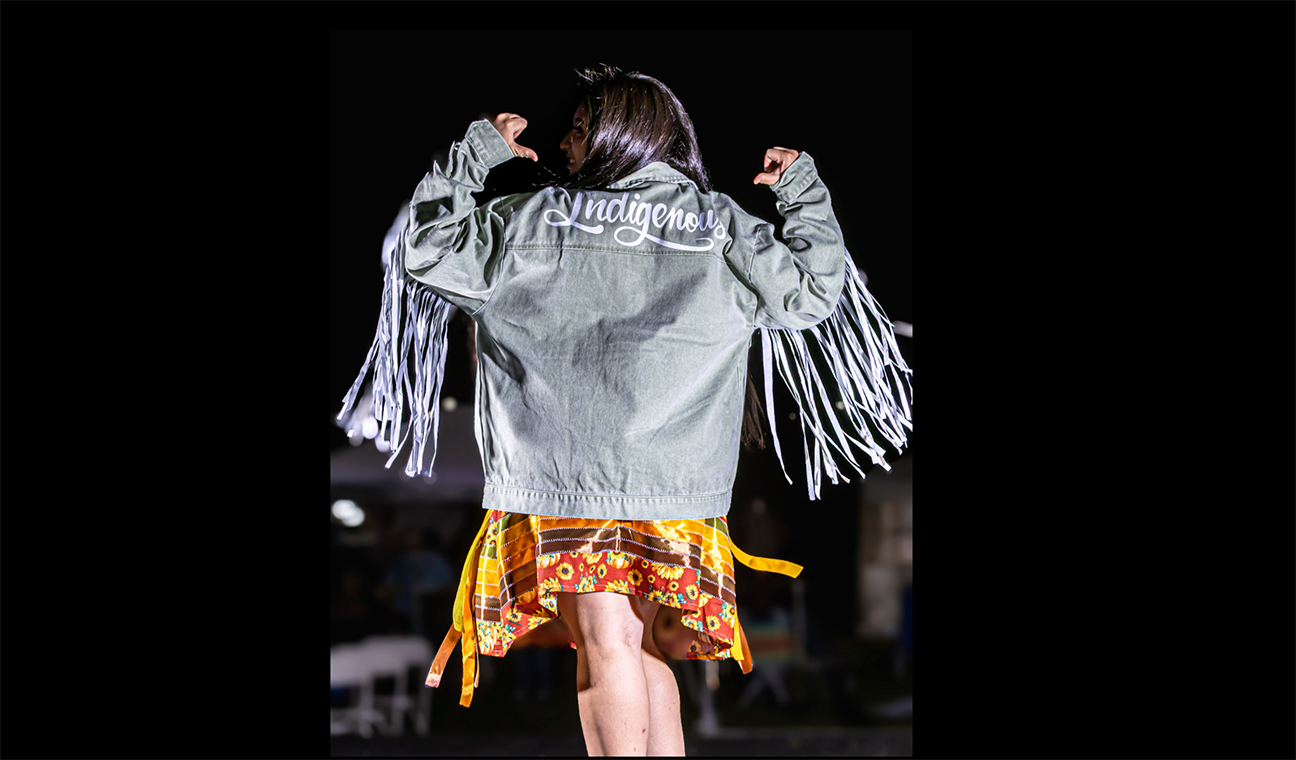
Explicit political statements are visible as well. Models wear Lopez’s Eisenhower jackets and denim trucker jackets airbrushed with phrases like “Braided Warrior,” “Stolen Land,” “No More Stolen Sisters,” and “Stop Colonizers From Stealing Native Children.”
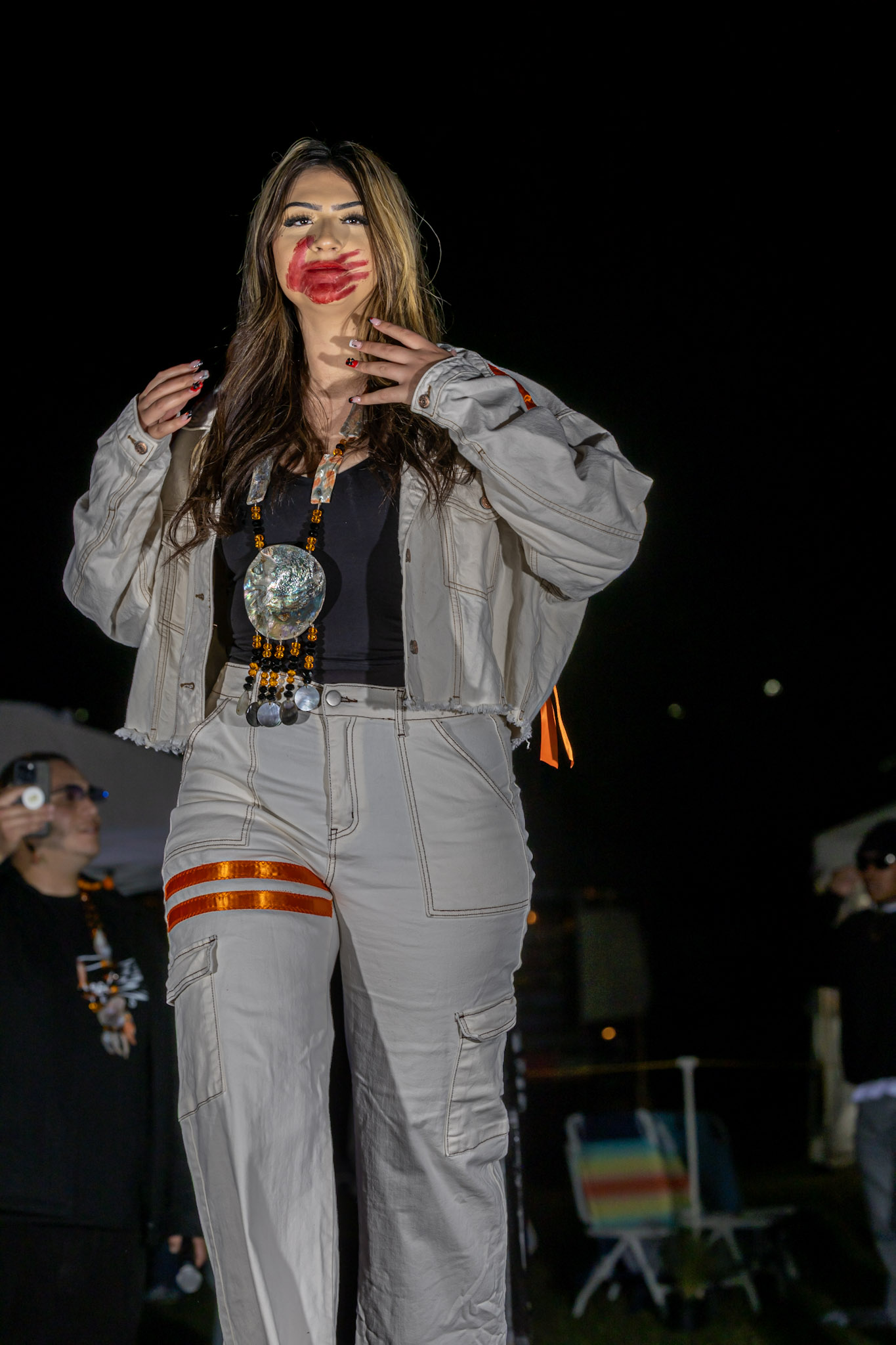
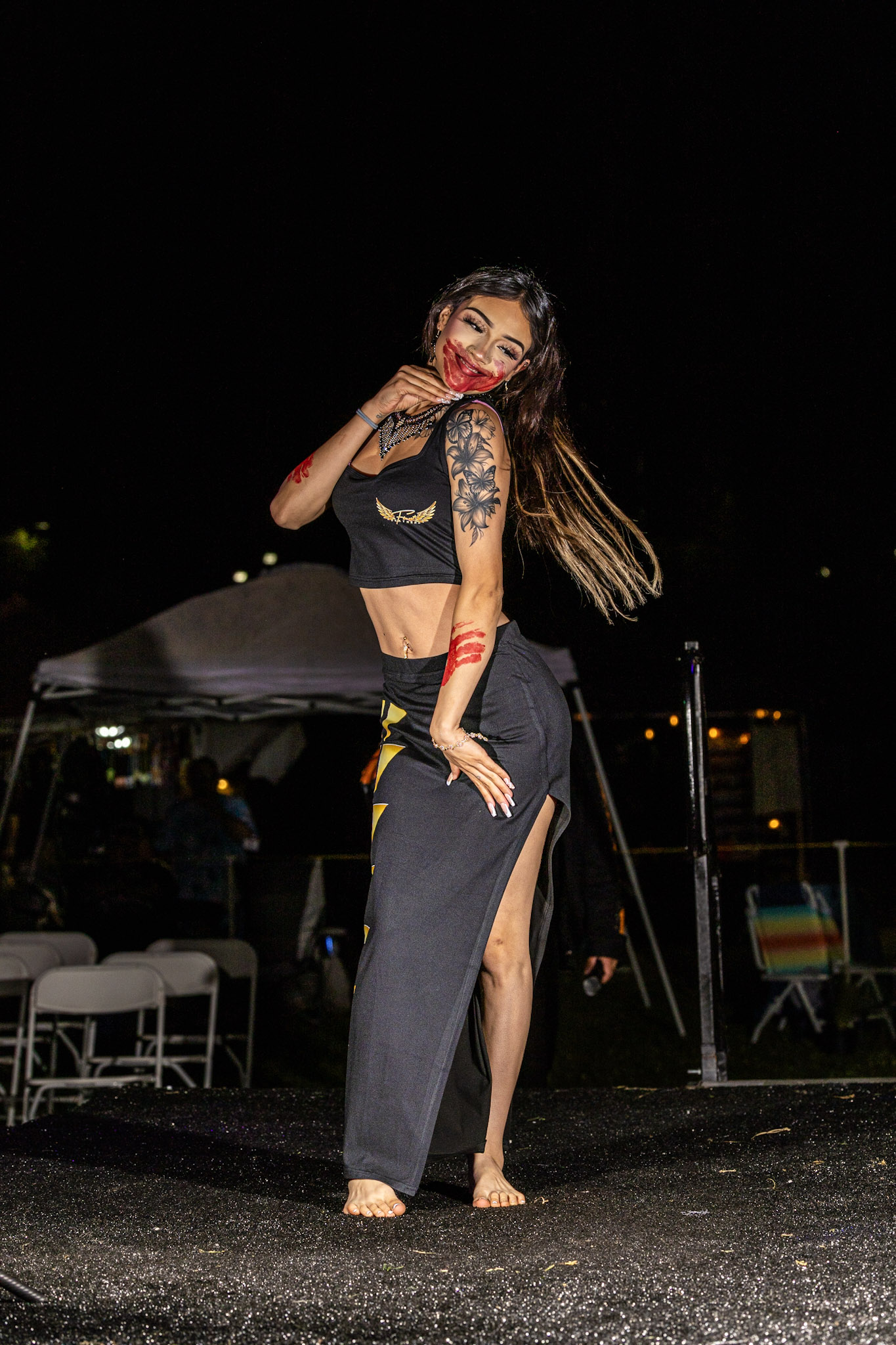
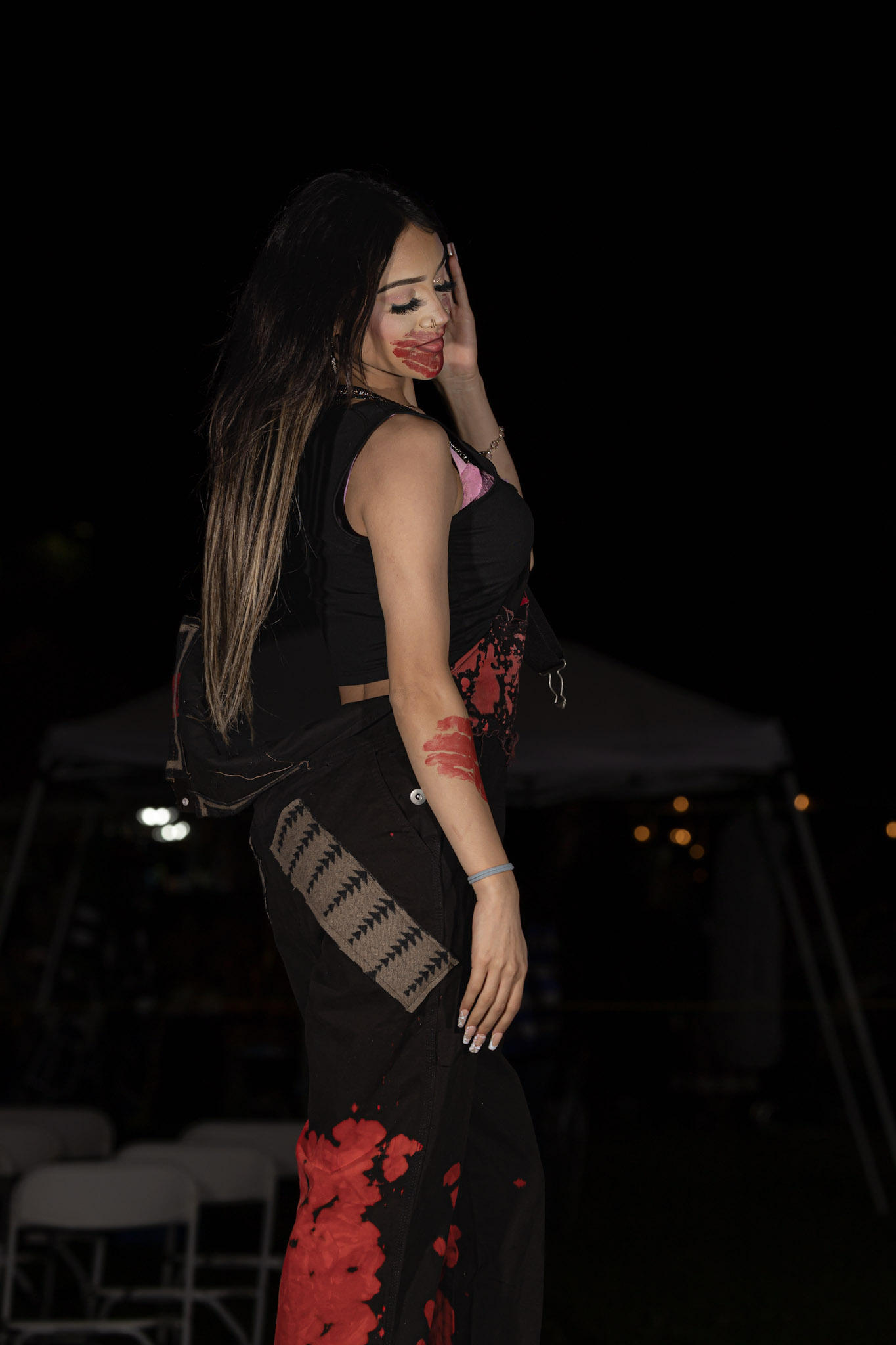
Models also take the runaway with a striking impression of a red hand over their mouths.
“It represents the mass genocide in the past and now,” explaines teenager Aubbrie Piñon Mendoza. “It shows how they tried to silence us.”
There is nothing silent about the Carmel Band of Rumsen Indian youth takeover and fashion show. California Natives celebrating their culture in public speaks volumes.
FEATURED IMAGE |
Enlarge

Have something to say about this story? Send us a letter.
SUPPORT NONPROFIT JOURNALISM 
GET OUR FREE NEWSLETTER