YOUNG VOICES |
By Dia Gupta-Lemus
Adán Gómez Jr. remembers a moment from last year’s La Posada Con Santa event in Salinas that stayed with him: a young boy asking to trade his toy for a blanket.
“That moment told me exactly how hard it is for some families out here,” Gómez said. “You see kids who would give back a toy just to stay warm. Some kids beg someone to use their shower once a week.”
Gómez is the president of Tradición Por Siempre, the nonprofit that organizes Monterey County’s El Grito Festival ( a yearly festival celebrating Mexico’s independence), the El Grito Parade, the Día del Niño (“A day just for the kids!”), and La Posada con Santa, described on the organization’s website as “holiday warmth with a cultural twist” that includes “tamales, piñatas, and festive cheer.”
These events offer a space where vulnerable families can gather in community.
“I see families in cars,” he said, “spending cold nights in the winter… So of course I gave the boy as many blankets as people in his family. I’m grateful to know them and to be able to know that I can help them in certain ways that I can. I wish I could do more.”
Gómez’s understanding of hard work began long before he took on the role of organizing community events. “My parents came with just clothes on their back, ” Gómez said, recounting their journey from Mexico to California. “They started working in agriculture. They were harvesters. And then my dad started doing repair work on tractors… He decided to start his own business.”
That business became the family’s automotive repair shop on Market Street in Salinas, which has been open for roughly 25 years. “I was kind of born into it,” he said.
Gómez spent many weekends working alongside his dad.
“I think I matured a little too early,” he said. “Every single weekend when I was out of school, I was working with him. But I loved it, I loved being with my dad.”
As the family settled in Salinas, Gómez said they were clear about one priority: giving back. Tradición Por Siempre grew from that impulse — a desire to bring cultural celebrations to a community that often does not have the time, money, or space to gather.
“People in agriculture work all year just to survive. The least we can do is give them one day where they can drop their guard, eat, dance, and enjoy a show.” Adán Gómez Jr. , president, Tradición Por Siempre
Building an organization around community trust
Gómez said he formed Tradición Por Siempre during a period when residents wanted more transparency and community involvement in local cultural events. “People wanted to understand where their money was going, how things were organized,” he said. “We wanted an event where everyone felt included.”
He said the goal was never to turn the events into a business. “We want to bring other people from other areas, so we can show our culture… We want to preserve our culture. We want to have it for as long as we can.”
That includes educating his own children. “I want to teach my daughters our culture,” he said. “I want to show them everything we do, all our traditions.”
The nonprofit keeps all events free, even though charging entrance fees would relieve financial strain. At El Grito, for example, balloon artists are paid by the organization, volunteers run games, a face painter donates her time, and local library and art programs set up booths without cost to families.
“People in agriculture work all year just to survive,” Gómez said. “The least we can do is give them one day where they can drop their guard, eat, dance, and enjoy a show.”
This philosophy is reflected in the nonprofit’s mission statement:
To honor and preserve Mexico’s cultural heritage through free, educational, and festive community events, so that traditions come alive and all generations can gather with pride, unity, and joy.
Tradición Por Siempre depends on volunteers — teams that arrive before sunrise, stay past midnight, and handle everything from staging to cleanup. “If it wasn’t for them, none of this would happen,” Gómez said.
A celebration that fills the streets
El Grito, the nonprofit’s largest annual festival, fills several blocks of East Salinas. Gómez said the celebration has gathered upward of 20,000 people, including visitors from San José. Two stages play cumbias and rancheras, more than 200 vendors set up food and craft booths, and performers including Aztec dancers, lucha libre wrestlers, and live bands cycle through the day.
He describes the atmosphere in one word: “alive.”
When Gómez steps onstage and sees thousands celebrating together, he said the months of preparation fall into place. At a time when many immigrants face hostility — despite sustaining the local agricultural economy — the event offers a welcome moment of celebration.
In recent years, rumors of ICE activity have circulated widely online, Gómez said, creating fear among families as some began to cancel medical appointments and avoid public spaces. Leading up to El Grito, several vendors backed out, and some community members urged him to cancel the festival.
But over time, he said, a different kind of momentum built. Residents encouraged one another to attend. Families reassured neighbors that the community would show up together.
“We realized maybe at the time that with so many people, at that point you’re the majority,” he said. “We’re a community. We’re together. And as a community together, nothing will happen to us.”
The festival went forward this year and, according to Gómez, had one of the largest crowds yet. “We had a full street full of people,” he said. “The city council members came, the mayor came up here, and they couldn’t believe what they saw … massive crowds.”
He saw the turnout as both practical and symbolic. “It was motivational for them,” he said of the community. “It was like, ‘Yeah, we’re not even scared … We’re a community. We’re together.’”
Enlarge
Struggling to stay afloat
Even as attendance grows, the future of Tradición Por Siempre is fragile. “We fight for breadcrumbs,” Gómez said. “And those breadcrumbs are barely enough to make the event go through.”
Gómez said he spends less time with his family and his work in order to plan the events. “I spend less time with my kids, ” he said. “I don’t benefit, literally. Sometimes I put (money) out of my wallet just to help it go through.”
The nonprofit relies on volunteer labor and sponsorships. Gómez estimates about 14 lead volunteers organize subcommittees for logistics, sponsorships, trash, volunteers, and social media. “Each position is so important,” he said. “If it wasn’t for them, the whole event doesn’t come together.”
In 2025, after dedicating all resources to El Grito, Tradición Por Siempre did not have enough money to host La Posada.
Its absence weighed on Gómez. La Posada provides food, blankets and hot chocolate to residents — and it’s a setting where families can safely ask for help. Missing it, Gómez said, left a deep ache.
“To me, success would be not only having a successful event … but after the event, to go help the communities, hand out food, blankets, toys to the kids, hot chocolate, bread,” he said. “It ends the year fantastic. Unfortunately, this year I’m not able to do it. And I beat myself for it every day.”
Community recognition plays an important role in gathering more support, Gómez explains; “When the county sees that we’re doing something good… it’s kind of like the golden bow on the deal,” Gómez said. “You’re coming with proof… that’s what (sponsors) want to see.”
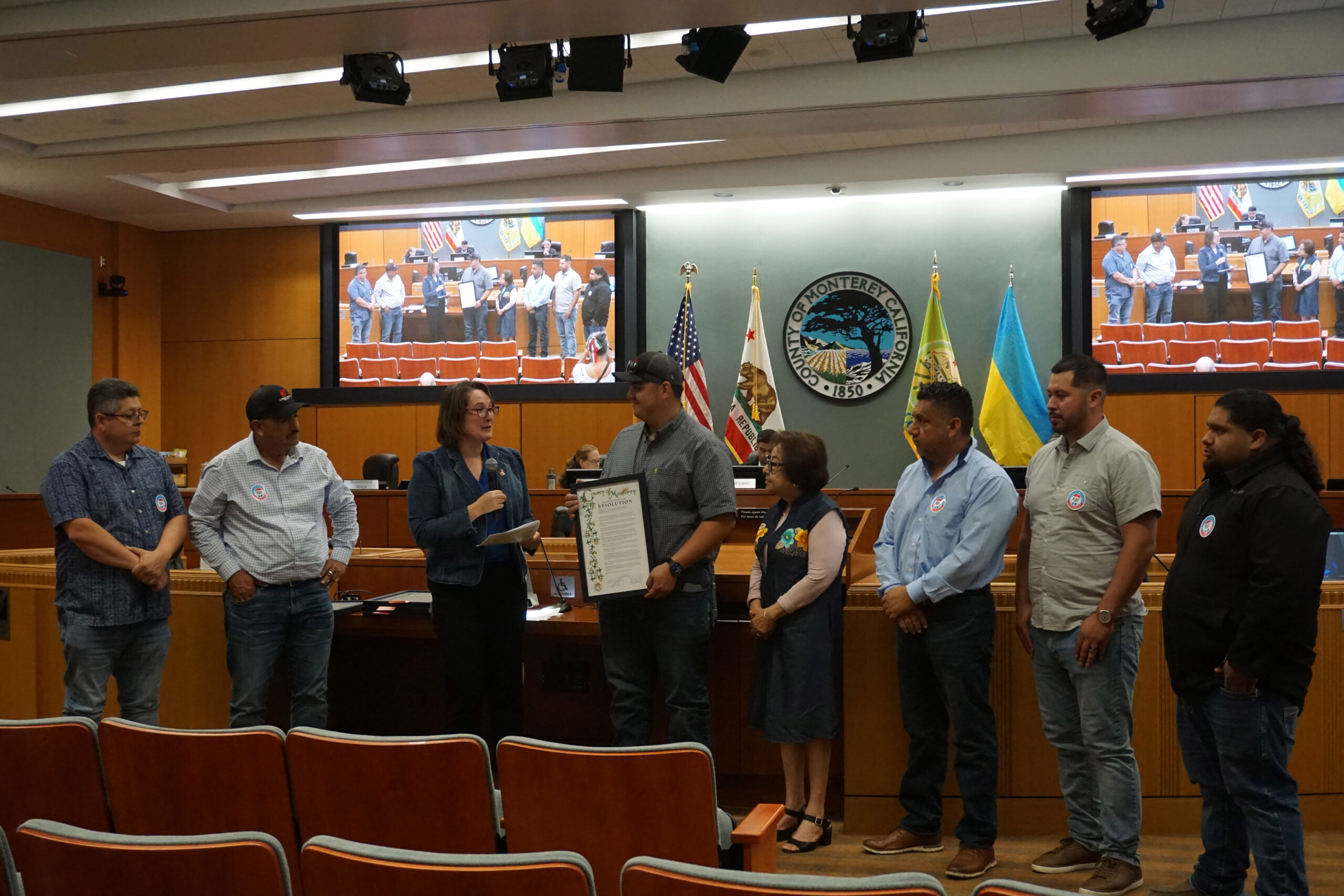
On Sept. 16, the Monterey County Board of Supervisors adopted a ceremonial resolution, sponsored by Supervisor Wendy Root Askew, in honor of the El Grito de Independencia festival and Tradición Por Siempre.
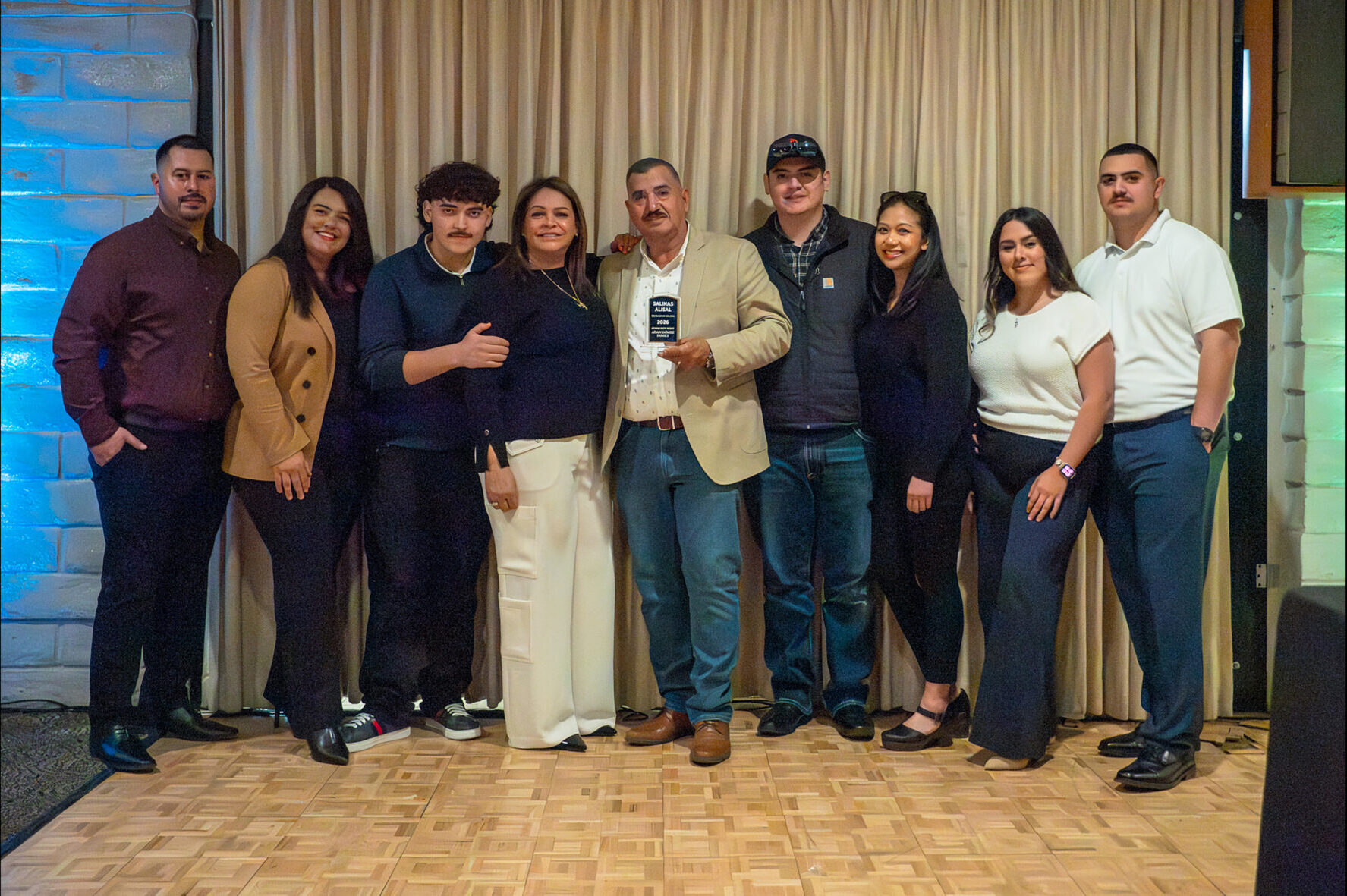
And on Feb. 21, the Gómez family received an Alisal Excellence Award for their dedication to the community.
Adán Gómez Sr. “is the type of person who will do a lot for the community and not expect any accolades,” former Councilmember Orlando Osornio said. “I can’t think of anyone more deserving of being honored.”
While the accolades are important, Gómez Jr. struggles with whether it is worth enduring the stress to “barely” make the event happen. “It’s tough,” he said. Gómez hopes the acknowledgment leads to deeper support from the local government. “I really wish I saw maybe a little bit more support from our community, our city of Salinas.”
“We realized maybe at the time that with so many people, at that point you’re the majority. We’re a community. We’re together. And as a community together, nothing will happen to us.” Adán Gómez Jr., president, Tradición Por Siempre
For the community
Asked who Tradición Por Siempre is for, Gómez’s answer is direct.
“For the community,” he said. “We target the low-income side of East Salinas… especially families who don’t want to be known for immigration purposes. They are terrified of asking for help.”
Gómez explains that many families avoid seeking assistance from the city or county because they are afraid.
“Unfortunately, they pay the biggest price,” he said. “Since they don’t want to be on a radar, they suffer the most.”
“To go to school and be bullied because you wear the same clothes, because you smell … it sucks,” Gómez said. “I wish I could do more.”
Even if he cannot host the full festival in a future year, Gómez said he plans to keep the nonprofit active.
“Realistically, if I don’t do it this upcoming year, I’ll probably focus on those families,” he said. “We’ll figure out some things … We’ll still help the community. We won’t stop.”
He returns often to the memory of the boy at La Posada — the boy who chose warmth over a toy.
For Gómez, the mission is simple: to build a community where families do not have to choose.
Enlarge

Have something to say about this story? Send us a letter.
SUPPORT NONPROFIT JOURNALISM 
GET OUR FREE NEWSLETTER