FEATURES |
By George B. Sánchez-Tello
After the 2018 deportation of Neofita Valerio-Silva, a Grover Beach homeowner and mother of three U.S.-born children, California state Assemblymember Dawn Addis realized the significance of providing legal aid to undocumented immigrants.
Valerio-Silva paid more than $7,000 to someone posing as a lawyer, Addis said, and assumed legal paperwork was filed on her behalf so she could stay in the U.S.
That didn’t happen.
Her 2011 petition for asylum was denied. In 2017, ICE officials told her she would be removed from this country.
“Neofita Valerio-Silva represents what so many people experience,” Addis said.
In October 2025, Addis and Assemblymember Esmeralda Soria announced that $5 million had been secured from the state’s budget to support immigrant legal aid specifically for residents in the Central Coast and Central Valley. A total of $1.5 million has been directed to Catholic Charities Diocese of Monterey to serve immigrants in the region and within the diocese, which includes Monterey, Santa Cruz, San Benito and San Luis Obispo counties. The group is a nonprofit service organization that offers residents financial aid, food support, legal aid for immigrants and tattoo removal services.
This year, 9,860 people received immigration legal representation and 23,762 people participated in “Know Your Rights” and legal guidance workshops provided by the organization, according to their annual impact report for 2025.
Angela Di Novella, executive director of Catholic Charities, said the funds will be used for legal support, education and legal referrals from rapid response organizers who assist communities and individuals experiencing immigration raids and detentions. The legal support pays for attorneys and staff accredited by the Department of Justice who can represent clients in immigration proceedings, provide legal advice and help individuals navigate complicated hearings and bureaucracies. Catholic Charities current budget is $5.9 million, Di Novella said.
Immigration hearings are civil matters, not criminal hearings, so there is no right to a public defender. This lack of assistance from an attorney or accredited legal representative adversely impacts immigrants and detainees seeking citizenship and trying to avoid deportation, according to a recent report by American Immigration Council.
“Of the immigration court cases decided from (fiscal year) 2019-2024, 62 percent of immigrants without a lawyer were ordered deported, compared to 27 percent of those who did have legal aid,” states the report.
“Consultations: that is our strength as an agency — the legal services,” Di Novella said.
Enlarge
Di Novella, Addis and staff for Assemblymember Soria and Assembly Speaker Robert Rivas said it was important to provide funding for legal aid to California’s immigrant communities outside the San Francisco Bay Area and Southern California, which receive a majority of the state dollars for immigrant aid. Immigrant courts and hearings are in those areas, Di Novella said, noting she understands why more state funding is directed north and south of the Central Coast. Those regions are not only larger, but also home to more immigration attorneys. However, that leaves a gap in services for local families and workers in agriculture, hospitality, health care, education and private businesses, Di Novella said.
“Assembly member Addis saw this as an opportunity to budget justice and support our community, which has been neglected for years,” she said.
That neglect manifests in the deportation of residents like Valerio-Silva, who, in moments of fear and vulnerability, place their trust and money in people with no community ties or history, Addis said. In such scenarios, people are more likely to be taken advantage of, Addis added, with potentially devastating impacts.
Catholic Charities was specifically named in Senate Bill 105 to receive the state funds. Addis said the nonprofit faith-based organization has trust and support in communities built over decades through partnerships with local churches and schools. Residents know the group’s programs are open to all, said Di Novella. “Not just Catholics — we serve everyone.”
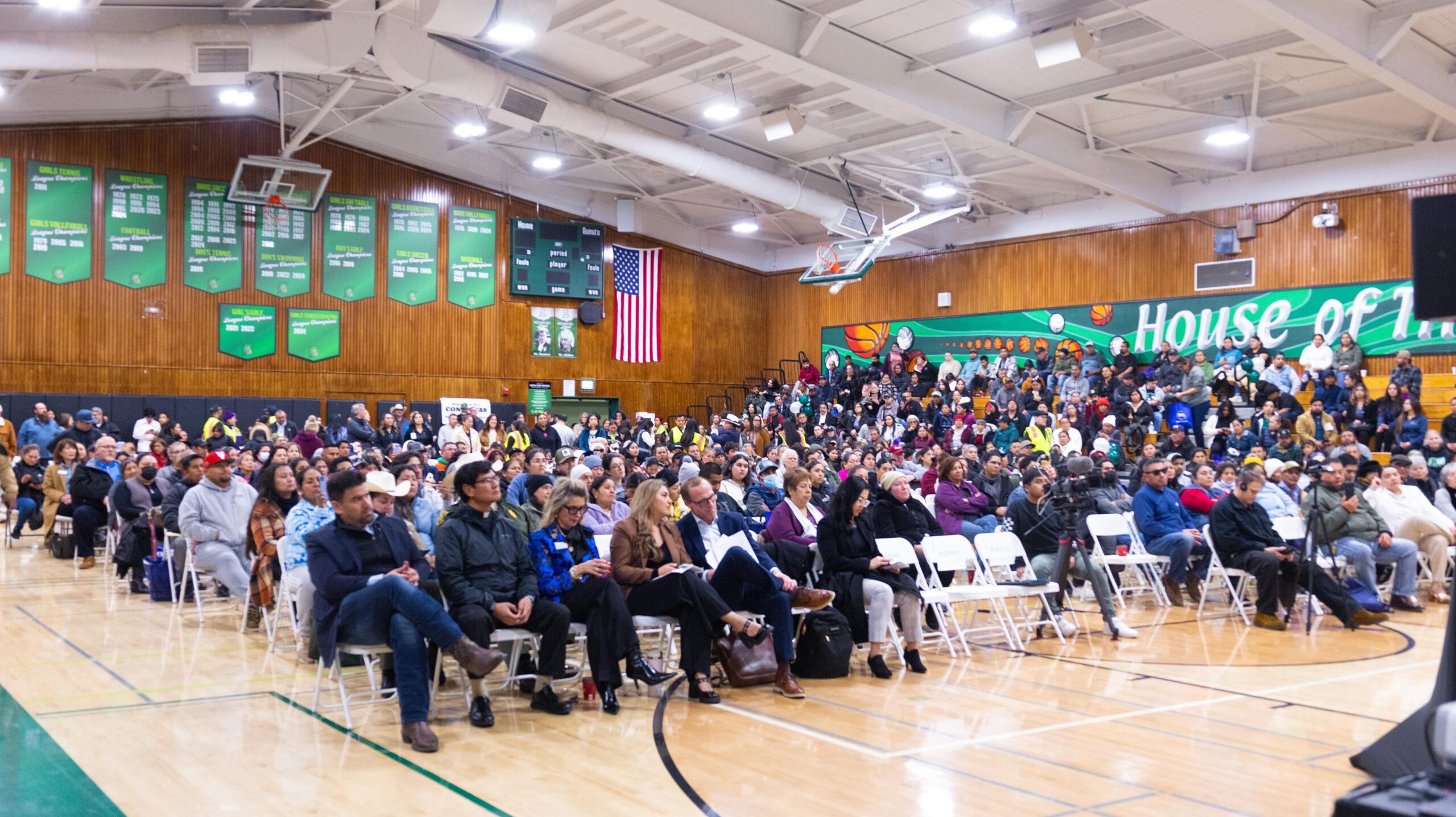
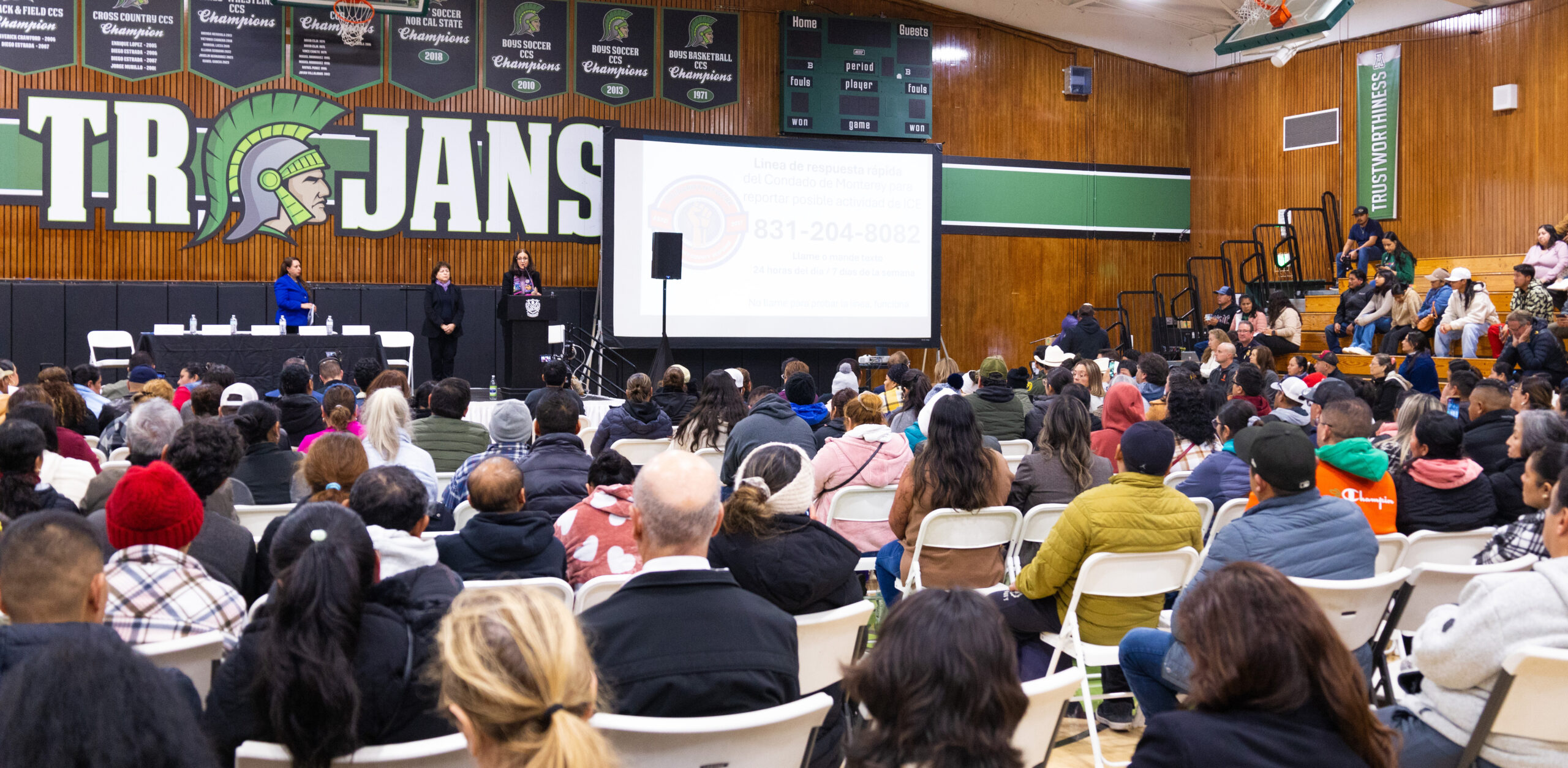
Di Novella said the value of their work became clear on a cold, rainy night in Salinas’ Alisal neighborhood in February 2025. A Know Your Rights workshop and immigration forum was scheduled in Alisal High School’s gym. Just weeks into President Donald Trump’s second term, Di Novella was aware that some immigrant families were hiding; children stayed home from school and people didn’t leave home, even for groceries. Residents were panicked, Di Novella said.
Organizers wondered if immigration officials would target the Know Your Rights gathering. She recalls a county supervisor suggesting that a raid was less likely if local elected officials and law enforcement were present, saying, “We need to show up for our community.”
More than 2,000 people came that night, Di Novella said. More than 40 attorneys and DOJ-accredited staff held over 100 consultations with residents that night, she added.
Since then, the events have been held monthly and are slated to continue in 2026.
Di Novella said Catholic Charities Diocese of Monterey is still waiting for direction from the state for the spending rules before the group can use the funding.
Enlarge

Have something to say about this story? Send us a letter.
SUPPORT NONPROFIT JOURNALISM 
GET OUR FREE NEWSLETTER