| FEATURES
By George Sánchez-Tello
This Tuesday, Jan. 6, the Monterey County Board of Supervisors will decide how to proceed with a proposed mental health facility for Salinas’ Creekbridge neighborhood. Dubbed the Mental Health Rehabilitation Center, the campus would create housing and programming for people with mental health needs so severe they need homes with certified staff.
County supervisors have publicly stated they recognize their responsibility to assist local patients with severe mental health needs, but are concerned with rising construction costs for the campus and how much financial support they can realistically expect from state and federal government agencies. The proposal has faced pushback from local residents with questions about safety and development of open space within the county’s largest city.
The proposed rehabilitation center would create a home for adults placed under conservatorship — people considered “gravely disabled” by the state of California and unable to provide for their own food, shelter, clothing, safety and medical care.
In Monterey County, there is a lack of available space for patients under conservatorship and in need of 24-hour care, according to the county’s Department of Behavioral Health. Nearly 100 patients are housed out of the county — in state hospitals, locked intensive treatment programs and board and care facilities, according to public presentations prepared by the county Health Department. Local patients are placed as far north as Santa Rosa and as far south as Long Beach; one intensive treatment program is 187 miles away, according to the presentation.
Enlarge
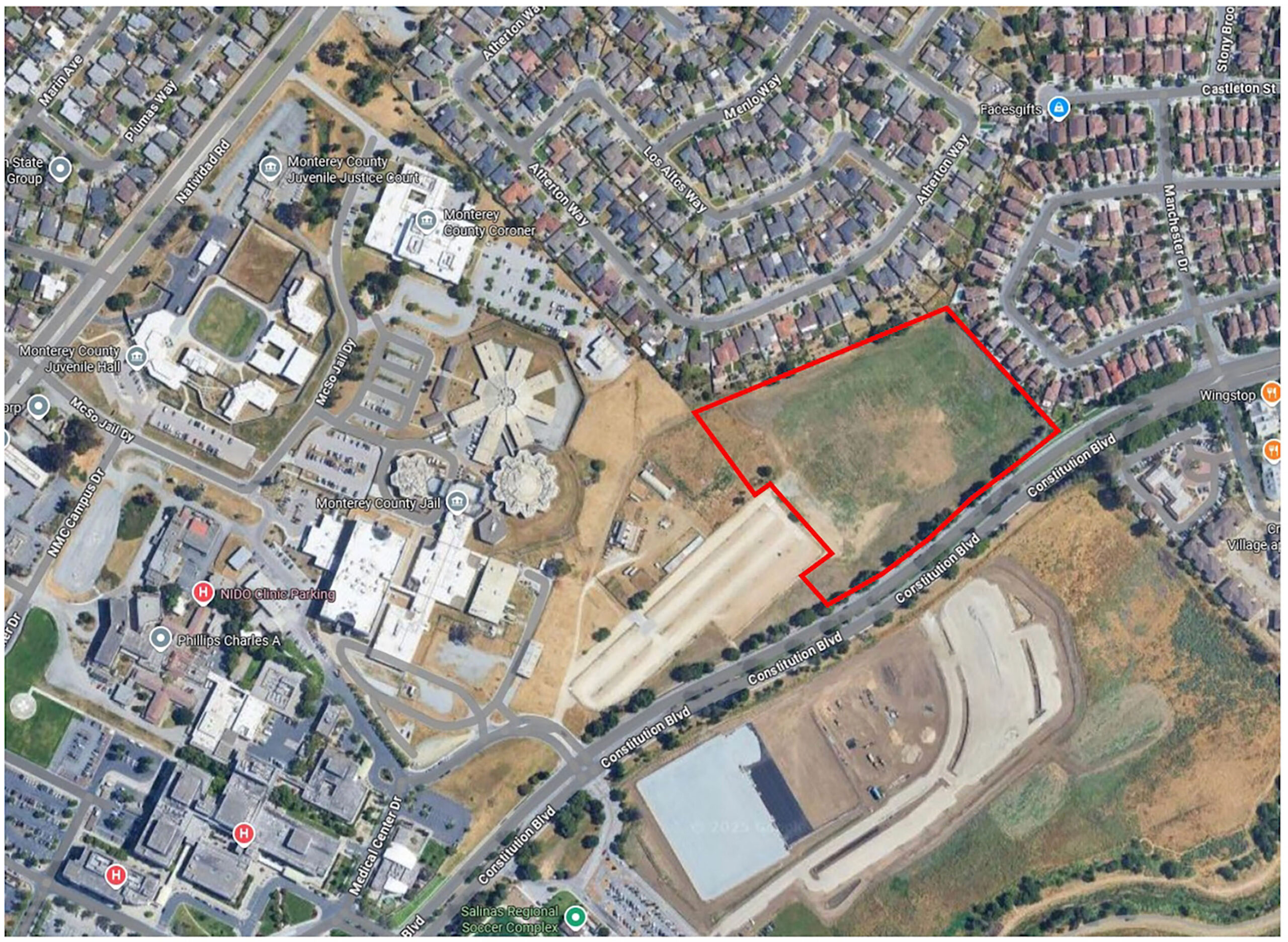
Statewide, the lack of space will continue to worsen, according to a 2022 Rand Corporation report, which states: “The shortfall at the community residential level is particularly severe in such regions as the Inland Empire, Southern San Joaquin Valley and Central Coast.”
The Mental Health Rehabilitation Center, or MHRC, was initially proposed to address the lack of conservator facilities in the county and region. The MHRC, according to its current proposal, would be built in an area of Salinas known as The Corral, along Constitution Boulevard near the Salinas Soccer Complex and the county jail. The site has the benefit of being near Natividad Medical Center. The proposed project was limited to space owned by the county, explained Melanie Rhodes, behavioral health director for the County Health Department.
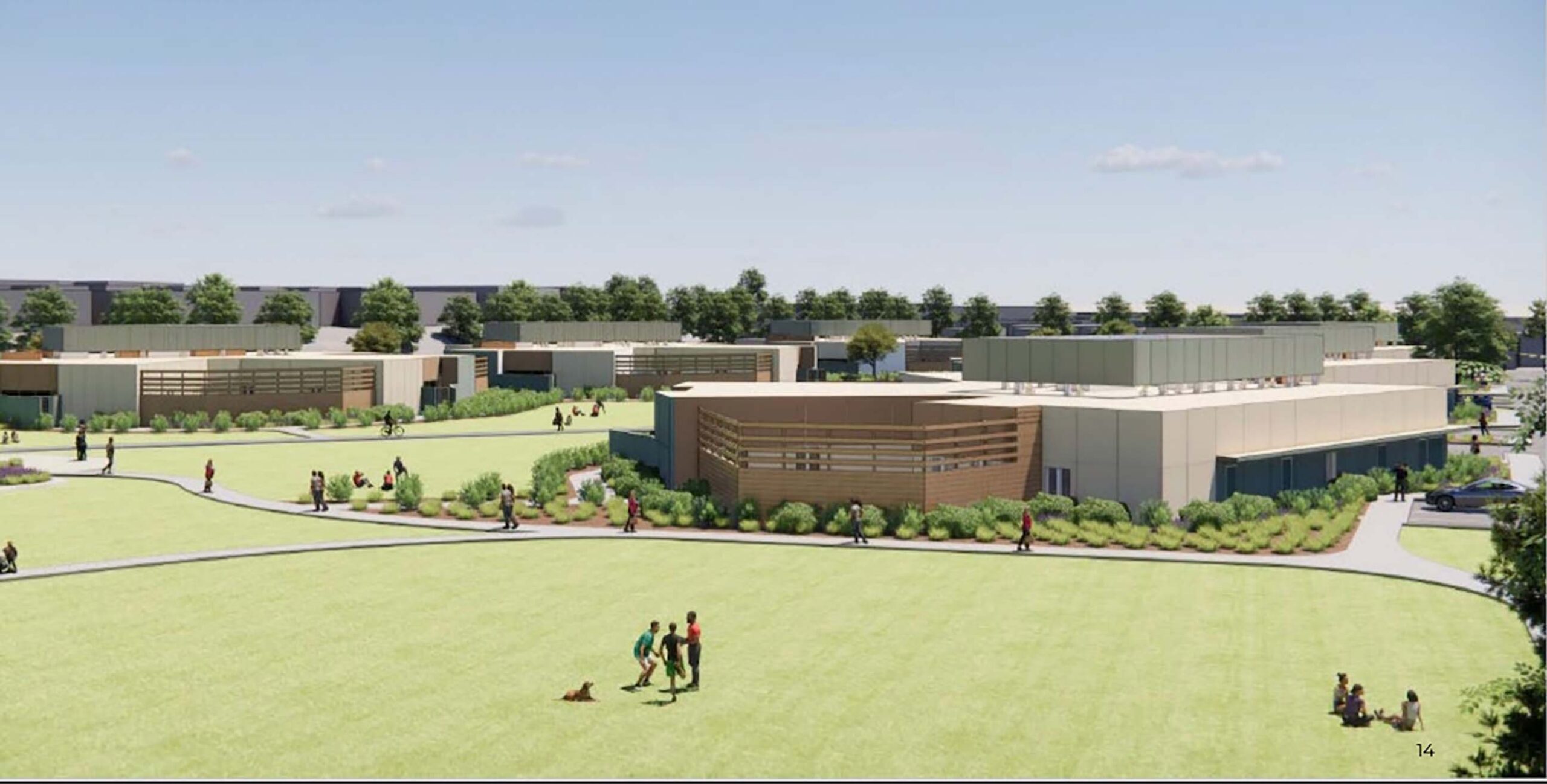
The proposed campus would be built in two phases. The first would include three 16-bed dormitories with rooms for doctors’ visits, meetings, exercise and shared living. The first phase would also include a support building that would house the campus kitchen, a maintenance shop, administrative offices and meeting rooms. The second phase would see the construction of three additional 16-bed dormitories.
An earlier proposal for the MHRC would have seen behavioral staff and patients move into a wing of the old Monterey County Jail, and the previous sheriff’s administration agreed to the proposal. However, Sheriff Tina Nieto has since said the old jail wing is needed for services provided by the Sheriff’s Department, including laundry for inmates and vocational training.
"I don’t question the need for it; I know we need it. California is at a crossroads where our behavioral health laws and programs have, just recently, been reformed dramatically. The concerns I have are the politics and fiscal climate we are living in." Monterey County Supervisor Luis Alejo
The shift from moving into an empty county building to building a brand-new facility saw the cost of the proposed MHRC rise to more than $172 million for a new construction project.
During the Oct. 28 meeting of the county Board of Supervisors, every supervisor raised concerns about the cost to build the facility.
“I don’t question the need for it; I know we need it. California is at a crossroads where our behavioral health laws and programs have, just recently, been reformed dramatically,” said Supervisor Luis Alejo, who represents District 1, where the facility would be built. “The concerns I have are the politics and fiscal climate we are living in.”
In addition to the impact of tariffs on construction materials, supervisors worried aloud about expected cuts to Medi-Cal and Medicaid, California’s state and federal health insurance, respectively. Supervisors questioned how cuts to public health funding would impact a project of this scale. In addition, they were concerned about Monterey County taxpayers getting stuck with any debt and growing costs that might not be covered by state health care grants.
“If we don’t build this facility, if we didn’t move forward with this, what does that cost scenario look like for the county?” asked Vice Chair Supervisor Wendy Root Askew. “What does that look like for the families? What does that look like for the mental health unit?”
She added: “I’m nervous about the finances, being what they are, given the state that we’re in.”
County supervisors also noted concerns from residents from county districts 1 and 2 about the impact of the project on their communities. Alejo said he wanted to see increased public engagement and awareness of the project. In response, three public presentations and listening sessions on the proposal were organized in November and December.
Rhodes said the presentations allowed public health officials to clarify misconceptions about mental health and illness, as well as the proposed facility. The overwhelming response from residents, specifically those in Creekbridge, was against the project.
“You’re asking me to put a mini-institution, a mental institution here in my neighborhood when you already have me filled with challenging — people that are challenged, living with challenges, in my neighborhood,” said Leticia Gomez, a self-described Creekbridge resident. “That’s why we all object.”
“If we don’t build this facility, if we didn’t move forward with this, what does that cost scenario look like for the county? What does that look like for the families? What does that look like for the mental health unit?” Vice Chair Supervisor Wendy Root Askew
The Board of Supervisors was scheduled to meet and make a decision on the proposed rehabilitation center at its Dec. 9 meeting. The board was advised in October it needed to commit support by December to meet project timelines. However, the discussion was pulled from the agenda four days before it was supposed to take place. Rhodes said she was told the agenda was full and supervisors wanted time to adequately discuss and hear back from county staff. The presentation and discussion is now scheduled for Jan. 6.
When supervisors meet Tuesday, they have at least four options, according to the agenda and presentation: proceed with the full proposal; proceed with the first phase of the project — three 16-bed buildings and one support center; a significantly scaled back project of one 16-bed building and one support center; or cease work on the project.
Supervisors ordered planning and work for the MHRC to halt in late October until they could meet again and make a decision. The estimate of planning costs to date is more than $3.6 million, according to a report prepared for the board.
Enlarge

Have something to say about this story? Send us a letter.
SUPPORT NONPROFIT JOURNALISM 
GET OUR FREE NEWSLETTER