FEATURES |
By Dennis Taylor
On the evening of April 4, 1968, John Silva sat with his parents in Providence, Rhode Island, watching NBC News interrupt its regularly scheduled programming to report the assassination of Martin Luther King Jr. He was only 11 year old.
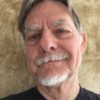
Fifty-seven years later, Dr. Silva sees that memory as a moment of significant impact in his life — one that helped shape him into the person he became: a medical doctor, a champion of the underserved, a dedicated community activist, a crusader for social justice.
“Dr. King’s assassination was a big deal in our household,” he said. “I remember Bobby Kennedy coming on TV to speak about the tragedy … I remember relatives calling us from across the country, in tears. For me, that was very influential.”
‘A seed was planted’
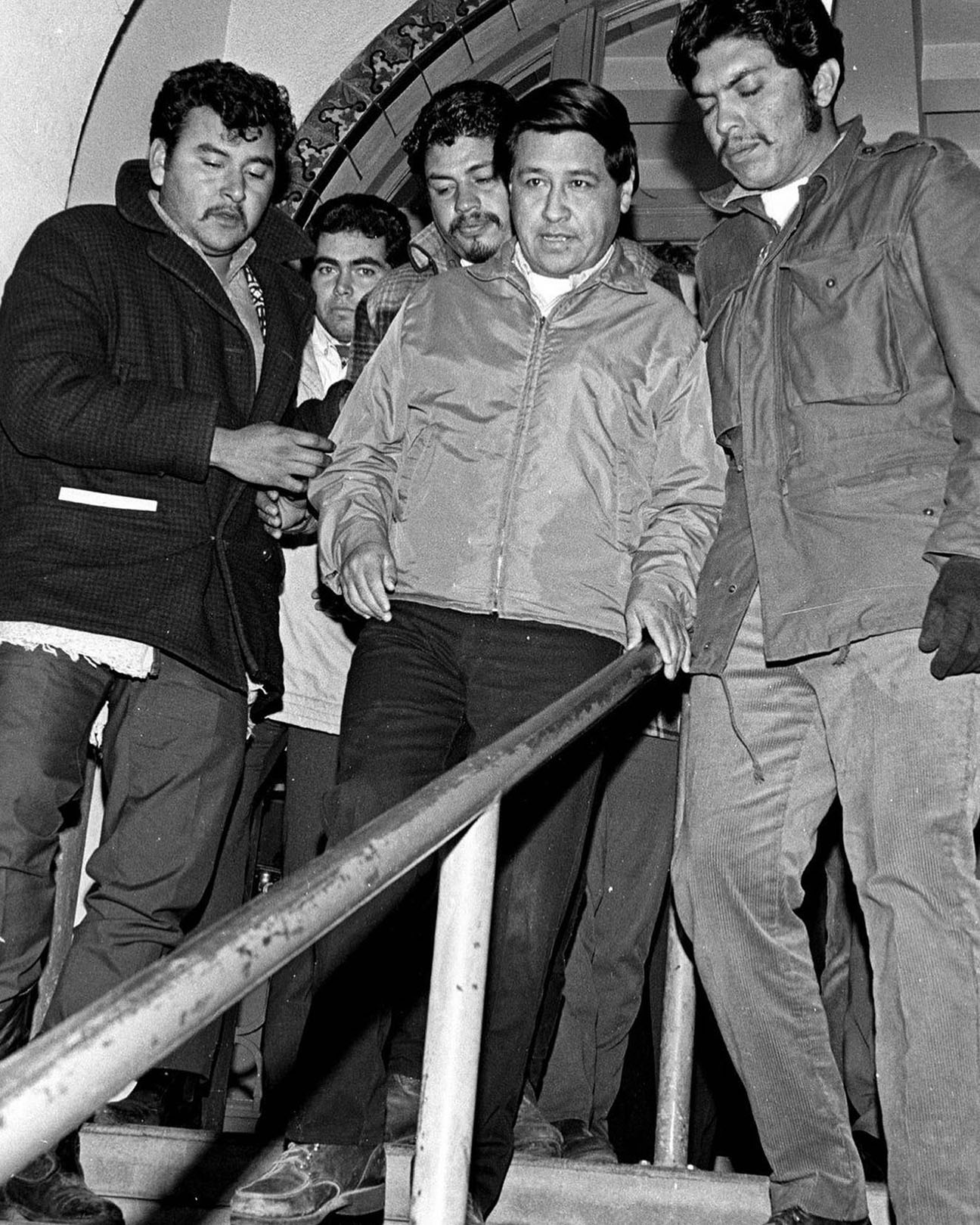
Two years later, he was riveted again by a live news bulletin from Salinas, California, where César Chávez — another icon of nonviolent social change — had been taken to the Monterey County Jail for defying a judge’s order to end a nationwide lettuce boycott by the labor union he co-founded, the United Farm Workers.
Chávez’s 20-day incarceration for contempt of court made national headlines and galvanized his historic movement.
“I remember that pilgrimage of people who came to see him, including Coretta Scott King and Ethel Kennedy … I remember the crowds outside the jail … Salinas seemed to me like the place where the social justice movement was headed,” he said. “Even at that young age, a seed was planted in my head about Salinas. And that might be the preamble to why I came to California for my residency after medical school.”
Enlarge
Serving the underserved
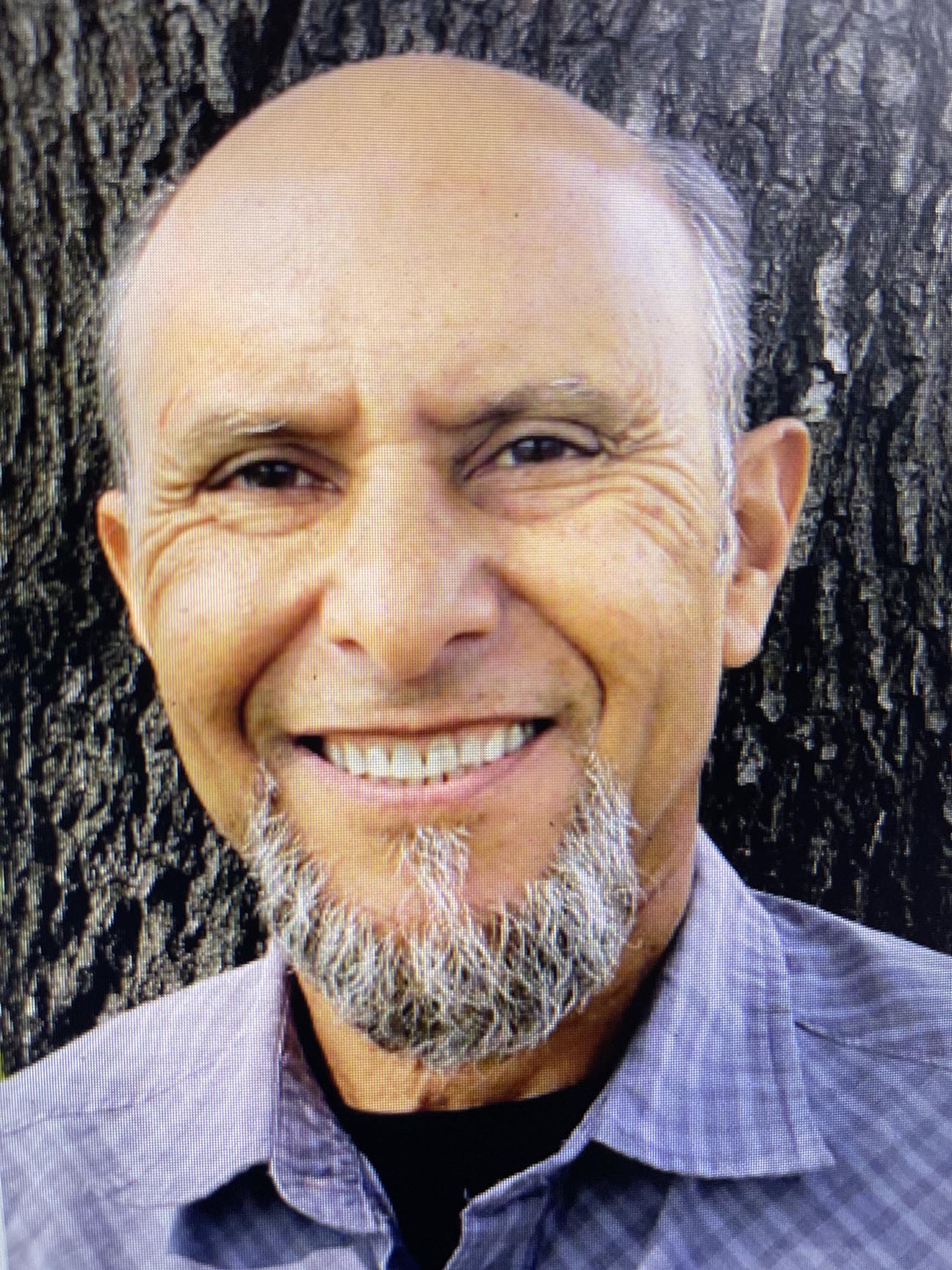
In 2023, after 40 years as a family doctor — much of it in service to underserved Latino communities, including farmworkers — Silva retired from his practice.
But he hasn’t rested.
- At 68, he’s a consultant for a Monterey County Workforce Board hybrid program that trains laypeople to become community health workers, an initiative designed to address a shortage of physicians and help alleviate their workload.
- He helped collect 10,000 signatures in 30 days to create a November 2026 ballot referendum to secure rent stabilization in Salinas by limiting annual rent increases to 2.75 percent.
- He continues his career-long effort to spread awareness about “social determinants of health” — the idea that nonmedical factors such as geography, income and education have significant effects on people’s well-being.
His decision to study medicine is traceable, at least in part, to a memorable childhood moment, said Silva, whose youthful aspiration had been to broadcast Boston Red Sox baseball games.
A surprise from Mom
“My mom took me to our doctor for a physical when I was in the seventh or eighth grade,” he recalled. “The doctor took time to explain all the things he was doing to me, and out of the blue, my mother said, ‘I think John’s going to go to medical school!’
“Well, that was the first I’d heard of it,” Silva recounted with a laugh. “I remember thinking, ‘Oh, really?’ But I just went with the flow.”
He also muses today that the odds that a blue-collar kid might graduate from an Ivy League medical school, then become a physician, were far better than achieving his original dream of becoming the voice of the Red Sox.
Silva acknowledges that he had “guardian angels” throughout his journey.
Some were neighborhood friends who helped him get into Moses Brown School (founded in 1748), considered one of the leading college preparatory schools in Massachusetts. As a student there from grades 7 through 12, he embraced that opportunity.
“The United Farm Workers had an office in our neighborhood, and I saw him near Sherwood School. There were a lot of people around him, but I said hello and César Chávez reached out and shook hands with my son.”
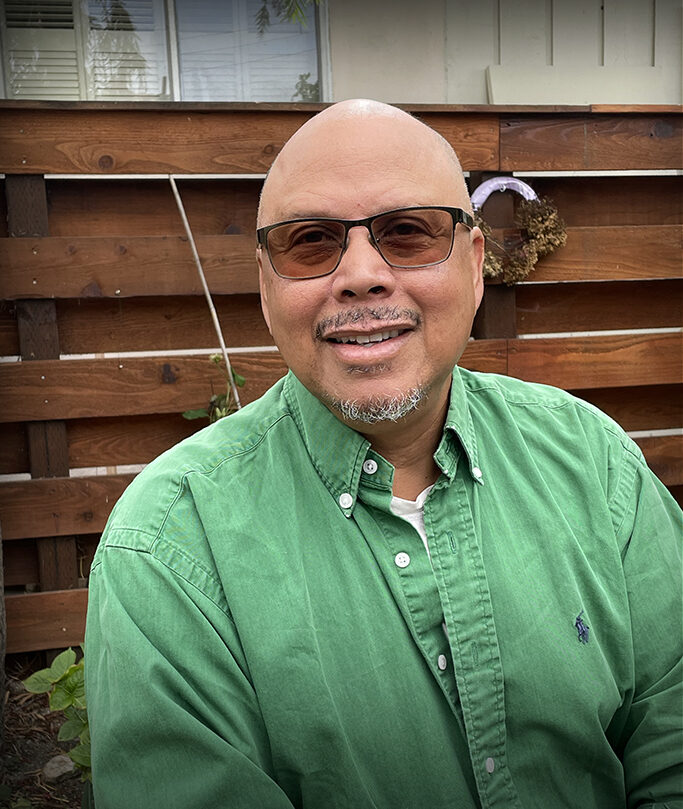
Dr. John Silva
80 graduates, seven doctors
“We only had 80 kids in my graduating class, but seven of us became physicians. I was the only one whose dad wasn’t a doctor in town,” said Silva. His father was a journeyman union laborer, and his mother had a career in hospital medical records and billing.
His lofty grade-point average merited admission into prestigious, Providence-based Brown University, where, during his senior year, he was introduced by a college professor to another “guardian angel.”
“Levi Adams was Brown’s vice president of external affairs, doing outreach for the university,” he said. “He also was a person from my neighborhood who was really committed to helping local kids get into Brown Medical School.”
“I don’t want to imply that I’m smart or anything, but I managed to pass all the tests I needed to pass, and made it through,” he said. “Not everybody did.”
Not his crowd
For Silva, interacting with wealthy medical school classmates from New York and Washington, D.C., was a culture shock for the blue-collar kid from Providence as he sized up his academic competition.
“Their fathers all seemed to be physicians who had written famous medical books,” he said. “Most of my friends were not part of that crowd.”
Unable to decide on a specialty, Silva opted to go into family medicine. In 1986, he felt fortunate to do his residency in California — land of César Chávez — at UC San Francisco’s Community Hospital of Sonoma County in Santa Rosa.
That’s where he met a nurse named Natalie Lujan, the woman who became his wife and mother of their three adult children: son Martin (named after Martin Luther King Jr.), and daughters Matisse and Alejandra.
In 1987, he was introduced to the man who became his mentor — another “guardian angel” — Antonio Velasco, a Salinas doctor who gained fame a decade earlier as part of a team of Natividad Medical Center physicians who stepped up to provide innovative long-term treatment for fieldworkers who’d been poisoned by pesticides on Old Stage Road.
Enlarge
‘Fields of Poison’
Velasco and his colleagues had developed groundbreaking protocols for diagnosing and treating those patients, then helped write a paper detailing how organophosphate chemicals affect a critical brain enzyme. It played a role in the adoption of a California rule requiring that recently sprayed agricultural fields be posted with warning signs.
“Dr. Velasco already was a famous guy when he brought me here in 1987 and put me to work in East Salinas,” recalled Silva, who opened his practice on the corner of Circle Drive and Sanborn Road with the help of $50,000 in startup funding from the Physician Incentive Loan Program, a state-specific National Health Service Corps program.
“I had an office there for 10 years. I just remember being very busy,” he said. “There was a waiting list to see me.”
For the predominantly Latino East Salinas community, heavily populated with fieldworkers, Silva’s office was a convenient blessing — a much easier walk for many than the next-closest option, Natividad Medical Center.
The magnificent mentor
With Velasco’s mentoring playing a major role, Silva’s medical education expanded and blossomed.
“Antonio is the one who started teaching me about health care in the Salinas Valley — that it’s not just what you see in the doctor’s office. It’s environmental … it’s affected by poverty … it’s about helping people with their immigration status,” he said.
“During my very first year, we saw a lot of farmworkers who were applying for agricultural worker amnesty. Between 1987 and 1990, we facilitated a lot of their applications.”
Part of the challenge for Silva during the early days was improving his grasp of the primary language of most of his patients.
“I won’t say his Spanish was limited, but he wasn’t fluid,” Velasco says. “But he settled in, got involved with the community little by little, and he was a joy to have around.”
A handshake from Chávez
A cherished memory for Silva was a chance meeting with lifelong exemplar César Chávez.
“The United Farm Workers had an office in our neighborhood, and I saw him near Sherwood School,” he recalled. His son Martin was about 6 months old and sitting on his shoulders when Silva met Chávez.
“There were a lot of people around him, but I said hello and César Chávez reached out and shook hands with my son.”
When membership in the UFW began to dwindle and numerous neighborhood residents lost their health care coverage, Velasco cut his fees by 50 percent for cash-paying patients.
His clinic also provided multiple emergency room-specific services to locals who were unable to make it to Natividad Medical Center’s ER.
"The clinic was great for East Salinas, because they had a lot of resources that private offices didn’t — including medical contracts that enabled them to hire community health workers and social workers.” Dr. John Silva
Joining Clínica de Salud
As Silva’s waiting list grew longer, Clínica de Salud del Valle came to East Salinas.
“They opened right next door, so after 10 years in that location, I got competed out,” he said.
“If you can’t beat ’em, you join ’em, so that’s when I went to work at Clínica de Salud,” said Silva, who remembers delivering 15 babies during the final month of his private practice. “The clinic was great for East Salinas, because they had a lot of resources that private offices didn’t — including medical contracts that enabled them to hire community health workers and social workers.”
Then, and now, the clinic was under the direction of Dr. Max Cuevas, whom Silva considers “a visionary.”
Silva retired in 2023, after four decades in medicine, to focus more time on his family and help with problems impacting underserved communities.
His wife, Natalie Lujan-Silva, a registered nurse and certified lactation counselor, has enjoyed a lengthy career as a case coordinator and case manager for high-risk infant follow-up at Natividad Medical Center’s Ninos Clinic.
Martin, their son, lives locally and works in health care. Both daughters became teachers — Matisse in New Hampshire, Alejandra in Salinas.
Enlarge
The struggle continues
Recently, the Monterey County District Attorney launched an investigation into the process to gather 10,000 signatures to place a referendum on the ballot reaffirming rent stabilization and renter protections — an effort Silva has been deeply involved with.
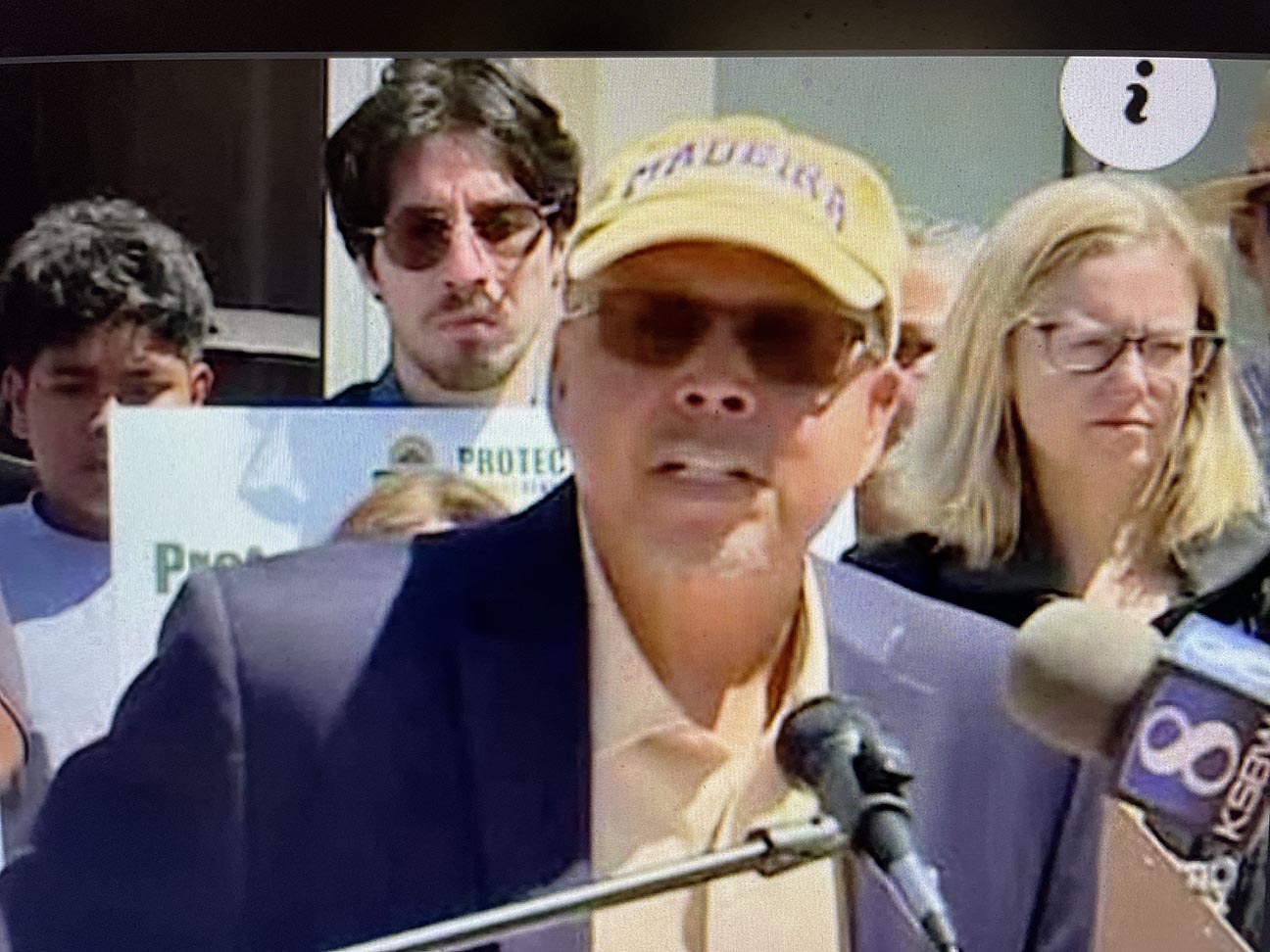
On Nov. 4, Silva gathered outside the Salinas City Hall with dozens of other activists who helped collect those signatures. In front of the crowd, he read a letter denouncing the investigation as an attack on First Amendment rights and as an attempt to intimidate those who want to get involved in the democratic process.
As he urged Salinas City council members and supervisors to acknowledge the legitimacy of the signature-gathering process, his words echoed those uttered by Dr. Martin Luther King Jr. and many other civil right leaders who have inspired Silva’s journey.
“Do what you can to encourage, promote and arrange for the discontinuance of this clearly abusive and retribution-based DA investigation against the people of Salinas with disclosure,” he read. “You, and your backers, know the power of your positions can achieve this, if you want to demonstrate the real democratic participatory governance that the people deserve.”
Enlarge

Have something to say about this story? Send us a letter.
SUPPORT NONPROFIT JOURNALISM 
GET OUR FREE NEWSLETTER