By George B. Sánchez-Tello
 Antonio Alcántara’s first memory of La Virgen de Guadalupe is the seven-hour bus trip from Ocotlán de Morelos in Oaxaca to Mexico City. There, as an eight-year-old child, outside the basilica to La Virgen, he saw Guadalupanos — devotees of La Virgen — on their knees or laying prostrate in gratitude for miracles they attribute to the mother of Jesus.
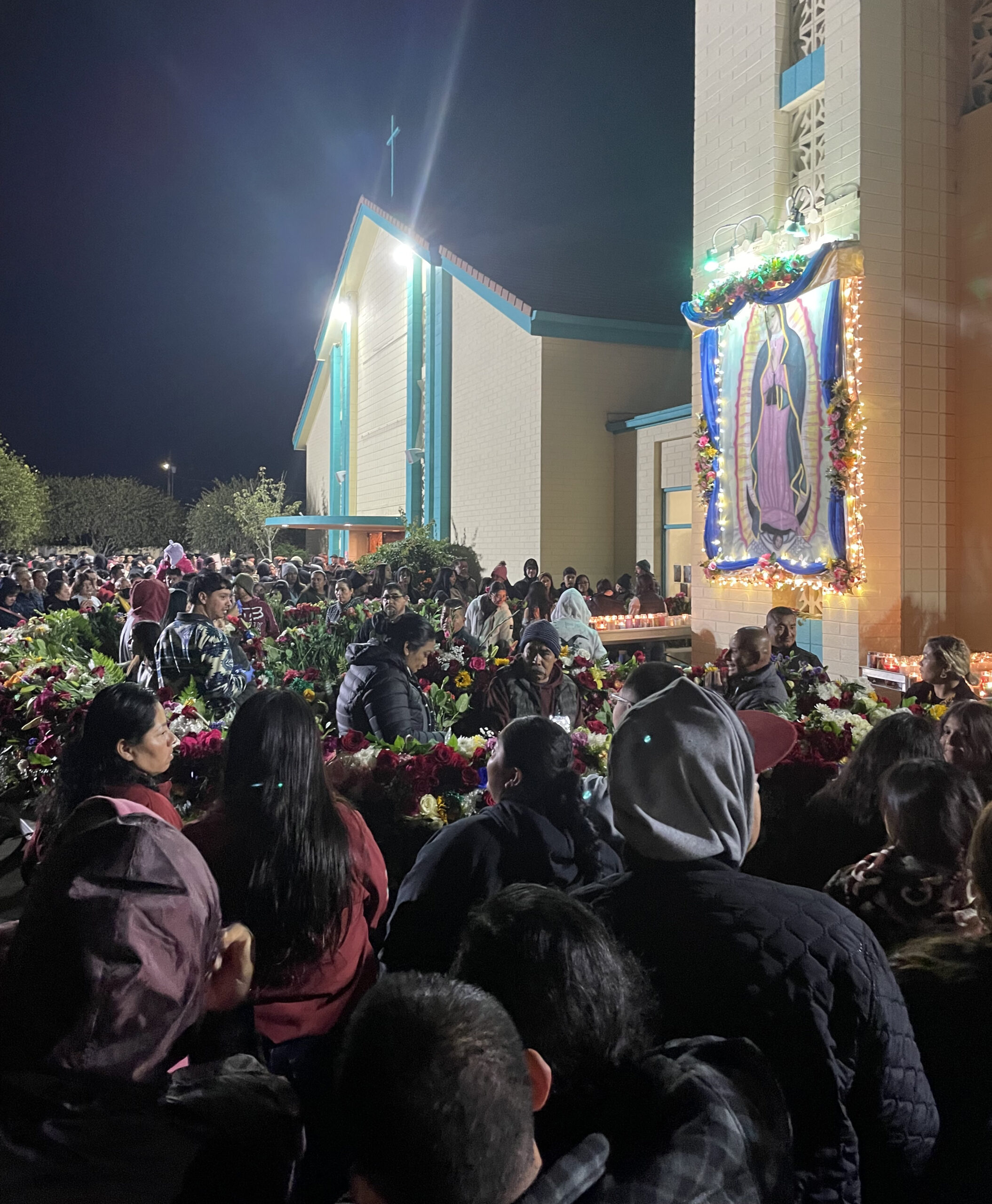
This time of year in Ocotlán de Morelos, Guadalupanos gather each night under a banner of La Virgen, followed by a brass band, praying and walking from one house to another. They end the evening with tamales and pozole.
On Friday, December 12, Catholic parishes across the world — and on California’s Central Coast — will celebrate the feast of Our Lady of Guadalupe, revered as the first saint of the Americas. In preparation, parishes across Monterey County began novenas, or nine consecutive days of daily prayer, on December 3.
Just like in Oaxaca, the novena to prepare for the feast of La Virgen de Guadalupe has begun in Salinas and across Monterey County. Alcántara admits some of his fellow Guadalupanos are fearful of being outdoors with concerns of federal agents seeking to deport immigrants. But Guadalupanos have faith in each other, he said, and in her protection.
“La Virgen nos va a proteger,” Alcántara said — Spanish for “the Virgen will protect us.”
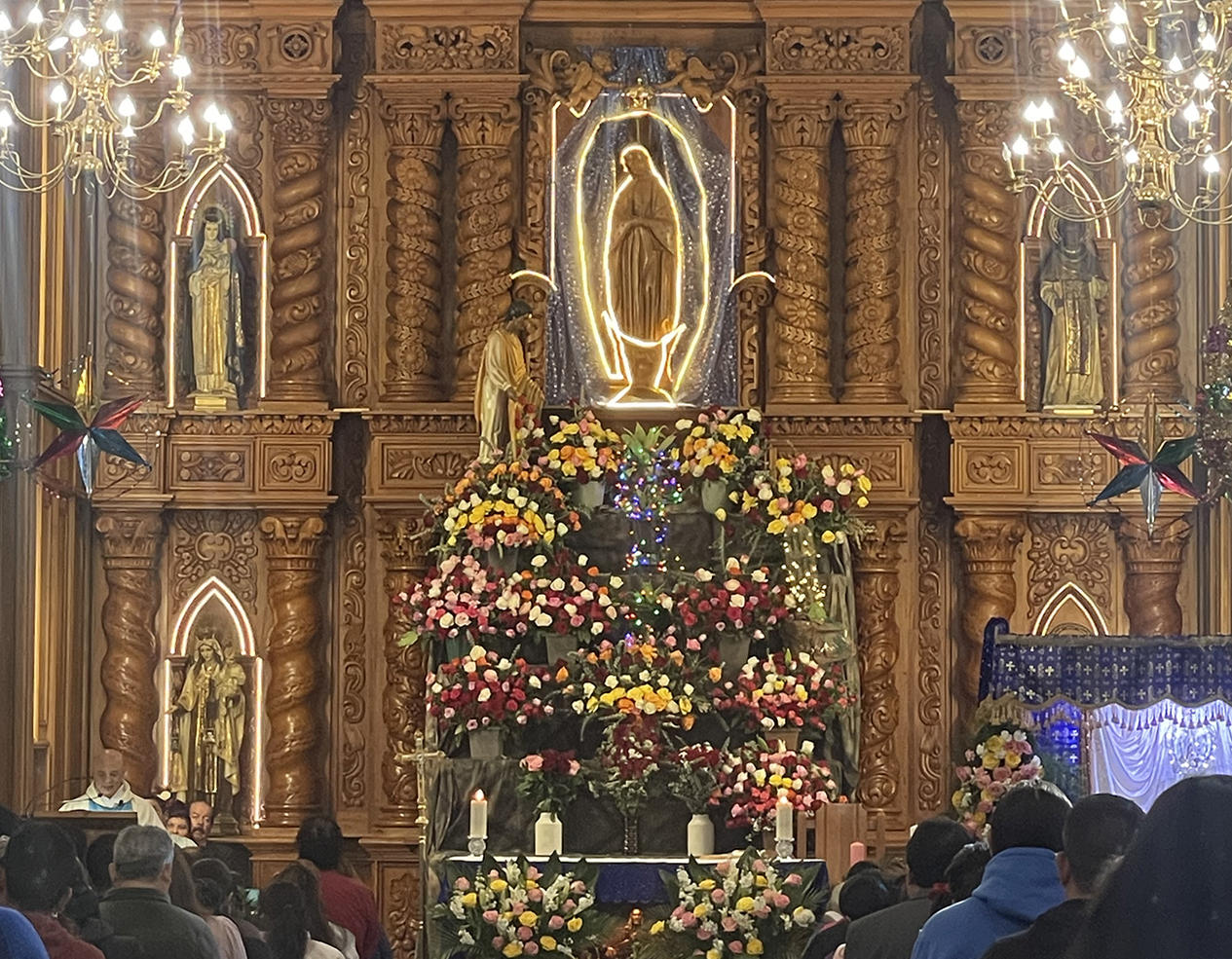
Church in Salinas. Photo | Antonio Alcántara.
This year’s celebration comes at a vulnerable moment for immigrant worshipers amidst immigration raids across the United States, especially in Southern California. Immigrants — whether living here legally or not — gathering publicly to celebrate La Virgen de Guadalupe is a demonstration of faith, culture, determination and resilience, said church officials and lay people.
“When we are in the church with La Virgen, we feel protected and that she will care for us,” added Alcántara in Spanish, who attends one of the four Catholic churches in Salinas.
The public celebration of the Mexican icon is an act of protest at this moment, said Kelly Medina-López, a professor at California State University, Monterey Bay.
“The literal biggest act of subtle protest of any person in Monterey County and the Salinas Valley could be to go to her mass,” Medina-López said. “Not be afraid and be there; attendance is protest. It is struggle.”
Deacon David Ford, the Chancellor with the Monterey Diocese, said the diocese is unaware of any threat to celebrations posed by immigration raids or enforcement. Nor has he heard of any additional security or coordination with local rapid response or solidarity networks.
“It’s clear people are scared but I haven’t heard of a downturn in church attendance,” said Deacon Ford. “Maybe that speaks to a sort of faith in the Church as a mother — someone they can trust.”
Monterey County so far has avoided the roving patrols by Immigrant and Customs Enforcement and U.S. Customs and Border Patrol that have terrorized immigrant communities in Southern California and left surrounding communities on edge. However, several scares in the area — including a raid on a cannabis farm in July that left the community rattled for months and caused panic in neighborhoods and local social media — are a reminder of the palpable fear shared by residents and public health and education officials.
“The brutality is not acceptable,” Deacon Ford said. “We need to treat people with human dignity.”
“The literal biggest act of subtle protest of any person in Monterey County and the Salinas Valley could be to go to her mass. Not be afraid and be there; attendance is protest. It is struggle.” Kelly Medina-López, CSUMB professor
Approximately 370 miles south, the Diocese of San Bernardino took the extraordinary step of issuing a dispensation to parishioners on July 8, officially allowing practicing Catholics to forgo regular church services to avoid possible detention by roving patrols of immigration agents.
“All members of the Faithful in the Diocese of San Bernardino who, due to genuine fear of immigration enforcement actions, are unable to attend Sunday Mass or Masses on holy days of obligation are dispensed from this obligation, as provided for in Canon 1247, until such time as this decree is revoked or amended,” reads the official Church statement.
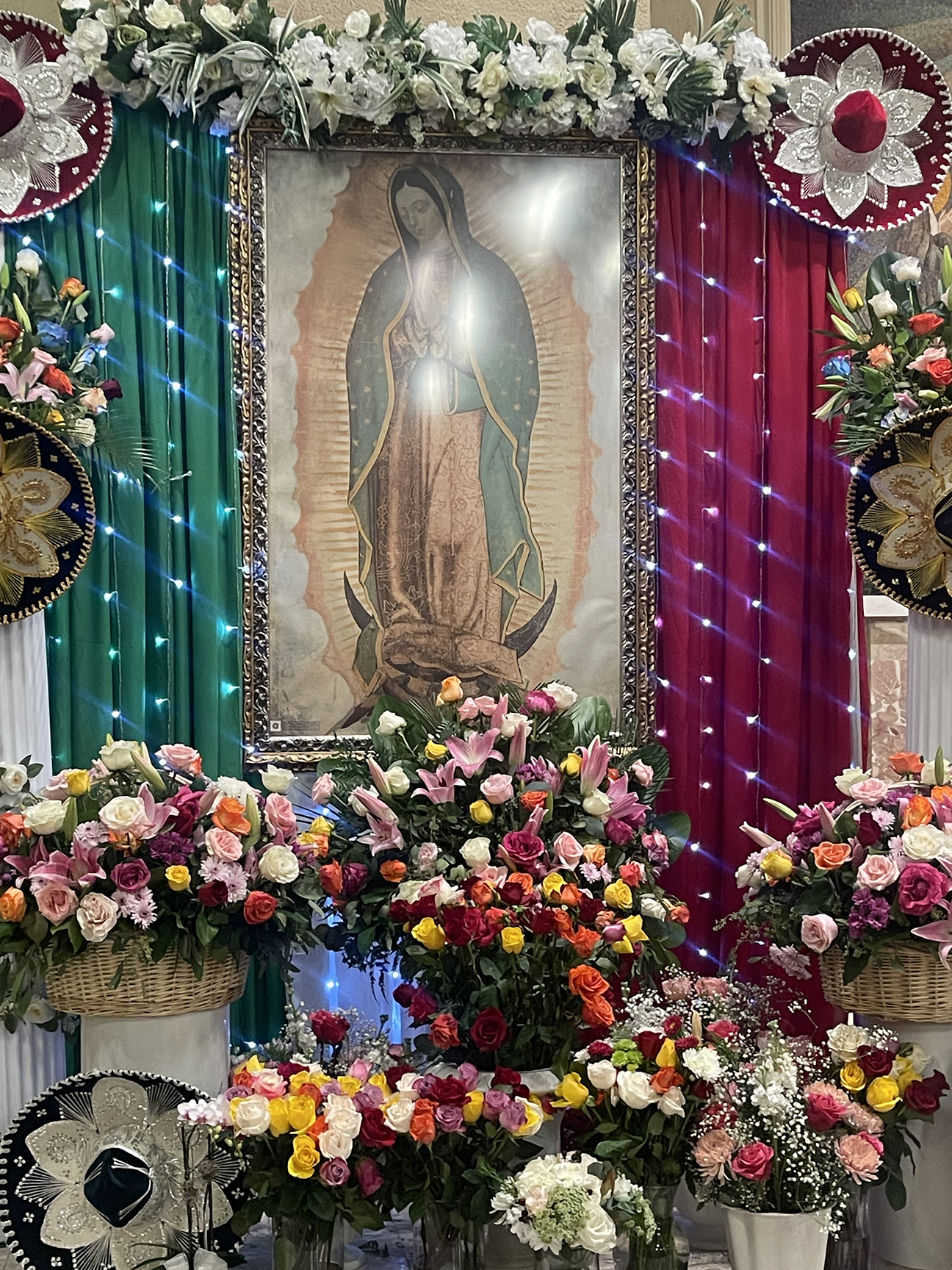
in Salinas. Photo | Antonio Alcántara.
While the celebrations on December 12 within Catholic churches are an explicit religious celebration, La Virgen de Guadalupe is an icon with a complex history. She first appeared to a Chichimeca native who had recently converted to Catholicism on the grounds of what was once a temple to Nahua deity Tonantzin ten years after the fall of Tenochtitlán to Spanish mercenaries.
She has many devotees outside the Catholic Church, explained Professor Medina-López, who, like her father, has a tattoo of La Virgen on her arm.
“She is the crossroads of migration, religious artifact and struggle,” Medina-López said. “She’s this paradox.”
Churches and chapels to La Virgen de Guadalupe and her likeness are ubiquitous across Mexico and Central America, and at the borders between countries and empires, including slave-trading sites across the Spanish colonial system and American Southwest, Medina-López said.
“The Church should always stand with the oppressed and the crucified of the world. We have to be brave and speak up. We have to be prophetic at this moment.” Deacon David Ford, chancellor with the Monterey Diocese
The familiar image of La Virgen de Guadalupe, said Medina-López, has been present in moments of social upheaval, revolution and protest for hundreds of years.
For Medina-López, her connection to La Virgen de Guadalupe is not through the Catholic Church, but Indigenous ceremonies in New Mexico, where she is from.
One month before this year’s feast of La Virgen de Guadalupe, the United States Conference of Catholic Bishops released a written and video statement in support of immigrants amidst the current wave of raids across the country. The statement recognizes both the dignity and rights of immigrants and the national right to regulate borders, while calling for an end to mass deportations and harmful rhetoric.
“We oppose the indiscriminate mass deportation of people,” concludes the statement from the United States Conference of Catholic Bishops. “We pray for an end to dehumanizing rhetoric and violence, whether directed at immigrants or at law enforcement.”
The announcement of immigrant solidarity is supported with biblical references and church teaching. In addition, the statement notes ongoing aid in parishes across the country and ends with a reference to Lady of Guadalupe.
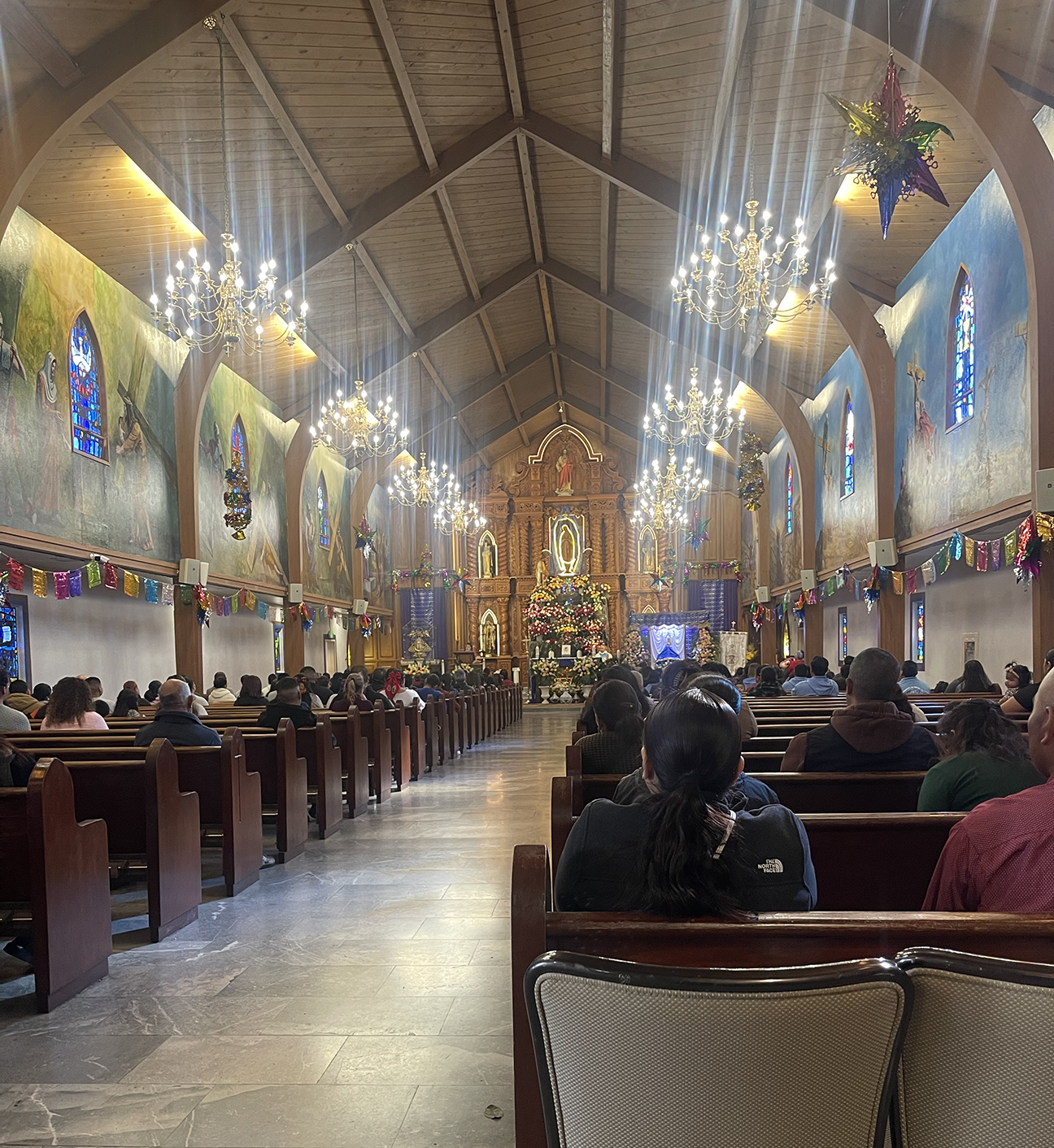
A special service at San Carlos Cathedral in Monterey was held on the feast of Saint Juan Diego, December 9, in solidarity with migrant families for what has been called a nationwide holy hour.
“The Church should always stand with the oppressed and the crucified of the world,” said Deacon Ford. “We have to be brave and speak up. We have to be prophetic at this moment.”
FEATURED IMAGE |
Enlarge

Have something to say about this story? Send us a letter.
LIKE WHAT YOU’RE READING? THROUGH DECEMBER 31, YOUR DONATION IS DOUBLED!
SUPPORT NONPROFIT JOURNALISM 
GET OUR FREE NEWSLETTER